

-
Research Article
-
Revitalization Strategies for Community Facilities in National Rental Housing Based on Resident Age Distribution - Focusing on Three Cities in Jeonbuk: Jeonju, Iksan, and Gunsan -
거주자 연령 분포에 따른 국민임대주택의 주민공동시설과 커뮤니티 활성화 방안 - 전북 3개 도시 전주, 익산, 군산을 중심으로 -
-
Hyun-Kyung Kang, Byungsook Choi
강현경, 최병숙
- This study explores improvement strategies for community facilities in national rental housing complexes, reflecting the age distribution and life-cycle needs of residents. …
- This study explores improvement strategies for community facilities in national rental housing complexes, reflecting the age distribution and life-cycle needs of residents. The study focused on twenty-one complexes built between 2003 and 2018 with over 300 units in Jeonju, Iksan, and Gunsan. The methodology involved a comprehensive cross-analysis utilizing 2022 demographic data, LH community facility area data, and 87 community program activity cases, supplemented by a seven-day on-site survey to evaluate actual spatial use. The analysis revealed that rigid, provider-oriented standards, do not to meet the evolving demands of residents. This has caused a significant spatial imbalance where childcare facilities are oversupplied, while senior centers and small libraries are critically insufficient. Furthermore, middle-aged residents (30.1% of the population) are excluded from community programming, leading to fragmented space use. To resolve these issues, the study proposes restructuring surplus childcare areas into flexible, multi-generational hubs and remodeling idle facilities for middle-aged job training and social exchange. Additionally, it suggests transforming senior centers into comprehensive care spaces, incorporating underused rooftops, and integrating welfare information systems and professional coordinators for single-person and vulnerable households. Ultimately, these improvements aim to transform communal facilities into active social hubs that foster social capital and ease intergenerational interaction. - COLLAPSE

-
Revitalization Strategies for Community Facilities in National Rental Housing Based on Resident Age Distribution - Focusing on Three Cities in Jeonbuk: Jeonju, Iksan, and Gunsan -
-
Research Article
-
A Study on the Place-Dependent Transformation of Spatial Organization in Andrea Palladio’s Villas and Palazzi
안드레아 팔라디오의 빌라와 팔라쪼에 나타난 장소에 따른 공간 조직 변형에 관한 연구
-
Minyong Park
박민용
- This study examines how housing typology is transformed according to place. While previous studies have mainly focused on the continuity of housing …
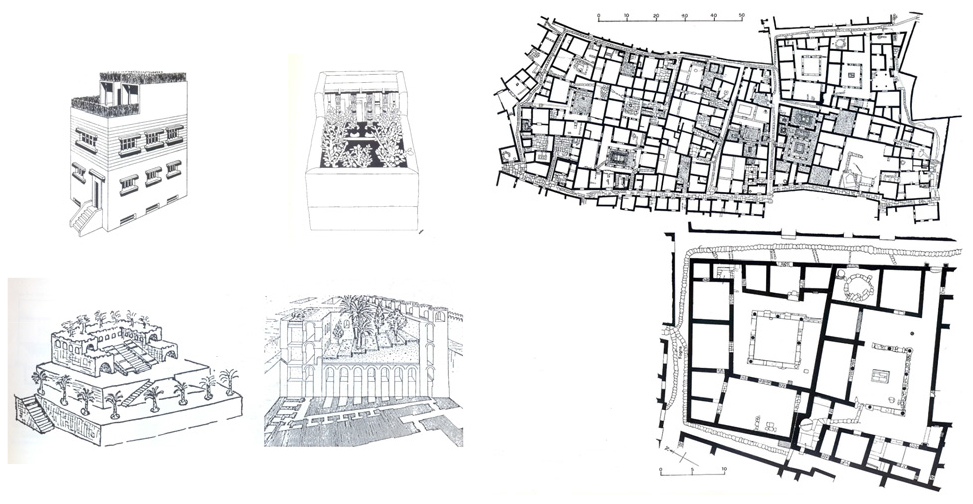
- This study examines how housing typology is transformed according to place. While previous studies have mainly focused on the continuity of housing types over time or on the formal characteristics of individual buildings, relatively less attention has been given to the relationship between housing typology and place. This study understands housing typology not as a fixed form but as a spatial organizational structure and analyzes Andrea Palladio’s urban palazzi and rural villas as representative residential types developed under different place conditions. Using typological and comparative analysis, the study investigates four principles of dwelling: relationship with nature, central space, public-private hierarchy, and collective space. The analysis shows that Palladio’s palazzi develop inward-oriented spatial organizations in response to dense urban conditions, whereas his villas form outward-oriented spatial organizations closely related to nature and landscape. These differences should be understood not as distinct housing types but as spatial transformations of shared dwelling principles according to place. The study demonstrates that housing typology maintains a universal spatial order while adapting to the particularity of place, offering implications for contemporary residential planning. - COLLAPSE
-
A Study on the Place-Dependent Transformation of Spatial Organization in Andrea Palladio’s Villas and Palazzi
-
Research Article
-
A Qualitative Study of How Young Single-Person Households Recognize Neighbors and the Conditions Shaping This Recognition
청년 1인 가구의 이웃 인식과 그 형성 조건에 관한 질적 연구
-
Yeonsu Hamm, Jihee Park, Hajung Ko
함연수, 박지희, 고하정
- Young single-person households have often been understood as lacking the conditions that support neighbor relations, including long-term residence, homeownership, repeated encounters, and …
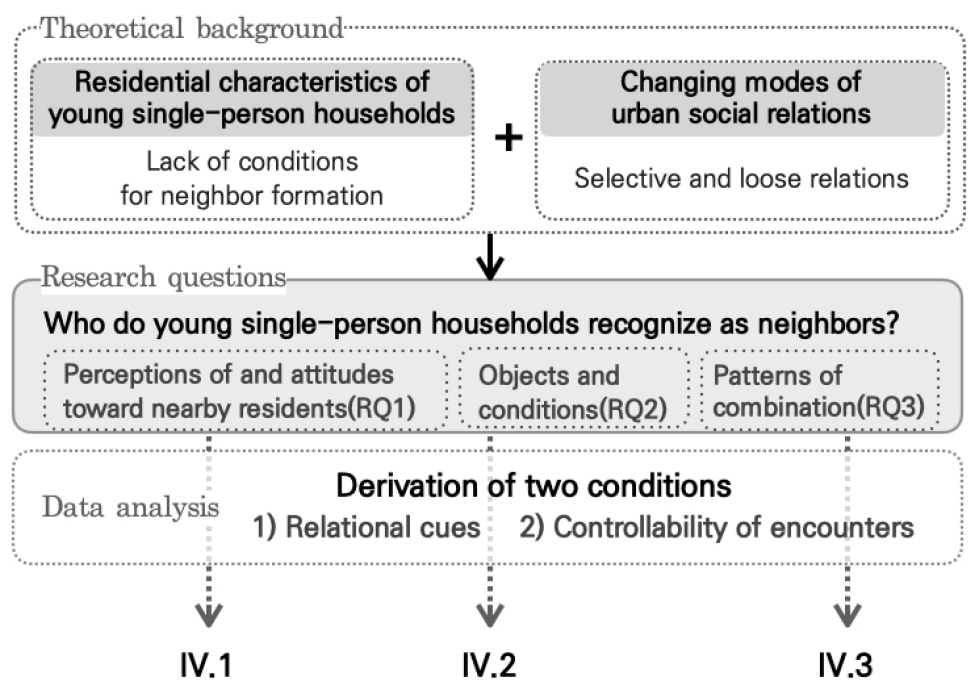
- Young single-person households have often been understood as lacking the conditions that support neighbor relations, including long-term residence, homeownership, repeated encounters, and community participation. Drawing on semi-structured interviews with 27 young single-person household residents in Gwanak-gu, Seoul, this study examines how young adults recognize neighbors and the conditions shaping that recognition. The findings identify two conditions: relational cues and the controllability of encounters. Relational cues are information and repeated experiences that make others recognizable and predictable, while controllability refers to the ability to initiate, maintain, or limit interactions to suit one’s rhythm and desired involvement. Neighbor recognition was most stable when both conditions were present; partial fulfillment produced thinner or context-dependent relations. Residents of the same building were often excluded from the neighbor category when relational cues were absent and encounters were difficult to control, reflecting dispersed daily rhythms, scarce semi-public spaces, exposure of private life, safety concerns, and obligatory interaction. These findings suggest that young single-person households do not simply lack neighbor relations; rather, such relations are selectively formed under conditions that allow legibility and autonomy. - COLLAPSE
-
A Qualitative Study of How Young Single-Person Households Recognize Neighbors and the Conditions Shaping This Recognition
-
Research Article
-
An Analysis of the Operational Status of Local Government Home Modification Services for Older Adults - Focused on Busan Metropolitan City -
지방자치단체 고령자 대상 주택개조서비스 운영실태 분석 - 부산광역시를 중심으로 -
-
Hyun Joo Kwon, Min-hye Goo, Ye Hee Cho
권현주, 구민혜, 조예희
- This study investigated the operational status of local government home modification services under the Integrated Care Support Act and identified challenges and …
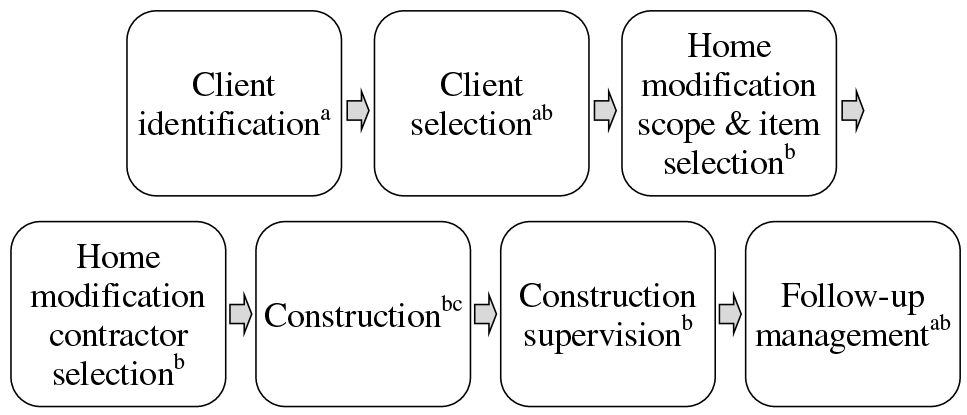
- This study investigated the operational status of local government home modification services under the Integrated Care Support Act and identified challenges and improvement needs perceived by service providers. An online survey and in-depth interviews were conducted with 11 practitioners from six home modification service organizations in Busan, South Korea. The results revealed several challenges, including insufficient information sharing during client selection, a lack of objective criteria for determining home modification priorities, difficulties in contractor selection, limited post-service management, and excessive administrative burdens caused by fragmented procedures and documentation requirements. In addition, unclear operational guidelines and insufficient professional training were identified as barriers to effective service delivery. To address these issues, this study suggests the standardization of administrative procedures, the development of operational guidelines and assessment criteria, the establishment of systematic post-management systems, and the expansion of professional education and expert involvement. The findings provide practical implications for improving home modification services and supporting aging in place within the community-based integrated care system. - COLLAPSE
-
An Analysis of the Operational Status of Local Government Home Modification Services for Older Adults - Focused on Busan Metropolitan City -
-
Research Article
-
A Study on the Characteristics of Sustainable Design Expression through Taoist Aesthetics
도가미학사상을 통한 지속가능 디자인 표현특성 연구
-
Yu-Hong Cheng, Jeong-Won Lee, Ji-Eun Seo
위홍청, 이정원, 서지은
- This study aims to reinterpret Taoist aesthetics as an analytical framework for contemporary sustainable architecture and to derive the characteristics of sustainable …
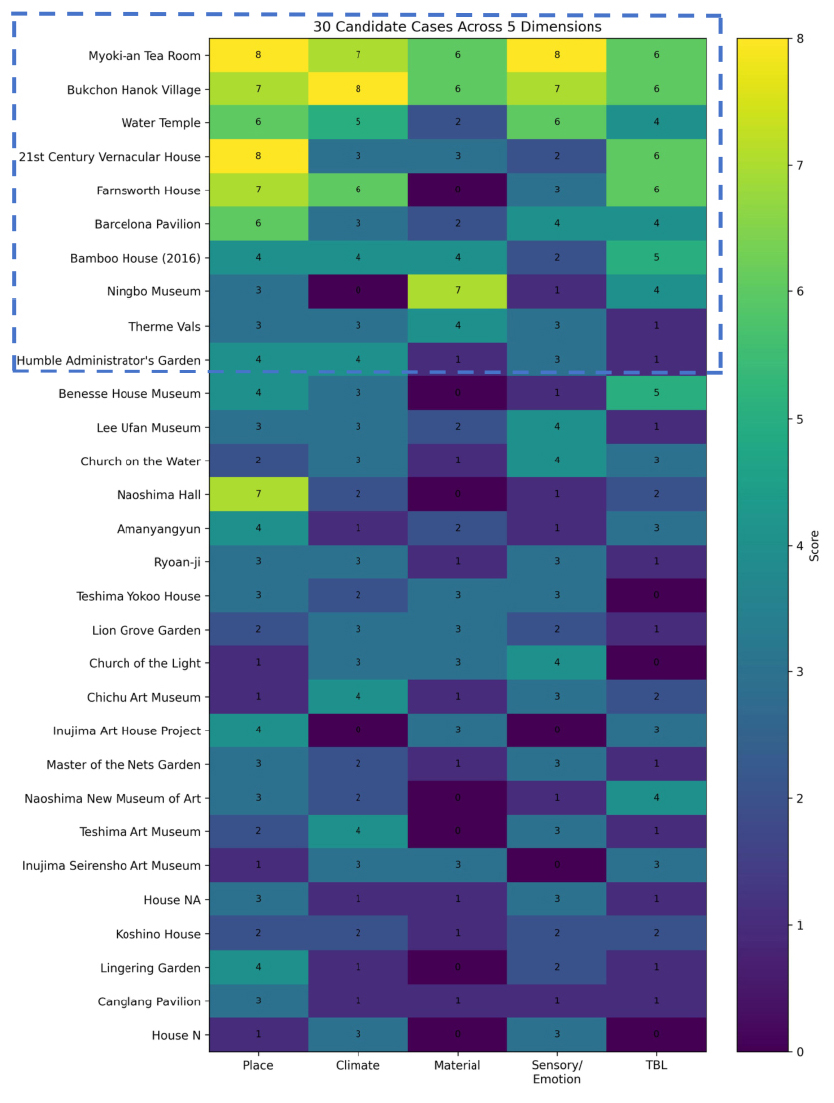
- This study aims to reinterpret Taoist aesthetics as an analytical framework for contemporary sustainable architecture and to derive the characteristics of sustainable design expression by linking it to the environmental, social, and economic dimensions of the Triple Bottom Line (TBL). Concepts related to Taoist aesthetics in previous studies were integrated into five core categories: generativity of emptiness, non-impositional order, non-fixed formation, spatiotemporality of nature, and free existence. Based on the TBL framework, evaluation indicators were established and ten architectural cases, including traditional gardens, residential, religious, public, and ecological architecture, were analyzed. The results show that Taoist aesthetics can be translated into sustainable design expression through the acceptance of natural conditions, the flexibilization of boundaries, the restraint of materials, the integration of temporality, and the support of user autonomy. These five categories were found to correspond structurally to environmental adaptability, social inclusiveness, and economic rationality. This study suggests that Taoist aesthetics can serve as both a philosophical foundation for expanding sustainability discourse beyond technical efficiency and an applicable interpretive framework for contemporary architecture. - COLLAPSE
-
A Study on the Characteristics of Sustainable Design Expression through Taoist Aesthetics
-
Research Article
-
EEG Response Analysis of Biophilic Fractal Patterns - Focusing on RAB Differences by Fractal Type and Complexity -
바이오필릭 프랙탈 패턴에 대한 EEG 반응 분석 - 프랙탈 유형과 복잡도에 따른 RAB 차이를 중심으로 -
-
Xin Wang, Ji Young Cho, Joori Suh
왕흠, 조지영, 서주리
- Fractals in nature exhibit self-similarity and scale invariance and are known to influence emotion, recovery, and visual interest. However, EEG-based evidence - …
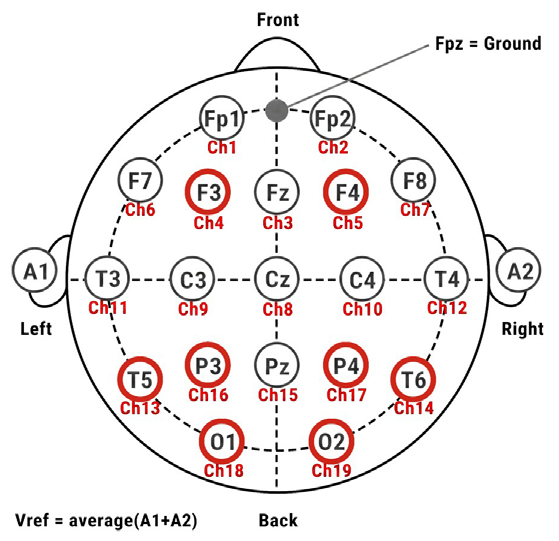
- Fractals in nature exhibit self-similarity and scale invariance and are known to influence emotion, recovery, and visual interest. However, EEG-based evidence - especially comparisons between exact and statistical fractals across different complexity levels - remains limited. This study investigated EEG responses to biophilic fractal patterns by examining differences in fractal type (exact vs. statistical) and complexity (D value: Medium-Low [ML] vs. Medium-High [MH]). Eight fractal patterns were presented to participants, and Relative Alpha to Beta (RAB) values were analyzed across four brain regions (F3-F4, T5-T6, P3-P4, O1-O2). Results revealed that exact and statistical fractals produced opposite RAB trends regarding complexity: exact fractals showed higher RAB in ML than MH in F3-F4, whereas statistical fractals showed higher RAB in MH than ML in T5-T6 and O1-O2. Under MH conditions, statistical fractals yielded consistently higher RAB than exact fractals across all regions. Regionally, F3-F4 responded to complexity in exact fractals, T5-T6 and O1-O2 to statistical fractal complexity, and P3-P4 to type differences under MH conditions. These findings highlight the importance of considering fractal type, complexity, and brain region when interpreting EEG responses. The significance of this study lies in showing that both the type and the complexity of the fractal patterns account for differences in EEG RAB responses. - COLLAPSE
-
EEG Response Analysis of Biophilic Fractal Patterns - Focusing on RAB Differences by Fractal Type and Complexity -
-
Research Article
-
The Role and Implications of Public Rental Housing Services during a Social Disaster - Focusing on User Satisfaction of LH Residential Life Services -
사회적 재난(코로나19) 상황에서 공공임대주택 주거서비스의 역할과 함의 - LH공공임대주택 주거생활서비스의 이용자 만족도를 중심으로 -
-
In-Sook Jo, Oh-Jung Kwon
조인숙, 권오정
- This study examines the role of LH public rental housing services in supporting vulnerable residents during the COVID-19 social disaster. Using four-year …
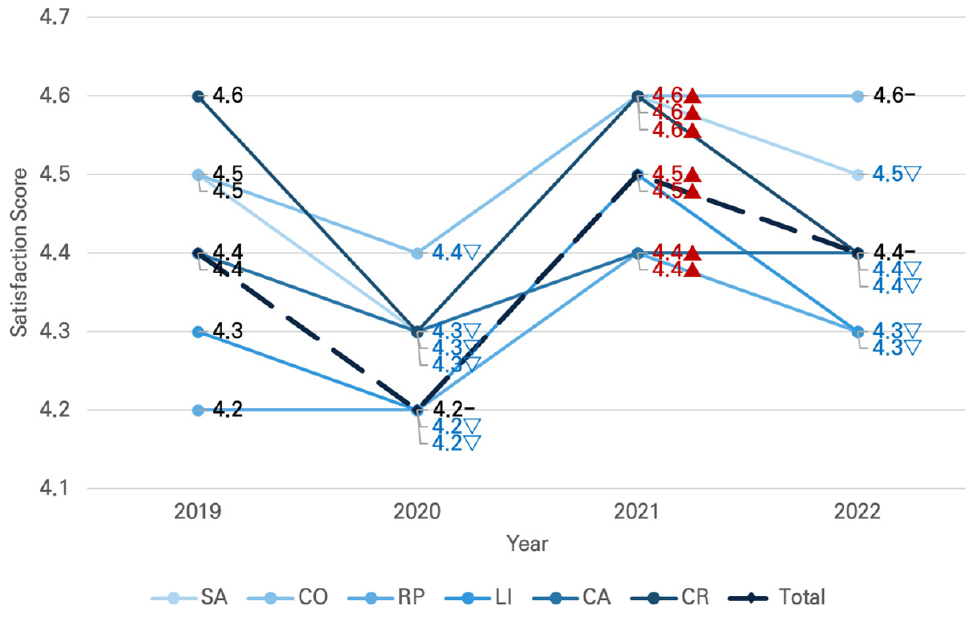
- This study examines the role of LH public rental housing services in supporting vulnerable residents during the COVID-19 social disaster. Using four-year time-series data (2019-2022) from LH’s Residential Life Service satisfaction surveys, changes across 13 services were analyzed using descriptive statistics, t-test, and one-way ANOVA (2022: N = 1,121). Overall satisfaction declined temporarily in 2020 (84.8 pts) before rebounding above the pre-COVID baseline in 2021 (90.2 pts), showing resilient service operation under disaster conditions. Impacts varied by service type: the contactless Digital Library rose continuously; the Senior Welfare Center, serving low-income elderly, surged once its crisis-support role became visible after resumption; in-person community services fluctuated with containment policies; and the Home Doctor visit-care service, despite sustained high satisfaction, dropped sharply in 2022, exposing a post-pandemic demand-supply imbalance. The Center’s crisis-household assistance sub-item showed the largest increase (3.9 → 4.7 pts, F = 4.18, p < .05), showing that the safety-net function of community-embedded services remains latent in normal times and emerges only during disasters. These findings identify four roles of residential life services in disasters-contactless leisure support, compensation for care gaps, mitigation of social isolation, and resilient operation-and suggest four policy directions: permanently reinforcing contactless infrastructure, establishing disaster-responsive continuity protocols, expanding visit-based care for single-person elderly households, and building agile response systems for post-disaster rebound demand. - COLLAPSE
-
The Role and Implications of Public Rental Housing Services during a Social Disaster - Focusing on User Satisfaction of LH Residential Life Services -
-
Research Article
-
A Study on Preferences for Flexible Floor Plan Types and Planning Directions for Promoting Long-Life Housing
장수명주택 활성화를 위한 가변형 평면 선호 유형과 계획 연구
-
Ji-Hye An, Jae-Woo Yoo
안지혜, 유재우
- This study aims to analyze residents’ preferences for flexible floor plan types and to propose planning directions for promoting long-life housing. Based …
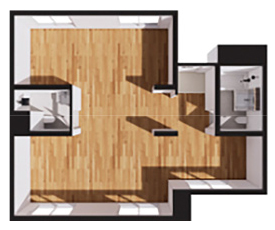
- This study aims to analyze residents’ preferences for flexible floor plan types and to propose planning directions for promoting long-life housing. Based on a review of previous studies and flexible housing cases, scenario-based floor plan alternatives were developed for 59 m2, 74 m2, and 85 m2 units under a Skeleton-Infill system. A questionnaire survey was conducted with 99 valid responses to examine housing inconveniences, awareness and acceptance of flexible housing, and preferences according to dwelling size, household size, and age group. The proposed floor plan types were designed to compare differences in openness, room subdivision, storage, and support spaces. The results showed generally positive acceptance of flexible housing, while preferred floor plan types differed by dwelling size and resident characteristics. Differences by household size were significant only in the 59 m2 unit, and age-group differences were identified in the preferred current dwelling size and the 85 m2 floor plan type. Based on these findings, this study proposed division–integration adaptability for 59 m2 units, function selection and adjustment for 74 m2 units, and spatial allocation adjustment for 85 m2 units. The findings provide basic data for user-oriented planning of long-life housing and public rental housing. - COLLAPSE
-
A Study on Preferences for Flexible Floor Plan Types and Planning Directions for Promoting Long-Life Housing
-
Research Article
-
An Empirical Analysis of the Relationship between Population Aging and Medical Spatial Imbalance
인구 고령화와 의료공간 불균형의 관계에 대한 실증 분석 연구
-
Xue-Ning, Jeong-Won Lee, Ji-Eun Seo
슈에닝, 이정원, 서지은
- This study examines changes in medical spatial imbalance across 17 metropolitan cities and provinces in South Korea from 2015 to 2024 and …
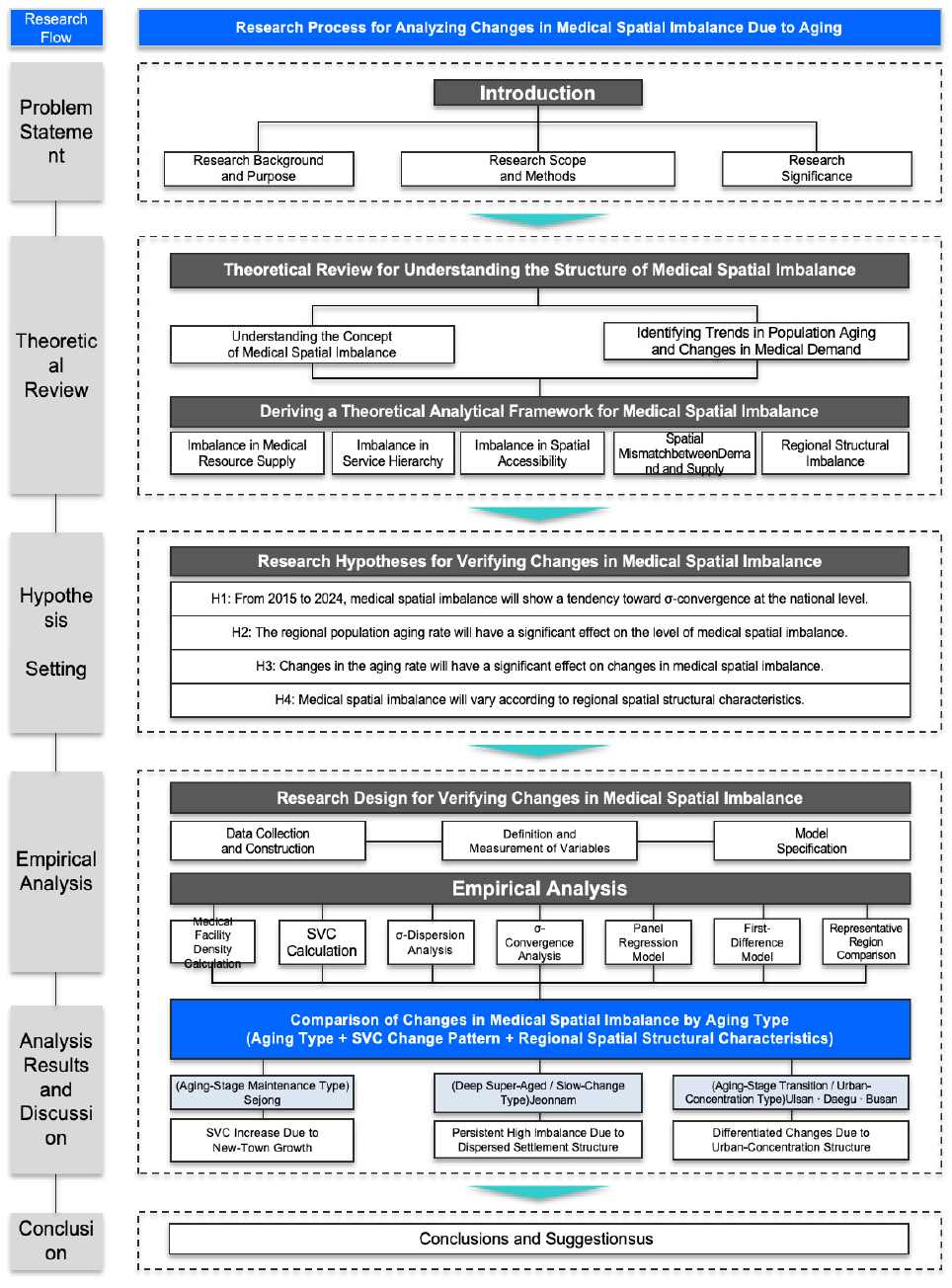
- This study examines changes in medical spatial imbalance across 17 metropolitan cities and provinces in South Korea from 2015 to 2024 and investigates its relationship with population aging. Medical spatial imbalance was measured using the Structural Variation Coefficient (SVC), and the analysis combined σ-dispersion, fixed-effects panel regression, first-difference models, and time-series comparisons of representative regions. The results reveal four major findings. First, regional aging trajectories differed according to settlement characteristics, including stagnating (Sejong), slow-growth (Jeonnam), moderate-growth (Ulsan, Busan), and rapid-growth (Daegu) patterns. Second, although the coefficient of variation of SVC declined over the study period, indicating limited σ-convergence, the average SVC increased slightly, suggesting that regional disparities narrowed while overall medical spatial imbalance persisted. Third, neither the level nor the rate of change in population aging had a statistically significant effect on medical spatial imbalance. This finding implies that the allocation of medical resources has not responded sufficiently to rapidly changing demographic demand and remains largely constrained by existing infrastructure. Finally, comparisons of representative regions showed that differences in medical spatial imbalance are closely associated with urban development, settlement structure, and regional spatial characteristics rather than population aging alone. These findings suggest that medical spatial imbalance cannot be explained solely by population aging and highlight the need for region-specific medical resource allocation strategies that reflect local spatial characteristics and healthcare demand. - COLLAPSE
-
An Empirical Analysis of the Relationship between Population Aging and Medical Spatial Imbalance
-
Research Article
-
A Study on the Diagnosis and Improvement Measures of Public Rental Housing Policy for Young Adults - Focusing on Expert Evaluation -
청년 대상 공공임대주택 정책 현황 진단 및 개선방안 연구 - 전문가 조사를 중심으로 -
-
Hyun Joo Kwon, Jiyoung Oh, Min-hye Goo, Yein Choi, Oh-Jung Kwon
권현주, 오지영, 구민혜, 최예인, 권오정
- This study investigated the limitations of current public rental housing policies for young adults and identified strategic directions for improvement through an …
- This study investigated the limitations of current public rental housing policies for young adults and identified strategic directions for improvement through an expert evaluation. A Expert survey or evaluation survey of 15 professionals in housing policy and related fields was conducted to diagnose the existing supply system and propose demand-responsive solutions. The results revealed key structural challenges: a spatial mismatch between supply and young adults’ preferred urban locations, and rigid income-based eligibility criteria creating blind spots for vulnerable individuals. Moreover, the current supply system’s overreliance on small-sized units for single-person households disconnects the housing ladder and hinders family formation. Preferential policies were also criticized for relying on formal criteria rather than actual child-rearing burdens. To address these issues, this study suggests short-term measures including simplifying procedures, mitigating income cliff effects by adopting the Rent to Income Ratio (RIR), and redesigning preferential criteria based on practical child-rearing needs. Long-term strategies recommend transitioning to a life-cycle customized support system allowing continuous residential upgrades, integrating asset-building programs, and supplying family-friendly units in high-demand areas. These findings provide practical implications for redesigning policies to effectively support young adults’ residential stability. - COLLAPSE
-
A Study on the Diagnosis and Improvement Measures of Public Rental Housing Policy for Young Adults - Focusing on Expert Evaluation -
-
Research Article
-
A Study on Apartment Housing Service Operational Needs for Realizing Aging in Place (AIP) among Middle-Class Older Adults and Pre-Elderly
중산층 예비고령자 및 고령자의 AIP실현을 위한 아파트 주거서비스 운영 요구에 관한 연구
-
In-Sook Jo, Young-Ho Yoon
조인숙, 윤영호
- As Korea enters a super-aged society, middle-class older adults remain in a structural blind spot between low-income public assistance and high-income private …
- As Korea enters a super-aged society, middle-class older adults remain in a structural blind spot between low-income public assistance and high-income private markets. This study analyzes AIP housing service needs among middle-class pre-elderly and older adults in apartment housing and proposes a management office-based operational strategy. An online survey of 173 middle-class apartment residents aged 55-74 across South Korea was analyzed using SPSS 28.0. While housing convenience (3.42) and safety (3.60) were rated favorably, age-friendly facility installation (2.73) and service adequacy (2.66) were critically low, with poorer subjective health linked to more negative housing evaluations. Service demand concentrated on safety, mobility, and medical care, led by emergency call (4.32), outing companion (4.21), and care (4.18) services. Among respondents aged 60 and over, 47.6% preferred to remain in their current home when healthy, and 90.2% accepted the management office as service provider. Income had no significant effect on affordable service cost, indicating a payment-structure rather than income-capacity problem. An integrated strategy organized around four axes-Space, Service, Cost, and Operating Entity-is proposed in connection with the 2026 Integrated Community Care Act. A management office-based service hub offers a practical pathway to AIP and AIC (Aging in Community) in both new and existing apartment housing, functioning as a preventive welfare strategy that reduces social care costs. - COLLAPSE

-
A Study on Apartment Housing Service Operational Needs for Realizing Aging in Place (AIP) among Middle-Class Older Adults and Pre-Elderly

Journal Informaiton
 Journal of the Korean Housing Association
Journal of the Korean Housing Association






 The Korean Housing Association
한국주거학회
Rm 1303, 19, Seoun-ro, Seocho-gu, Seoul, Republic of Korea
Tel: +82-2-565-5336 / Fax: +82-2-565-5340, / E-mail: journal@khousing.or.kr Copyright© The Korean Housing Association. Powered by APUB
Tel: +82-2-565-5336 / Fax: +82-2-565-5340, / E-mail: journal@khousing.or.kr Copyright© The Korean Housing Association. Powered by APUB