Research Article

Journal of the Korean Housing Association. 25 June 2025. 105-113
https://doi.org/10.6107/JKHA.2025.36.3.105

ABSTRACT


MAIN

  • I. 서 론

  •   1. 연구의 배경 및 목적

  •   2. 연구 범위 및 방법

  • II. 이론적 배경

  •   1. 고령친화환경과 마을커뮤니티

  •   2. 마을커뮤니티공간의 외부환경

  •   3. 고령친화 마을커뮤니티공간의 외부환경 접근요소

  • III. 사례분석

  •   1. 사례분석 개요

  •   2. 사례분석

  •   3. 소결

  • Ⅳ. 결 론

I. 서 론

1. 연구의 배경 및 목적

국내 고령자의 자살률은 OECD 국가 평균의 약 2.9배에 달하며 사회적 고립이 긴급한 사회 문제로 대두되고 있다(Kostat, 2023). 안전확인정도의 노인돌봄서비스 정책을 개선하고자 활동적 노화와 계속거주 개념을 바탕으로 거주지 중심으로 패러다임이 변화되고 있다. 고령자는 노년기에 접어들면서 노화에 따른 신체적 문제, 은퇴와 같은 사회적 변화 등으로 물리적 활동 공간의 범위가 축소되고, 동시에 교류영역 또한 축소된다. 이에 사회적 활동공간으로서 근린생활권 즉, 고령자의 주요한 활동 공간이 되는 마을이 점차 중요해지고 있다. 이러한 측면에서 마을은 고령자의 일상의 다양한 서비스와 연계되는 공간적 범위이자 사회적 교류의 장 측면에서 고려되어야 한다.

광주광역시는 고령친화지표 평가 결과에 따르면 고령자의 외부활동 안전성과 쾌적성은 전국 평균에 미치지 못하는 것으로 나타났다(Ko et al., 2021). 특히 마을커뮤니티공간은 주로 저층 주거지나 유동 인구가 감소한 지역의 유휴공간을 활용하는 경우가 많아, 복잡한 동선, 길 찾기의 어려움, 공간 정보 부족 등 물리적 접근에 여러 제약이 존재하며, 이는 고령자들의 일상 외출과 사회참여에 큰 영향을 미치고 있다(Kim & Moon, 2022). 따라서 본 연구는 지역사회 내 고령자들의 지속적인 사회참여와 건강한 생활을 지원하기 위해, 고령자 이용률이 높은 마을커뮤니티공간의 물리적 접근성을 분석하고, 이를 개선하기 위한 구체적인 방안을 제시하고자 한다.

기존 선행연구들(Seoul, 2018; Park & Eun, 2020; Jung, 2020; Kim, 2020; Lee, 2021; Ahn, 2022;)은 마을 내 커뮤니티 환경의 중요성을 강조하며, 물리적 환경 및 도보 접근성을 거시적 관점에서 연구되고 있다. 반면 고령자의 특성을 고려한 실제 일상에서 공간에 접근하는 미시적 환경에 대한 구체적 분석은 부족한 실정이다. 또한 기존 커뮤니티공간은 대규모 중심의 공간 계획이나 주거시설 내 환경에 초점을 맞추어 연구되고 있다. 이에 본 연구는 고령자의 일상생활권에 속한 소규모 마을 커뮤니티공간에 주목하여, 고령자가 쉽게 접근할 수 있는 구체적인 물리적 접근 개선 방안을 제시한다는 점에서 차별성을 갖는다.

2. 연구 범위 및 방법

본 연구의 공간적 범위는 광주광역시 동구로, 2017년 광주・전남지역 최초의 고령친화도시 지정 및 2024년 WHO 제3기 인증 획득 등 고령자 정책이 적극 시행되고 있는 지역임을 근거로 선정되었다. 내용적 범위는 동구 내 마을커뮤니티공간 ‘마을사랑채’로, 주민 주도형 복지 거점 공간으로 평가받고 있다. 또한 프로그램 참여 주민의 만족도가 98% 이상이며, 13개 동에 1 곳씩 개소하여 생활권(동) 중심 공간의 활용도가 높을 것으로 예상되어 선정하였다. 본 연구의 방법은 고령친화환경과 마을커뮤니티공간의 문헌연구를 통해 물리적 접근요소를 도출하여 이를 기반으로 사례분석을 진행하였다. 사례분석 결과를 바탕으로 고령친화환경을 위한 마을커뮤니티공간의 외부환경 접근 개선 방안을 제안하였다.

II. 이론적 배경

1. 고령친화환경과 마을커뮤니티

세계보건기구(WHO)는 고령자의 삶의 질 향상을 위해 활동적 노화(Active Aging)를 강조하며, 고령자가 자율적이고 의미 있는 삶을 지속할 수 있도록 지원할 것을 제시하고 있다. 이는 의료・복지를 넘어서, 고령자가 물리적・사회적 환경 속에서 능동적으로 살아갈 수 있도록 하는 통합적 접근을 요구한다.

그러나 국내 현실은 대중교통, 계단, 경사로, 미끄러운 도로 등 물리적 환경의 제약으로 인해 고령자의 보행과 외출이 어려운 상황이며, 고령자의 65.7%가 외출 시 불편을 겪고 있는 것으로 나타났다. 이에 따라 고령자의 독립성과 이동성을 보장하는 물리적 환경 개선이 시급하며, 이를 바탕으로 생애주기별 욕구를 반영한 서비스 제공과 사회참여 기회의 확대가 필요하다.

마을 커뮤니티는 고령자에게 단순한 공간을 넘어서는 중요한 사회적 인프라로 기능한다. 고령자는 신체적 제약으로 활동 반경이 좁아지는 만큼, 일상적으로 접근 가능한 커뮤니티 공간은 정서적 안정과 사회적 소속감 형성, 그리고 자기 정체성 유지에 중요한 역할을 한다. 이러한 마을 커뮤니티는 고립 방지, 인지・정서 건강 증진, 지역 돌봄망 형성 등 고령자의 건강한 노후를 위한 핵심 기반이 된다. 특히 광주광역시 동구는 마을 커뮤니티를 활용한 백년 동아리, 찾아가는 명화극장, 소통경로당을 운영하여 고령자의 자립과 사회참여를 지원하는 지역 기반 모델을 선도하고 있다.

고령친화환경 선행연구(Park, 2018; La & Kim, 2023; Moon, 2023; Jang & Min, 2024; Choi, 2024)를 바탕으로 <Table 1>과 같이 고령친화환경의 물리적 특성을 도출하였다.

Table 1.

Characteristics of The senior-friendly Physical enVironment of Previous Researchers

Keyword Characteristics of an age-friendly physical environment
Safety An environment that is easily accessible without physical or visual obstacles
Safety An environment that prevents accidents by eliminating potential hazards
Identification An environment that is quickly and easily recognizable by the elderly through colors, fonts, and shapes
Health A pleasant environment that utilizes lighting, ventilation, and eco-friendly materials
Activity An environment that can support various activities

2. 마을커뮤니티공간의 외부환경

마을커뮤니티공간의 법적 기준은 없으나 기능 및 역할 측면에서 제1종 근린생활시설로 도보 10분 거리(500 m 이내)에 위치하여 주민들 모두 건강하고 독립적인 삶을 지원하는 주민 거점공간을 의미한다(Lee, 2019; Kim, 2020; Kim, 2024). 마을커뮤니티공간의 설치 기준은 사업 또는 지자체의 기준에 따라 상이하나 주로 마을 내 유휴공간 및 비활성화된 공유공간을 리모델링하는 방식으로 조성되며, 기존의 커뮤니티센터와 같은 단독건물보다 지역적 상황을 고려하여 유휴공간을 활용하는 형태가 늘어나고 있다.

공간은 외부환경에서 내부환경으로의 접근성을 전제로 한다. 외부환경의 편의 제공 없이는 내부 커뮤니티 서비스 이용도 어려워지며, 접근성의 질은 공간의 활성화와 이용자 참여에 직결된다. ‘물리적 접근성’은 단순히 건물의 출입 편의성만을 의미하는 것이 아니라, 그 주변 도로, 보행자 안전, 시인성, 대중교통 연결성 등 전체 환경과의 조화로운 연계를 포함한다.

따라서 마을커뮤니티공간의 외부환경은 단순한 위치의 문제가 아니라, 일상과의 연속성, 안전, 인지 가능성, 이동 편의성 등 다양한 요소가 종합적으로 고려되어야 하며, 이는 곧 커뮤니티 활성화와 고령자 등 다양한 주민의 이용 확대로 이어진다.

선행연구자들(Seoul, 2018; Kim, 2020; Jung, 2020; Lee, 2021; Anh, 2022)에 따르면, 마을커뮤니티공간의 외부환경은 공간 이용의 전제 조건으로서 커뮤니티 활성화에 핵심적인 역할을 하며. 이를 정리하면 <Table 2>과 같다.

Table 2.

External Environment Planning Elements of Village Community Space by Previous Researchers

Keyword Planning elements of the physical external environment
External circulation Location adjacent to residential areas and connected to living infrastructure, safe pedestrian
Entry space Low-rise construction, entrances and exits that are easy for the elderly, disabled, and children to enter
Building facade Transparent materials that allow visual communication between the inside and outside or high-visibility building facade

3. 고령친화 마을커뮤니티공간의 외부환경 접근요소

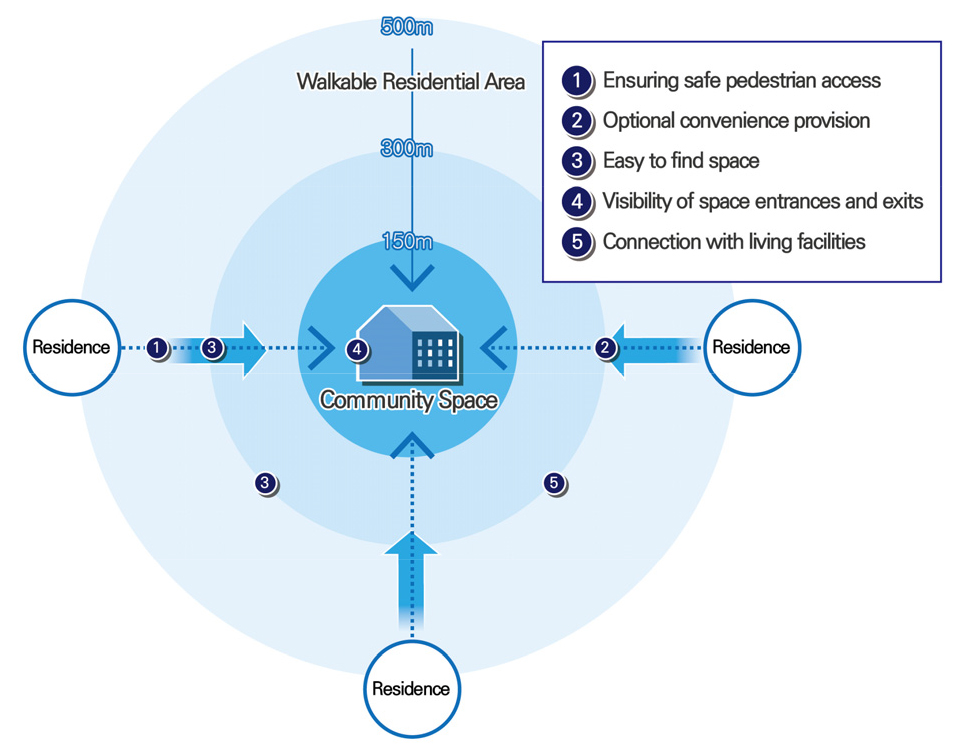
고령자들은 신체 노화로 인한 이동성 저하로 인해 사회적 교류와 신체활동을 유지하기 위해 이동성이 필수적이다. 최근 선행연구와 WHO 고령친화도시 가이드 등은 도보 접근성이 노인의 육체적・심리적 건강 및 삶의 만족도에 결정적인 역할을 한다고 강조한다. National Survey of Older Koreans(2020)는 지역사회 활동을 위한 도보 접근의 중요성을 확인하였으며, 노인복지관은 구 단위로 조성되어 도보 접근에 한계가 있는 반면, 마을커뮤니티공간은 생활권 내 도보 접근이 용이하다. 그러나 여전히 노인의 사회적 활동 및 신체활동을 촉진할 수 있는 복지시설과 공공공간은 부족하고, 일상 보행환경도 열악한 실정이다. 이에 본 연구는 고령자가 쉽게 접근하고 이용할 수 있는 500 m 이내 물리적 환경 개선의 필요성에 주목하였으며, <Table1>과 <Table 2>를 바탕으로 고령친화 마을커뮤니티공간의 물리적 접근 요소를 ‘안전한 보행권 확보’, ‘선택 가능한 편의 제공’, ‘찾기 쉬운 공간’, ‘공간 출입구의 시인성’, ‘생활시설과의 연계’ 5가지로 도출하였다. 각 요소별 세부내용은 고령자를 위한 도로 설계 가이드라인, 인지건강디자인 가이드라인 등 관련 법규 또는 가이드라인을 통하여 도출하였다<Figure 1>.
https://cdn.apub.kr/journalsite/sites/khousing/2025-036-03/N0450360309/images/Figure_khousing_36_03_09_F1.jpg
Figure 1.

Physical Accessibility Elements of Senior-Friendly Community Spaces

1) 안전한 보행권 확보

고령자는 신체적 노화로 인한 균형감각 및 사고 대처 능력의 저하로 낙상 위험에 쉽게 노출되며, 안전한 보행권은 생존과 사회적 참여를 가능하게 하는 필수적 요소이다. 고령자를 위한 보행로 설계 가이드라인에 의하면 보도와 차도의 물리적 분리, 보행기의 이용을 고려한 최소 1.5 m 이상의 유효 보도폭 확보, 보도 경사 구간의 미끄럼 방지 포장, 무단차 적용 등이 권장된다(Ministry of Land, Infrastructure and Transport, 2020). 따라서 주거지에서 마을커뮤니티공간으로 도보 접근 시, 이러한 기준에 따라 보행자의 안전을 확보하고 연속적인 이동이 가능한 환경 조성이 필요하다.

2) 선택가능한 편의 제공

고령자는 느린 보폭과 체력 저하로 장시간 보행이 어려우므로, 마을커뮤니티공간으로 가는 동선에 벤치・쉼터 등 휴게시설을 최대 390~400 m 간격으로 제공해 안전성과 쾌적성, 연속성을 확보해야 한다(Park, 2018). 이러한 휴게공간은 이웃과의 자연스러운 교류 기회도 제공한다.

3) 찾기쉬운 공간

저층주거지 내 복잡한 동선으로 고령자의 길 찾기 어려움이 크며, 신체・인지 저하로 공간을 혼동하기 쉽다. 따라서길 찾기를 쉽게 하기 위해서는 고령자의 신체적, 정서적, 사회적 특성을 반영한 서울시 인지건강 디자인 가이드라인에 따라 크고 명료한 글씨체와 색 등을 활용해 직관적인 방향성을 제공해야 하며, 이는 외출을 지원하고 마을에서 자존능력을 유지하며 살아갈 수 있는 환경을 제공한다.

4) 출입구의 시인성

일반적인 도시환경은 일반성인을 기준으로 하며, 비슷한 건물과 출입구는 고령자의 공간 인지를 어렵게 하므로, 마을커뮤니티공간 출입구는 고령자의 신체적 특성을 고려해 눈에 띄는 색・그림・재질로 시인성을 높여야 한다.

5) 생활시설과의 연계

고령자의 하루 활동 반경(1,100~1,800 m)을 고려해(Kang, 2018) 마을커뮤니티공간은 행정복지센터, 공공시설, 공원, 약국, 병원, 마트 등 생활시설과 도보 10분 이내에 위치해 짧고 효율적인 동선을 제공해야 한다. 이는 고령자가 공간을 자주적으로 방문할 수 있는 기회를 높인다.

이상의 고령친화적 마을커뮤니티공간의 물리적 접근요소는 <Table 3>과 같이 정리할 수 있다.

Table 3.

Physical Accessibility Elements of Village Community Spaces for Senior-Friendly Environments

Item Physical Access Elements
A. Ensuring safe pedestrian access A-1. Separation of sidewalk and roadway
Securing sufficient effective width.
A-2. Uneven construction of the upper surface of the boundary stone and the pavement surface of the road (side gutter)
A-3. Non-slip floor material
A-4. Presence of risk factors in walking 
(flower pots, used tires, stacking structures, etc.)
B. Optional convenience provision B-1. Availability of convenience facilities and spaces such as benches and shelters within the walking path
C. Easy to find space C-1. Design of signs or wayfinding signs with large, clear fonts and colors
C-2. Space layout on the first floor
D. Visibility of space entrances and exits D-1. Front entrance of a building with high visibility, including color, picture, and material
E. Connection with living facilities E-1. Located adjacent to neighborhood facilities

III. 사례분석

1. 사례분석 개요

사례 분석 대상은 마을사랑채 11곳 중 5곳으로 선정하였다. 선정된 대상지는 주거지 내 위치하였으며, 주민공공복지시설로 이용되던 부지를 신축・리모델링한 곳으로 고령자의 물리적 접근을 도모하고 있어 연구의 대상지로 적합할 것으로 판단되어 선정하였다. 사례분석 방법은 문헌 및 현장조사(2024년 8-9월), 네이버 지도(2024년 5월 기준)를 통해 조사하였다. 평가 방법은 대상지로부터 500 m 이내 거리 기준으로 접근 요소가 설계되었으며, 제 기능을 하는 경우에는 적정(○), 접근 요소가 설계되었지만 제 기능을 하지 못하는 경우 또는 접근 요소가 일부 설계되었고, 일부 제 기능을 하는 경우에는 부족(△), 접근 요소가 없는 경우, 미흡(X)으로 분석하였다.

Table 4.

Case Study area Overview

Case Name location Composition process Opening date
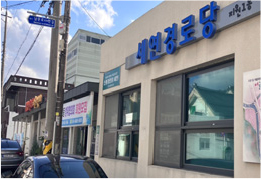
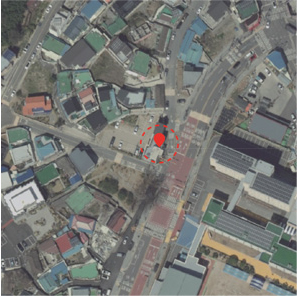
G1 Gyerim 2-dong 68, Donggye-ro Established in conjunction with the new administrative welfare center ’22. 12.
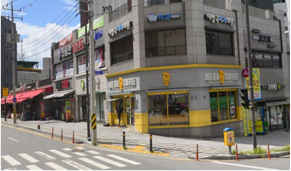
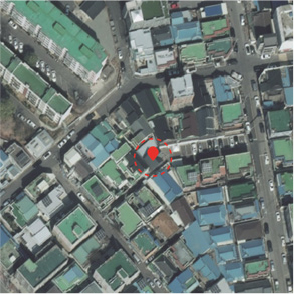
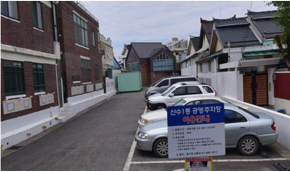
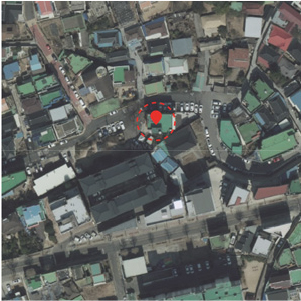
G2 Sansu 1-dong 5-42, Mudeung-ro 449beon-gil Newly built on public parking lot site ’20. 1.
G3 Jisan 2-dong 16, Bamsil-ro 4beon-gil Renovation of Dong-gye Senior Citizen Center ’19. 8.
G4 Jiwon 1-dong 1-1, Nammun-ro 634beon-gil Purchase of empty houses to improve slums around schools ’21. 3.
G5 Jiwon 2-dong 1, Hwasan-ro 337beon-gil Remodeling in connection with the extension of the second floor of the senior center ’22. 1.

2. 사례분석

본 연구의 사례분석은 다음 <Table 5, 6, 7, 8, 9>과 같다.

Table 5.

Case G1
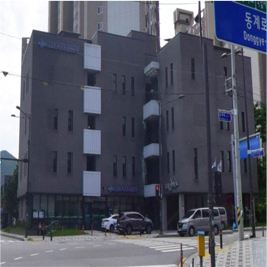
Scale 150 m2 floor 4th floor
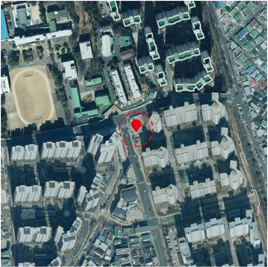
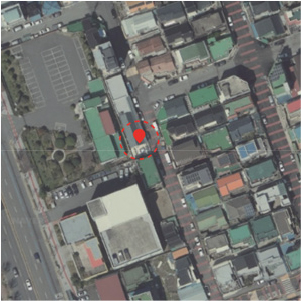
Exterior Image https://cdn.apub.kr/journalsite/sites/khousing/2025-036-03/N0450360309/images/Figure_khousing_36_03_09_T5-1.jpg Location https://cdn.apub.kr/journalsite/sites/khousing/2025-036-03/N0450360309/images/Figure_khousing_36_03_09_T5-2.jpg
Physical Access Elements
Elemental Evaluation Content Image
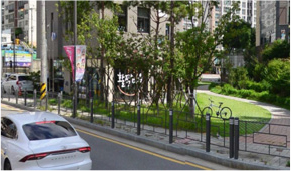
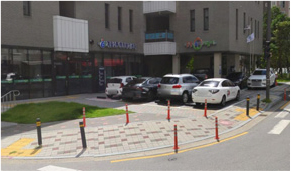
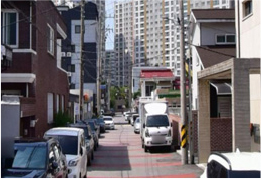
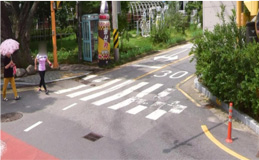
A A-1 Separation of sidewalk and roadway
Design of short flow through the building piloti
https://cdn.apub.kr/journalsite/sites/khousing/2025-036-03/N0450360309/images/Figure_khousing_36_03_09_T5-3.jpg
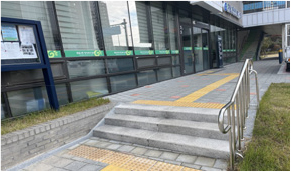
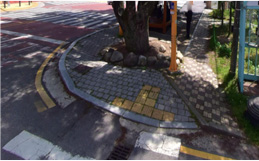
A-2 Step-free Walkway Design
Use of front tactile blocks
https://cdn.apub.kr/journalsite/sites/khousing/2025-036-03/N0450360309/images/Figure_khousing_36_03_09_T5-4.jpg
A-3 Use of artificial granite blocks on walking paths within 500 m of community space https://cdn.apub.kr/journalsite/sites/khousing/2025-036-03/N0450360309/images/Figure_khousing_36_03_09_T5-5.jpg
A-4 X -
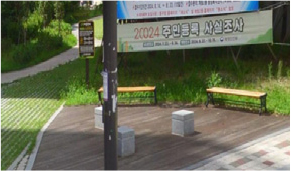
B B-1 Install benches on the side and back of the building https://cdn.apub.kr/journalsite/sites/khousing/2025-036-03/N0450360309/images/Figure_khousing_36_03_09_T5-6.jpg
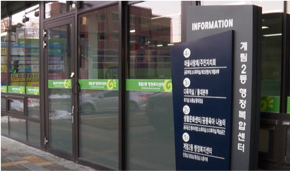
C C-1 Installation of comprehensive information signs on the front of the building https://cdn.apub.kr/journalsite/sites/khousing/2025-036-03/N0450360309/images/Figure_khousing_36_03_09_T5-7.jpg
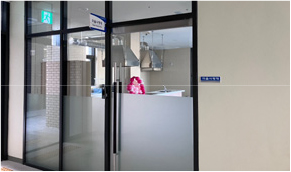
C-2 X Located on 4th floor https://cdn.apub.kr/journalsite/sites/khousing/2025-036-03/N0450360309/images/Figure_khousing_36_03_09_T5-8.jpg
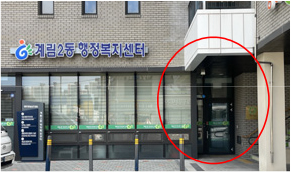
D D-1 X Facades of the same color and material. https://cdn.apub.kr/journalsite/sites/khousing/2025-036-03/N0450360309/images/Figure_khousing_36_03_09_T5-9.jpg
E E-1 Administrative welfare center on the first floor
Adjacent to mart, side dish store, etc.
https://cdn.apub.kr/journalsite/sites/khousing/2025-036-03/N0450360309/images/Figure_khousing_36_03_09_T5-10.jpg

A. Ensuring safe pedestrian access, A-1. Sidewalk-road separation, A-2. No unauthorized vehicle access, A-3. Non-slip flooring, A-4. No walking hazards. B. Optional convenience provision, B-1. Amenities along walking paths. C. Easy to find space, C-1. Wayfinding elements, C-2. Ground floor layout. D. Easy to find space, D-1. Visible main entrance. E. Connection with living facilities, E-1. Close to daily facilities.

Table 6.

Case G2
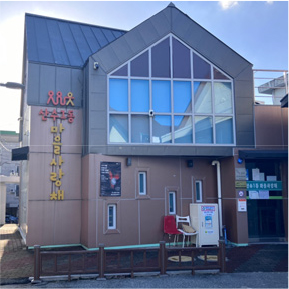
Scale 94.2 m2 floor 1th floor
Exterior Image https://cdn.apub.kr/journalsite/sites/khousing/2025-036-03/N0450360309/images/Figure_khousing_36_03_09_T6-1.jpg Location https://cdn.apub.kr/journalsite/sites/khousing/2025-036-03/N0450360309/images/Figure_khousing_36_03_09_T6-2.jpg
Physical Access Elements
Elemental Evaluation Content Image
A A-1 Separation of sidewalk and roadway
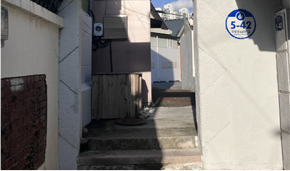
Narrow back door walkway of the building
https://cdn.apub.kr/journalsite/sites/khousing/2025-036-03/N0450360309/images/Figure_khousing_36_03_09_T6-3.jpg
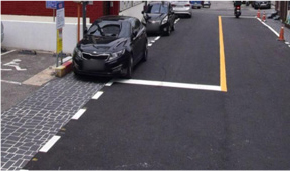
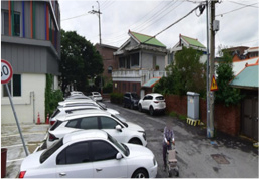
A-2 Unauthorized vehicle construction on the front sidewalk Steps due to stairs at the back of the building https://cdn.apub.kr/journalsite/sites/khousing/2025-036-03/N0450360309/images/Figure_khousing_36_03_09_T6-4.jpg
A-3 Use of anti-slip materials https://cdn.apub.kr/journalsite/sites/khousing/2025-036-03/N0450360309/images/Figure_khousing_36_03_09_T6-5.jpg
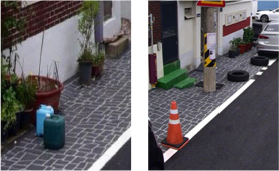
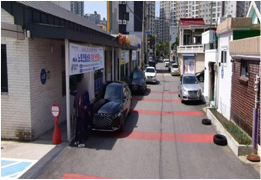
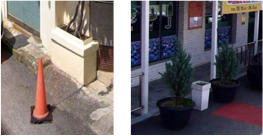
A-4 X Pedestrian obstruction as an item to prevent parking
(flower pots, old tires, rabicon, etc.)
https://cdn.apub.kr/journalsite/sites/khousing/2025-036-03/N0450360309/images/Figure_khousing_36_03_09_T6-6.jpg
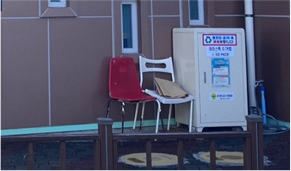
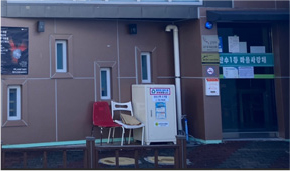
B B-1 X Placement of chairs in front of the building
Not functioning properly due to aging
https://cdn.apub.kr/journalsite/sites/khousing/2025-036-03/N0450360309/images/Figure_khousing_36_03_09_T6-7.jpg
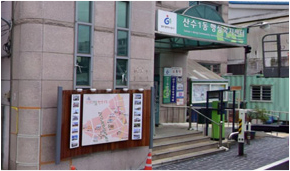
C C-1 Installation of signs that make it difficult to recognize clear information https://cdn.apub.kr/journalsite/sites/khousing/2025-036-03/N0450360309/images/Figure_khousing_36_03_09_T6-8.jpg
C-2 Located on the first floor above ground
Located away from the pedestrian path
https://cdn.apub.kr/journalsite/sites/khousing/2025-036-03/N0450360309/images/Figure_khousing_36_03_09_T6-9.jpg
D D-1 X Insufficient spatial awareness due to the entrance/exit route via the public parking lot https://cdn.apub.kr/journalsite/sites/khousing/2025-036-03/N0450360309/images/Figure_khousing_36_03_09_T6-10.jpg
E E-1 Adjacent to the administrative welfare center https://cdn.apub.kr/journalsite/sites/khousing/2025-036-03/N0450360309/images/Figure_khousing_36_03_09_T6-11.jpg

A. Ensuring safe pedestrian access, A-1. Sidewalk-road separation, A-2. No unauthorized vehicle access, A-3. Non-slip flooring, A-4. No walking hazards. B. Optional convenience provision, B-1. Amenities along walking paths. C. Easy to find space, C-1. Wayfinding elements, C-2. Ground floor layout. D. Easy to find space, D-1. Visible main entrance. E. Connection with living facilities, E-1. Close to daily facilities.

Table 7.

Case G3
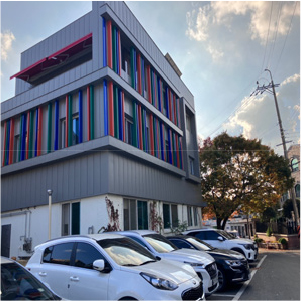
Scale 149.3 m2 floor 1th floor
Exterior Image https://cdn.apub.kr/journalsite/sites/khousing/2025-036-03/N0450360309/images/Figure_khousing_36_03_09_T7-1.jpg Location https://cdn.apub.kr/journalsite/sites/khousing/2025-036-03/N0450360309/images/Figure_khousing_36_03_09_T7-2.jpg
Physical Access Elements
Elemental Evaluation Content Image
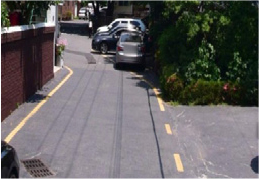
A A-1 Sufficient effective width mixed-use road https://cdn.apub.kr/journalsite/sites/khousing/2025-036-03/N0450360309/images/Figure_khousing_36_03_09_T7-3.jpg
A-2 Step-free Walkway Design
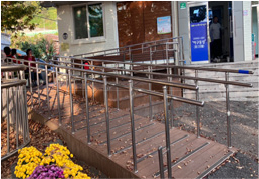
Installation of ramps and safety steps at entrances
https://cdn.apub.kr/journalsite/sites/khousing/2025-036-03/N0450360309/images/Figure_khousing_36_03_09_T7-4.jpg
A-3 X Use of asphalt with risk of falling due to black ice https://cdn.apub.kr/journalsite/sites/khousing/2025-036-03/N0450360309/images/Figure_khousing_36_03_09_T7-5.jpg
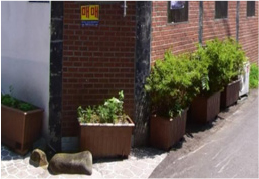
A-4 Pedestrian obstruction due to large flower pots, stones, etc. due to alley environment improvement project https://cdn.apub.kr/journalsite/sites/khousing/2025-036-03/N0450360309/images/Figure_khousing_36_03_09_T7-6.jpg
B B-1 Installation of pavilions within the path and benches in front of buildings https://cdn.apub.kr/journalsite/sites/khousing/2025-036-03/N0450360309/images/Figure_khousing_36_03_09_T7-7.jpg
C C-1 X -
C-2 Located on the first floor.
Difficult to secure visibility due to the zelkova tree
https://cdn.apub.kr/journalsite/sites/khousing/2025-036-03/N0450360309/images/Figure_khousing_36_03_09_T7-8.jpg
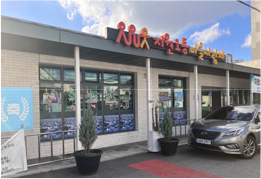
D D-1 Entrance design with high-saturation red and blue colored sheet https://cdn.apub.kr/journalsite/sites/khousing/2025-036-03/N0450360309/images/Figure_khousing_36_03_09_T7-9.jpg
E E-1 Located on the second floor, small library, adjacent to the senior center https://cdn.apub.kr/journalsite/sites/khousing/2025-036-03/N0450360309/images/Figure_khousing_36_03_09_T7-10.jpg

A. Ensuring safe pedestrian access, A-1. Sidewalk-road separation, A-2. No unauthorized vehicle access, A-3. Non-slip flooring, A-4. No walking hazards. B. Optional convenience provision, B-1. Amenities along walking paths. C. Easy to find space, C-1. Wayfinding elements, C-2. Ground floor layout. D. Easy to find space, D-1. Visible main entrance. E. Connection with living facilities, E-1. Close to daily facilities.

Table 8.

Case G4
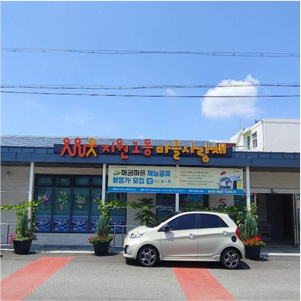
Scale 90.7 m2 floor 1th floor
Exterior Image https://cdn.apub.kr/journalsite/sites/khousing/2025-036-03/N0450360309/images/Figure_khousing_36_03_09_T8-1.jpg Location https://cdn.apub.kr/journalsite/sites/khousing/2025-036-03/N0450360309/images/Figure_khousing_36_03_09_T8-2.jpg
Physical Access Elements
Elemental Evaluation Content Image
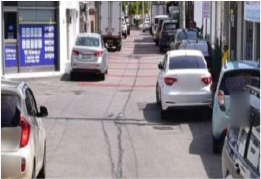
A A-1 X Mixed-use road with sidewalk
Pedestrian hazard when crossing with vehicles
https://cdn.apub.kr/journalsite/sites/khousing/2025-036-03/N0450360309/images/Figure_khousing_36_03_09_T8-3.jpg
A-2 Step-free Walkway Design https://cdn.apub.kr/journalsite/sites/khousing/2025-036-03/N0450360309/images/Figure_khousing_36_03_09_T8-4.jpg
A-3 X Asphalt with risk of falling due to black ice https://cdn.apub.kr/journalsite/sites/khousing/2025-036-03/N0450360309/images/Figure_khousing_36_03_09_T8-5.jpg
A-4 Placement of items that prohibit vehicle parking (Ravicons, flower pots, pet tires, etc.) https://cdn.apub.kr/journalsite/sites/khousing/2025-036-03/N0450360309/images/Figure_khousing_36_03_09_T8-6.jpg
B B-1 X -
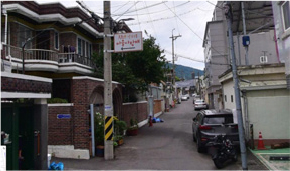
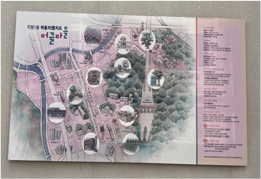
C C-1 Installation of village map signboard on exterior wall of senior center, but low visibility, making it difficult to obtain information https://cdn.apub.kr/journalsite/sites/khousing/2025-036-03/N0450360309/images/Figure_khousing_36_03_09_T8-7.jpg
C-2 Located on 1st floor https://cdn.apub.kr/journalsite/sites/khousing/2025-036-03/N0450360309/images/Figure_khousing_36_03_09_T8-8.jpg
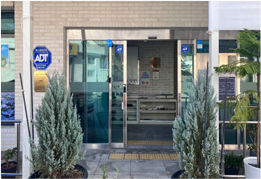
D D-1 Automatic door for space access, but difficult to find from the side https://cdn.apub.kr/journalsite/sites/khousing/2025-036-03/N0450360309/images/Figure_khousing_36_03_09_T8-9.jpg
E E-1 Located in the same area as senior center
Nearby elementary school, cultural center, pharmacy, etc.
https://cdn.apub.kr/journalsite/sites/khousing/2025-036-03/N0450360309/images/Figure_khousing_36_03_09_T8-10.jpg

A. Ensuring safe pedestrian access, A-1. Sidewalk-road separation, A-2. No unauthorized vehicle access, A-3. Non-slip flooring, A-4. No walking hazards. B. Optional convenience provision, B-1. Amenities along walking paths. C. Easy to find space, C-1. Wayfinding elements, C-2. Ground floor layout. D. Easy to find space, D-1. Visible main entrance. E. Connection with living facilities, E-1. Close to daily facilities.

Table 9.

Case G5
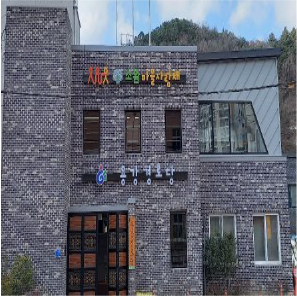
Scale 125 m2 floor 2th floor
Exterior Image https://cdn.apub.kr/journalsite/sites/khousing/2025-036-03/N0450360309/images/Figure_khousing_36_03_09_T9-1.jpg Location https://cdn.apub.kr/journalsite/sites/khousing/2025-036-03/N0450360309/images/Figure_khousing_36_03_09_T9-2.jpg
Physical Access Elements
Elemental Evaluation Content Image
A A-1 X Pedestrian path cut off. No sidewalk at the point of contact between space and ground. https://cdn.apub.kr/journalsite/sites/khousing/2025-036-03/N0450360309/images/Figure_khousing_36_03_09_T9-3.jpg
A-2 X Dangerous for pedestrians due to steps and uneven sidewalk https://cdn.apub.kr/journalsite/sites/khousing/2025-036-03/N0450360309/images/Figure_khousing_36_03_09_T9-4.jpg
A-3 X Danger of falling due to asphalt https://cdn.apub.kr/journalsite/sites/khousing/2025-036-03/N0450360309/images/Figure_khousing_36_03_09_T9-5.jpg
A-4 Installation of Ravicons to prevent stopping and secure pedestrian crossing in front of building https://cdn.apub.kr/journalsite/sites/khousing/2025-036-03/N0450360309/images/Figure_khousing_36_03_09_T9-6.jpg
B B-1 Installation of pavilions on the side of building, in front of traffic lights https://cdn.apub.kr/journalsite/sites/khousing/2025-036-03/N0450360309/images/Figure_khousing_36_03_09_T9-7.jpg
C C-1 X Instrumentation of direction with arrows and guide signs inside building https://cdn.apub.kr/journalsite/sites/khousing/2025-036-03/N0450360309/images/Figure_khousing_36_03_09_T9-8.jpg
C-2 X Located on the 2nd floor above ground https://cdn.apub.kr/journalsite/sites/khousing/2025-036-03/N0450360309/images/Figure_khousing_36_03_09_T9-9.jpg
D D-1 Use of colors that contrast with the building’s exterior wall materials https://cdn.apub.kr/journalsite/sites/khousing/2025-036-03/N0450360309/images/Figure_khousing_36_03_09_T9-10.jpg
E E-1 Located on the 1st floor of building by the path
Adjacent to elementary school, Ssamji Park, mart, etc.
https://cdn.apub.kr/journalsite/sites/khousing/2025-036-03/N0450360309/images/Figure_khousing_36_03_09_T9-11.jpg

A. Ensuring safe pedestrian access, A-1. Sidewalk-road separation, A-2. No unauthorized vehicle access, A-3. Non-slip flooring, A-4. No walking hazards. B. Optional convenience provision, B-1. Amenities along walking paths. C. Easy to find space, C-1. Wayfinding elements, C-2. Ground floor layout. D. Easy to find space, D-1. Visible main entrance. E. Connection with living facilities, E-1. Close to daily facilities.

3. 소결

본 연구는 광주광역시 동구의 마을커뮤니티공간을 중심으로 고령친화환경 조성을 위한 물리적 접근 요소를 분석하였다. 분석 결과 <Table 10>과 같으며, 생활시설과의 연계는 우수한 반면 전반적으로 고령자의 물리적 접근 측면에서 미흡한 것으로 나타났으며, 구체적으로는 다음과 같다.

Table 10.

Case Analysis Results

Physical Access Elements CASE
Item Detail G1 G2 G3 G4 G5
A. Ensuring safe pedestrian access A-1. Sidewalk-road separation X X
A-2. No unauthorized vehicle access X
A-3. Non-slip flooring X X X
A-4. No walking hazards X X X
B. Optional convenience provision B-1. Amenities along walking paths X X
C. Easy to find space C-1. Wayfinding elements X X
C-2. Ground floor layout X X
D. Visibility of space entrances and exits D-1. Visible main entrance X X
E. Connection with living facilities E-1. Close to daily facilities

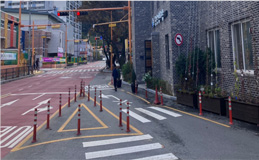
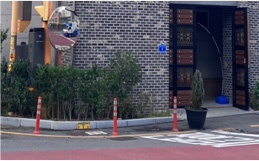
첫째, 안전한 보행권 확보 측면에서는 무단차 시공 등 기본적인 보행환경은 일정 부분 확보되어 있었으나, 전반적으로 보행자 안전을 고려한 설계는 미흡하였다. 대부분의 사례(G2,3,4)에서 보차혼용도로를 사용하여 고령자의 보행 안전이 보장받지 못하고 있었으며, 정차 차량, 화분, 폐자재 등의 물리적 장애물이 다수 존재한 것으로 나타났다. 또한, 보행로 재질 역시 차도 포장용인 아스팔트가 주를 이루어 낙상 위험이 높은 것으로 나타났다.

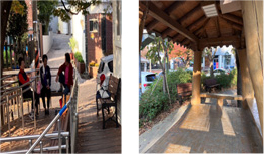
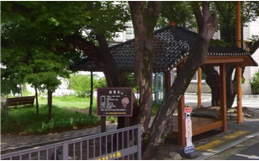
둘째, 선택가능한 편의 제공 측면에서는 전반적으로 낮은 것으로 나타났다. 일부 사례에서는 벤치나 정자 등 휴식공간을 마련하였으나, 이는 보행 동선 중간에 위치하기보다 커뮤니티공간의 전면이나 후면 등 접근성이 낮은 공간에 한정되어 있었다.

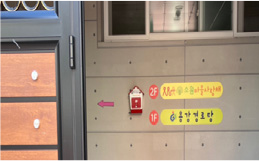
셋째, 찾기 쉬운 공간 구성은 일부 사례에서 안내표지판이 존재하였으나, 고령자의 인지 및 시각 특성을 충분히 반영하지 못한 것으로 나타났다. 설치된 안내물은 시인성이 낮고, 위치나 크기, 색상 대비 등이 부족하여 제 기능을 하지 못하였다. 공간의 배치 또한 주요 보행로와 연계되지 않거나 지하 및 상층부에 위치한 경우가 있어 접근이 어려운 것으로 나타났다.

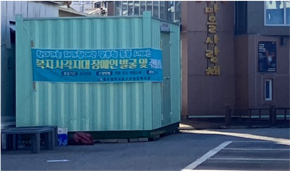
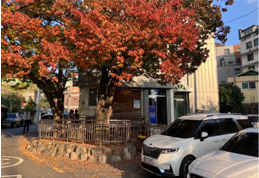
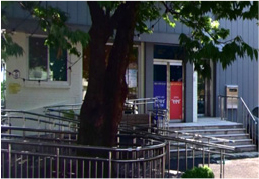
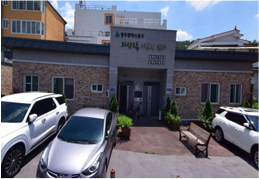
넷째, 공간 출입구의 시인성 역시 전반적으로 낮은 수준으로 나타났다. 일부 공간은 마을사랑채 로고(Logo) 디자인과 컬러를 활용해 정체성을 확보하고 있었으나, 다수 사례에서 출입구가 외벽과 동일한 재질 및 색상으로 구성되어 식별이 어려웠으며, 차량의 정차로 인해 출입구 시야 확보가 제한되는 등 개선이 필요한 것으로 나타났다.

다섯째, 생활시설과의 연계성은 비교적 우수한 것으로 나타났다. 대부분의 마을커뮤니티공간이 행정복지센터, 경로당, 작은도서관 등 유사 기능의 공공시설과 동일 건물 또는 도보 5분 이내 거리에 위치해 있는 것으로 나타났다.

Ⅳ. 결 론

사례분석 결과를 바탕으로 고령친화적 마을커뮤니티공간의 물리적 접근 요소를 개선하기 위한 방안을 모색하였으며, 연구 결과는 다음과 같다.

첫째, 고령자를 위한 안전한 보행환경은 유니버설 디자인 측면에서 개선되어야 한다. 유니버설 디자인은 다양한 연령, 체력, 이동 및 인지 능력을 가진 이용자가 공공공간을 안전하고 편리하게 이용할 수 있도록 계획할 수 있는 디자인으로 개인의 불편함을 최소화하고 만족감을 높여 사회참여를 촉진하는 구조를 실현한다. 이에 따라 고령친화적 마을커뮤니티공간은 유니버설 디자인 통합 가이드라인의 보행 안전을 위한 지침을 준수하여 고령자가 안전하게 보행할 수 있도록 커뮤니티공간에서 주거지에 이르는 최소한의 500 m 보행로에서 건물 주출입구까지 보행자와 차량의 완전히 분리해야 하며, 부득이하게 보차혼용도로를 설계해야 하는 경우는 보행자 우선 도로를 설정하거나 차가 통행하는 부분의 폭을 시각적으로 좁아 보이게 만들어 차량 접근 속도를 제한하고 보행자의 안전을 최우선으로 보장해야 한다. 보행로는 무단차로 설계하여 걸림돌 및 이동 장애 요소를 제거해야 하며, 우천 시에도 미끄럽지 않는 재질로 마감하여야 한다. 또한 보행로 인근 주민들은 낙상 및 사고 위험이 있는 물품을 적재를 금하고, 보행로의 제 기능을 온전히 할 수 있도록 해야 한다. 이러한 환경은 고령자가 건강하고 활력있는 노년기를 보낼 수 있는 고령친화도시의 기반을 마련하게 될 것이다.

둘째, 고령자의 보행 동선 내 벤치, 쉼터 등 휴게 기능을 갖는 시설 및 공간을 확충해야 한다. 주거지에서 500 m는 일반 성인에는 연속적으로 걸어갈 수 있는 가까운 거리이나, 신체적 노화를 겪고 있는 고령자에게는 보행 중 휴식이 필요한 거리이다. 이에 고령자의 체력과 이동 범위를 고려하여 보행 동선에서 일정한 간격으로 편의시설 및 공간을 효율적으로 배치하여 고령자가 부담 없이 이동할 수 있도록 지원해야 한다. 이러한 편의는 고령자가 단순한 휴식을 넘어 주민 간 연속적 교류와 커뮤니티 활성화를 도모할 수 있다.

셋째, 인지건강 디자인 측면에서 마을커뮤니티공간의 위치정보를 직관적이고 쉽게 이해할 수 있도록 하여 고령자의 독립적인 이동과 공간 접근을 지원해야 한다. 인지건강 디자인은 고령자의 신체, 정서, 사회적 자극을 통해 일상생활수행능력(ADL)을 원활하게 유지시켜 고령자가 거주하는 커뮤니티에서 잔존 능력을 유지하도록 지원한다. 이에 마을커뮤니티공간은 고령자의 시각적 특성을 고려하여 명확한 색 대비, 크고 명료한 문자 및 간결한 그래픽을 사용하여 출입구의 식별성을 강화해야 한다. 또한 주요 동선에 바닥 페인팅, 화살표, 안내표지판 등 시각적 유도 요소를 추가하여 공간의 위치정보를 명확히 제공하여 보행의 연속성을 도모해야 한다.

넷째, 고령자에게 필요한 생활・의료・복지 등 생활편의시설과 연계하여 마을커뮤니티공간의 일상적 접근을 용이하게 해야 한다. 고령자가 도보로 이동할 수 있는 일상생활권 범위를 설정하고, 마을커뮤니티공간이 중심이 된 보행네트워크를 따라 공원, 약국, 병원, 마트, 행정복지센터 등 생활편의시설을 배치해야 한다. 이는 고령자에게 편의를 제공할 뿐 아니라 마을커뮤니티공간의 자연스러운 방문을 유도하여 주민들 간 교류와 사회참여를 증진할 수 있으며, 더 나아가 지역사회 통합돌봄을 실현할 수 있는 정주환경을 실현하게 될 것이다.

본 연구는 본 연구는 ‘접근성’이라는 세부적 측면에 주목하여 마을 커뮤니티 공간 외부환경을 분석하였다는 점에서고령자 친화 환경 조성을 위한 물리적 환경 전반에 초점을 맞추어 진행된 선행연구와 차별성을 가진다. 특히 고령자의 일상생활에서 중요한 보행 동선과 이동 편의성, 접근 경로의 명확성 등을 중심으로 실질적인 개선방안을 제시하였다는 점은 물리적 환경의 세부 요소에 대한 깊이 있는 분석을 제공함으로써 기존 연구의 한계를 보완한다. 이는 향후 고령자 친화적 환경 조성에 있어 보다 구체적이고 실행 가능한 설계 기준을 마련하는 데 이론적 근거를 제공하며, 관련 분야 연구의 실천적 확장을 도모할 수 있다는 점에서 학문적 기여가 있다. 다만, 본 연구는 광주광역시 동구라는 제한된 공간적 범위 내에서 분석이 이루어졌다는 한계가 있어 향후 연구에는 연구 범위를 타 지역으로 확대하여 지역적 특성과 고령자의 다양한 요구를 비교・분석하고, 일반화 가능한 고령친화 설계 가이드라인 수립을 위한 기초자료로 활용될 필요가 있다. 더불어 고령자를 대상으로 한 설문조사 및 행동 관찰 연구를 병행하여 실제 이용자의 경험과 선호를 심층적으로 분석함으로써 공간 설계의 실효성을 높일 수 있을 것이다.


References

1

Ahn, E. S. (2022). A case study on private community space : Focusing on the changes of Maeul Bookcafe NAMU in Uijeongbu-si, Gyeonggi-do. Master's thesis, Sungkonghoe University.

2

Choi, H. D. (2023). Research on the aging design of indoor space under home-based pension mode - Self-care elderly in China as an example. Doctoral dissertation, Dongmyeong University.

3

Dong-gu, Gwangju Metropolitan City. Maeulsarangchae (2024). Retrieved from https://www.donggu.kr/menu.es?mid=a10402080100

4

Jeong, S. W. (2021). Planning of community center considering single-person households. Master's thesis, Konkuk University.

5

Kang, H. J. (2018). A study on revitalization of elderly community facilities in aging society. Doctoral dissertation, Kookmin University, Seoul.

6

Kim, E. H., & Moon, J. M. (2022). A study on design plan for Activation of village community space. Korean Design Research Society, 7(2), 96-105.

10.46248/kidrs.2022.2.96
7

Kim, E. J. (2020). A study on the design of multi-purpose space for community improvement in community service center: Focused on the case of Dobong-gu, Seoul. Master's thesis, Chung-Ang University.

8

Ko, Y. H., Han, S. Y., Her, J. S., & Lee, K. H. (2021). A study on measuring age-friendliness for Korean age-friendly communtites. Policy Research Report. AURI.

9

La, G. Y., & Kim, K. S. (2023). A study on the elderly friendly design of community public space for aging in place - centered on around elderly people living in the central area of Shanghai -. Korean Society of Spatial Design, 18(5), 385-398.

10

Lee, J. M. (2021). The types of mixed-use community spaces as a social infrastructure to revitalize a local community. Korean Society of Spatial Design, 16(3), 169-178.

11

Lee, Y. K., Kim, S. J., Hwang, N. H., Joo, B. H., Nam, E. H., Lee, S. H., Jeong, K. H., Kang, E. N., & Kim, K. R. (2020). National survey of older Koreans. Ministry of Health and Welfare. Korea Institute for Health and Social Affairs.

12

Ministry of Land (2020). Infrastructure and Transport, Road Design Guidelines for the Elderly.

13

Moon, J. Y. (2023). Development of planning guidelines on elderly welfare housing facilities for aging in community. Doctoral dissertation, Hanyang University.

14

Park, H. S., & Eun, N. S. (2020). A study on the planning and management of community space for the elderly in local community - Mainly on the elderly complex space in Japan. Korea Institute of Healthcare Architecture, 26(2), 49-61.

15

Park, J. Y. (2018). A study on evaluation of physical safety factors for the Age-Friendly City-Focused on Five Urban Communities in Seoul-. Journal of the Architectural Institute of Korea, 34(3), 117-128.

16

Seoul City Community Support Center (2018). Guide to Creating a Village Vitality Center.

17

Zhang, Y. T., Min, K. Y. (2024). Research on public spaces in senior-friendly communities. Korean Design Research Society, 9(2), 223-232.

10.46248/kidrs.2024.2.223
페이지 상단으로 이동하기