Research Article

Journal of the Korean Housing Association. 25 April 2025. 051-060
https://doi.org/10.6107/JKHA.2025.36.2.051

ABSTRACT


MAIN

  • I. 서 론

  •   1. 연구의 배경 및 목적

  •   2. 연구 방법 및 범위

  • II. 이론적 배경

  •   1. 노인요양시설의 로비 공간

  •   2. 바이오필릭 디자인과 생물학적 반응

  • III. 국내・외 노인요양시설 로비 이미지의 바이오필릭 디자인 특성

  •   1. 사례 조사 개요 및 방법

  •   2. 노인요양시설의 바이오필릭 디자인 패턴 분석

  •   3. 국내・외 노인요양시설의 바이오필릭 디자인 적용 특성 비교 분석

  • IV. 결 론

I. 서 론

1. 연구의 배경 및 목적

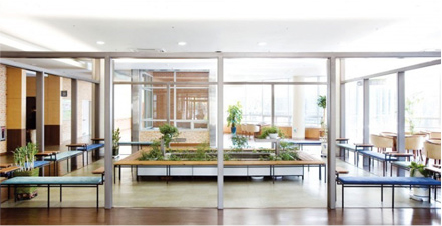
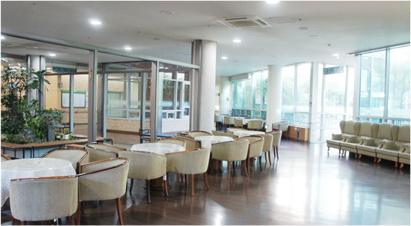
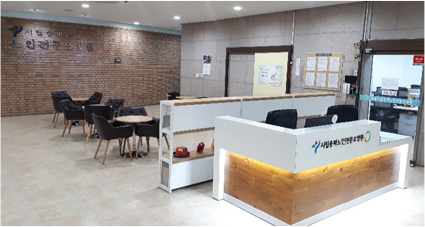
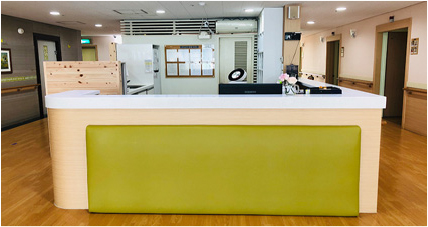
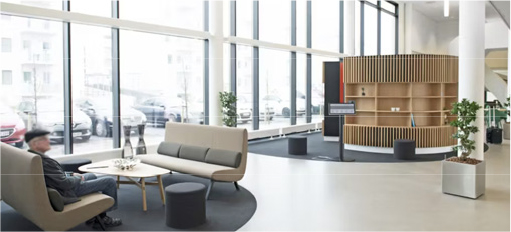
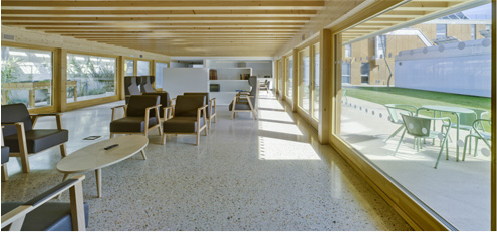
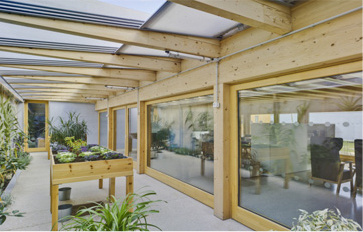
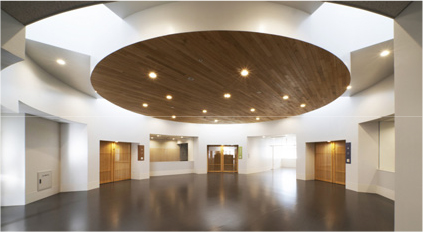
의료 기술의 지속적인 발전으로 평균 수명이 증가하면서 노인 인구가 증가하는 추세이다(Li et al., 2022). 최근 통계청 자료에 따르면, 우리나라 노인요양시설 및 입소자는 2013년 대비 2023년 기준으로 각각 81.2%, 87.6% 증가하였다. 노인요양시설은 신체 및 정신적 문제로 일상생활에 어려움을 겪는 노인들에게 전문적인 서비스를 제공하는 노인의료복지시설이다(Shi, 2019). 그러나 노인요양시설 입소자들은 새로운 생활환경으로 큰 변화를 경험하게 되며, 이는 사회적 단절 및 고립 등과 같은 문제로 이어져 삶의 질 저하를 초래할 수 있다(Lee, 2018a). 건축 분야에서는 지속적으로 자연 요소를 활용한 치유 환경 조성을 논의해 왔으며, 인간의 건강 및 삶의 질 향상에 대한 자연의 효과를 입증하고 있다(Lee, 2018b; Jang, 2021; Liu, 2023). 이와 같은 맥락에서, 인간에게 자연의 긍정적인 경험을 유도하는 설계 전략인 바이오필릭 디자인은 심리적 안정감을 제공하여 노화로 인한 정신건강 저하 및 질병을 겪는 노인들에게 긍정적인 효과가 있다(Kellert, 2018; Lee & Park, 2017). Liu(2023)는 노인의 신체・정신적 건강에 큰 영향을 미칠 수 있는 치유 환경을 위해 노인요양시설에서 바이오필릭 디자인을 적극 도입해야 하며, Kim & Lee(2023)는 노인에게 긍정적인 영향을 미치는 자연 경험을 위해 노인요양시설에서 자연 요소의 적용이 필요하다고 하였다. 이러한 선행 연구들은 노인요양시설에서 바이오필릭 디자인 적용의 필요성을 입증한다. 노인요양시설의 로비는 입소자들이 처음으로 맞이하는 공간으로, 외부와 자연스럽게 연결되어 시각적 개방감과 편리한 접근성을 제공한다(Choi, 2016). 이러한 특성은 입소자들에게 심리적 안정감을 주고, 시설 내에서 자연을 경험할 수 있게 하여 긍정적인 효과를 가져올 수 있다(Yoon, 2023). 따라서 본 연구의 목적은 생물친화적 관점에서 국내・외 노인요양시설의 로비 이미지를 비교 분석하고, 이를 토대로 바이오필릭 디자인 적용 특성과 향후 적용 방향을 논의하는 것이다.

2. 연구 방법 및 범위

본 연구의 방법은 첫째, 선행 연구 및 문헌을 통해 노인요양시설의 개념, 로비 공간의 특성, 바이오필릭 디자인 패턴 등을 고찰한다. 둘째, 국내・외 노인요양시설은 2000년 이후 설립된 시설로1) 노인요양시설, 요양원, 노인치매요양센터, Elderly Care Center, Nursing Home, Elderly Dementia Care Center와 같은 주요 키워드를 통해 사례를 선정하여 비교한다. 노인요양시설의 로비 이미지는 시설의 공식 홈페이지와 건축 프로젝트 데이터베이스인 Archidaily를 통해 수집하였다. 셋째, 바이오필릭 디자인 패턴을 분석의 관점으로 설정하여 국내․외 노인요양시설 로비 이미지의 적용 특성을 비교 분석한다. 넷째, 분석 결과를 바탕으로 향후 노인요양시설 로비 공간의 바이오필릭 디자인 적용 방향을 제안한다.

II. 이론적 배경

1. 노인요양시설의 로비 공간

급증하는 노인 요양의 수요 및 부양 부담은 충분한 노인요양시설을 확보하는 것과 동시에 요양환경의 질적 향상을 도모하는 것이 중요하다. 노인복지법 제34조 제1항에 따르면, 노인요양시설은 치매・중풍과 같은 노인성 질환으로 도움이 필요한 고령자에게 요양 및 보호, 그 밖의 편의 제공을 목적으로 한다. Lee(2023)는 노인요양시설에 입소하는 노인들은 새로운 환경에 적응하는 과정에서 자아 정체성의 혼란, 의사결정 능력의 제한, 그리고 기존 사회적 관계의 약화 및 단절과 같은 다양한 심리적, 사회적 변화를 경험한다고 하였다. 이는 입소자들에게 무력감, 상실감, 고독감 등 부정적인 요인으로 작용하며 삶의 질 저하로 이어진다(Lee, 2018a). 관련 선행 연구들은 이러한 부정적 영향을 완화하기 위해 노인요양시설 내 교류 및 전이 공간을 강조한다(Shi, 2019). 노인요양시설은 <Table 1>과 같이 거주 공간, 간호 공간, 공용 공간, 관리 공간으로 구성한다(Ryu, 2015).

Table 1.

Spatial Composition Of Elderly Care Facilities

Category Required room
Living space Bedroom, washroom and bathroom, toilet, etc
Nursing space Medical room, nurse’s station, caregiver’s room, physical therapy room, etc
Common space Lounge, lobby, program room, dining room and kitchen, etc
Management space Office, security room, storage and auxiliary facilities, electrical room, mechanical room, etc

노인요양시설의 공용 공간인 로비는 입소 시 가장 먼저 접하는 공간으로, 시설에 대한 전반적인 인식 및 편안함과 안정감을 제공하여 장소적 애착 형성에 도움을 준다(Yoon, 2023). 특히 노인요양시설은 인지 능력 장애로 목적 없이 배회하는 행동 특성을 보이는 치매 환자를 고려해 공간에 대한 인지성, 친숙한 분위기, 배회 경로 등을 지원해야 하는데(Kim & Yoon, 2018), 이러한 맥락에서 로비가 갖는 공간적 특성은 매우 중요하다. 로비는 각 공간과 연결되는 중앙 현관으로, 길 찾기에 핵심 역할을 하며, 주요 출입구와 인접하여 시설 내부와 외부를 연결하는 전이적 특성을 가진다(Lee, 2018b). 노인요양시설의 로비는 자연스럽고 편리한 접근 경로를 제공해야 하며, 시각적으로 개방된 구조를 갖추어야 한다(Yoon, 2023). 이를 통해 노인들이 시설 내에서만 생활하더라도 답답함을 덜 느끼고, 시설의 전형적인 이미지를 벗어나 더욱 안정적인 분위기를 경험할 수 있다(Choi, 2016). 따라서 노인요양시설의 공용 공간에 자연 요소를 도입하는 것은 노인의 우울 증상 완화, 의지력 향상, 긍정적 미래관 형성 등 심리적 건강 증진에 기여할 뿐만 아니라, 치매 노인의 신체적・정신적 치유와 삶의 질 향상에 필수적인 요소로 작용한다(Jun & Choi, 2009; Kim & Choi, 2011; Choi, 2016; Kwon & Lee, 2019).

2. 바이오필릭 디자인과 생물학적 반응

바이오필릭 디자인은 생명(Bio)과 사랑(Philia)의 합성어인 바이오필리아(Biophilia)에 기반한다(Fromm, 1973; Kellert, Heerwagen, & Mador, 2011). 바이오필리아는 오랜 시간에 걸친 진화 과정에서 형성된 자연과의 깊은 관계로 생물이 갖는 자연에 대한 본능적인 사랑을 말하는 가설이다(Wilson, 1984). 이를 건축공간에서 자연과의 상호작용을 통해 인간의 웰빙과 건강에 기여하는 전략이 바이오필릭 디자인이다(Kellert, 2018). 바이오필릭 디자인은 노화로 신체 및 정신적 기능 저하를 경험하는 노인에게 심리적 안정과 회복력 등 긍정적인 영향을 미친다(Lee & Park, 2017). <Table 2>는 바이오필릭 디자인 적용을 위한 세 가지 범주 및 14가지 패턴과(Browning, Ryan, & Clancy, 2014) 바이오필릭 디자인 패턴 관련 선행 연구2)를 통해 바이오필릭 디자인이 주는 생물학적 반응을 정리한 내용이다. 첫째, ‘공간 내부의 자연’ 범주는 공간 내부에서 동식물, 물뿐만 아니라, 바람, 소리, 향기 및 기타 자연 요소와의 직접적인 연결을 의미한다(Browning, Ryan, & Clancy, 2014). 이러한 연결은 혈압 및 심박수 감소, 평온함 및 집중력 향상에 도움을 준다(Lee & Park, 2018). 이 범주에는 외부 자연 환경을 조망할 수 있는 ‘자연과의 시각적 연결’, 청각, 후각, 촉각 등 비시각적인 자극을 통해 자연 환경의 변화를 느낄 수 있는 ‘자연과의 비시각적 연결’, 자연에서 발생하는 예측 불가능한 현상을 느낄 수 있는 ‘비리듬적 감각 자극’, 자연 환경에서 발생하는 온도 및 공기 흐름의 변화를 느낄 수 있는 ‘열과 공기의 이동’, 물의 요소를 통해 물의 특성을 느낄 수 있는 ‘물의 존재’, 시간에 따라 변화하는 자연의 빛 움직임을 느낄 수 있는 ‘다이나믹 & 확산적 빛’, 자연의 변화를 관찰 및 경험할 수 있는 ‘자연계와 연결’ 패턴이 해당한다(Browning, Ryan, & Clancy, 2014). 둘째, ‘자연의 연출’ 범주는 자연에서 발견되는 물체, 재료, 색상, 형태 등 자연의 간접적인 요소인 자연 유사물을 다룬다(Browning, Ryan, & Clancy, 2014). 이러한 자연 유사물의 활용은 혈압 감소, 스트레스 감소, 인지능력 상승에 기여한다(Sim, 2022). 이에 해당하는 패턴은 자연에서 관찰할 수 있는 유기적인 형태의 ‘자연을 닮은 형태’, 자연에서 얻을 수 있는 재료와 자연을 연상하게 하는 색상을 사용하는 ‘자연 소재 및 색상 활용’, 자연 환경에서 관찰할 수 있는 복잡하면서도 질서 있는 형태인 ‘복잡성과 질서’이다(Browning, Ryan, & Clancy, 2014). 셋째, ‘공간의 특성’ 범주는 공간 속에서 자연과 시야 확장, 미지의 매력, 그리고 안전 요소와 같은 의도적이고 매력적인 공간 구성을 결합하여 자연 경험을 제공한다(Browning, Ryan, & Clancy, 2014). 이러한 자연 경험은 피로도 감소, 안정감 증가, 집중력 향상에 영향을 준다(Liu, 2023). 해당 패턴에는 잠재적 위협으로부터 넓은 시야를 제공하여 개방감과 동시에 안전감을 느낄 수 있는 ‘전망’, 안전하고 보호받는 느낌을 느낄 수 있는 공간을 제공하는 ‘은신처’, 흥미로운 공간적 조건을 활용하여 공간에 대한 호기심을 유도하는 ‘신비감’, 공간에서 인지된 위험을 제공하여 모험심과 긴장감을 자극하는 ‘위험’이 있다(Browning, Ryan, & Clancy, 2014). 그러나 바이오필릭 디자인의 과도하거나 부적절한 적용은 집중력 저하, 불편함, 불안감, 눈부심으로 인한 시각 저하, 물리적 위험과 같은 부정적인 반응을 초래할 수 있다(Al-Aqqad & Yedekci, 2024). 따라서, 바이오필릭 디자인 요소의 적절한 선택과 균형 잡힌 적용이 중요하다.

III. 국내・외 노인요양시설 로비 이미지의 바이오필릭 디자인 특성

1. 사례 조사 개요 및 방법

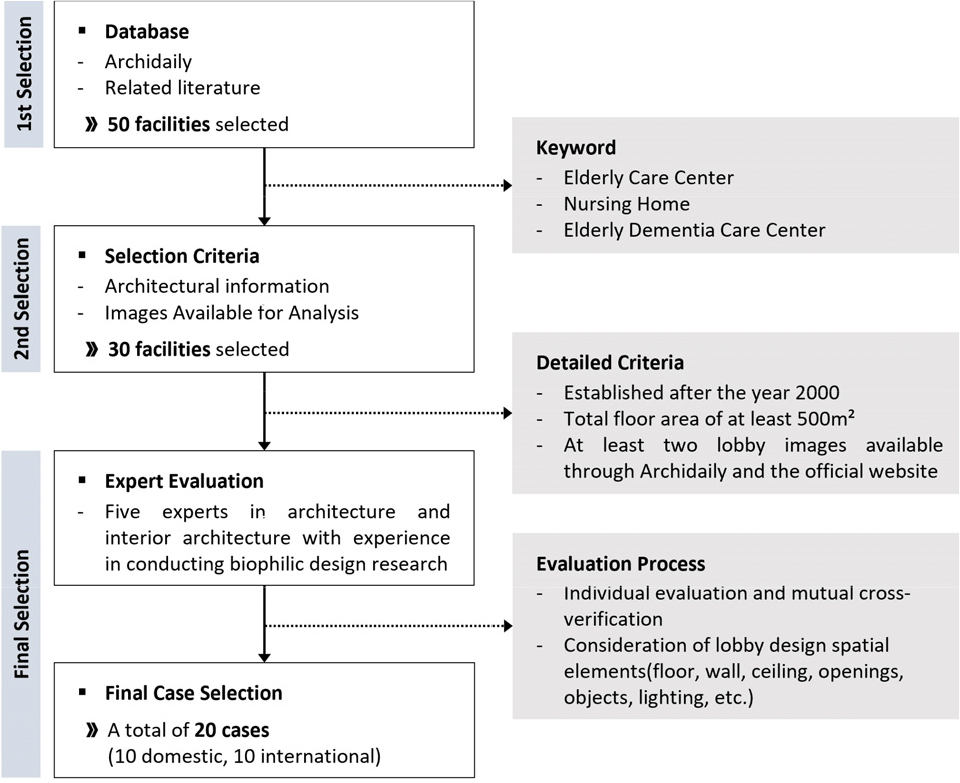
본 연구에서는 노인요양시설의 로비 이미지에 적용된 바이오필릭 디자인 패턴 특성을 분석하기 위해 국내 10개, 국외 10개로 총 20개의 노인요양시설을 선정하였다. 사례 선정 과정은 <Figure 1>과 같다. 먼저, 주요 키워드인 노인요양시설, 요양원, 노인치매요양센터, Elderly Care Center, Nursing Home, Elderly Dementia Care Center를 활용하여 관련 문헌 조사와 건축 프로젝트 데이터베이스 Archidaily를 통해 총 50개의 시설을 1차로 선정하였다. 이후, 2000년 이후 설립, 연면적 500 m2 이상, 시설의 공식 홈페이지 및 Archidaily에서 수집 가능한 로비 공간 이미지 최소 2장 이상의 기준을 적용하여 30개의 시설을 2차로 선정하였다. 최종적으로, 바이오필릭 디자인 연구 수행 경험이 있는 건축 및 실내 건축 전문가 5인의 개별 평가와 상호 교차 검증을 통해 국내 시설 10개와 국외 시설 10개 총 20개의 시설을 분석 대상 시설로 확정하였다. 이 과정에서 로비 공간의 주요 디자인 요소(바닥, 벽, 천장, 개구부, 오브제, 조명 등)를 고려하였다.

Table 2.

Biophilic Design Patterns and Biological Response
Biophilic design pattern Contents
Physical responses Psychological responses Behavioral cognitive responses
Nature in the space (NIS) Visual connection with nature (VC) Providing environments that offer views of the external natural environment
- Reduction in blood pressure and heart rate
- Improvement in immune function
- Reduction in stress
- Enhancement of self-esteem
- Decrease in depression and anxiety
- Increase in engagement
- Improvement in attention  
Non-visual connection with nature (NVC) Providing environments that allow the perception of changes in the natural environment through non-visual stimuli such as auditory, olfactory, and tactile sensations
- Reduction in blood pressure
- Alleviation of pain
- Reduction in stress and anxiety
- Promotion of mental health
- Enhancement of creativity
- Improvement in cognitive abilities
Non-Rhythmic sensory stimuli (NR) Providing environments that allow the experience of unpredictable phenomena occurring in nature
- Relaxation of heart rate
- Reduction in systolic blood pressure
- Mental relaxation
- Improvement in mood
- Increase in observational attention  
Thermal & airflow variability (TA) Providing environments that allow the experience of changes in temperature and airflow occurring in the natural environment
- Comfort - Improvement in spatial - Enhancement of concentration
Presence of water (PW) Providing environments that allow the experience of water elements and their characteristics

- Reduction in blood pressure - Decrease in heart rate
- Increase tranquility   - Promotion of social interaction  
Dynamic & diffuse light (DL) Providing environments that allow the experience of the changing movement of natural light over time
- Stabilization of circadianrhythms
- Alleviation of fatigue
- Increase in happiness   - Enhancement of creativity  
Connection with natural systems (CN) Providing environments that allow the observation and experience of changes in nature
- - Increase in positive emotions - Restoration of concentration
Natural analogues (NA) Biomorphic forms & patterns (B) Providing organic forms that can be observed in nature
- Reduction in heart rate - Reduction in stress - Improvement in memory
Material connection with nature (MC) Using materials sourced from nature and colors that evoke natural elements
- Reduction in diastolic blood pressure - Reduction in stress and fatigue   - Enhancement of creativtiy  
Complexity & order (CO) Providing complex yet orderly forms that can be observed in the natural environment
- - Reduction in stress - Improvement in cognitive abilities
Nature of the space (NOS) Prospect (P) Providing environments that offer a wide field of view to protect against potential threats, creating a sense of openness while ensuring safety
- Improvement in immune function - Increase in sense of security - Improvement in concentration
Refuge (R) Providing environments that create a sense of safety and protection
- - Provision of a sense of protection - Increase in attention
Mystery (M) Providing environments that stimulate curiosity about the space by utilizing intriguing spatial conditions
- Reduction in fatigue - Increase in preference for space - Improvement in concentration
Risk / Peril (RP) Providing environments that stimulate a sense of adventure and tension by introducing perceived risks in the space
- Increase in dopamine - Positive reactions - Improvement in problem-solving skills

https://cdn.apub.kr/journalsite/sites/khousing/2025-036-02/N0450360205/images/Figure_khousing_36_02_05_F1.jpg
Figure 1.

Process Of Case Selection

본 연구는 14개의 바이오필릭 디자인 패턴 중 노인 공간에서 중요한 일관성 및 안정성과 안전을 우선적으로 고려하였으며, ‘열과 공기의 이동’ 및 ‘위험’ 패턴을 제외한 12개 패턴을 다룬다. 노인은 체온 조절 능력 및 온도 적응 능력이 저하되어 환경 변화에 민감하게 반응하며, 저체온이나 고체온에 쉽게 노출될 위험이 높다(Kim, 2009). 이러한 점에서 온도 변동성이 큰 ‘열과 공기의 이동’ 패턴이 오히려 건강과 편안함을 저해할 수 있다고 판단하였다. 또한, ‘위험’ 패턴은 공간에 대한 모험 및 호기심을 자극하여 흥미롭고 매력적인 요소로 절벽 위의 산책로, 높은 곳의 투명 유리 바닥 등으로 구현될 수 있다(Browning, Ryan, & Clancy, 2014). 그러나 균형 감각 및 신경계 기능의 약화로 낙상 사고에 쉽게 노출되는 노인에게 위험을 초래한다(Kim & Choi, 2016). 이로 인해 안전을 최우선으로 고려해야 하는 노인 공간에 ‘위험’ 패턴을 적용하지 않는 것이 적합하다고 판단하였다. <Table 3>은 사례 분석 대상지의 개요를 보여준다.

Table 3.

General Information Of Elderly Care Facility

N. Name of nursing home (year of establishment) Location Building area (m2) Feature
A Turtle (2022) Gyeonggi-do, Korea 2433 Nursing home
B Seocho-gu (2011) Seoul, Korea 5698 Nrusing center
C Sanggye (2017) Seoul, Korea 1944 Nursing home
D Seoul Dongbu (2005) Seoul, Korea 10400 Nrusing center
E Seoul Songpa (2010) Seoul, Korea 3116 Nrusing center
F Himchan (2022) Gyeonggi-do, Korea 1468 Nursing home
G Aerim (2012) Busan, Korea 2370 Nursing home
H Elim (2023) Gyeonggi-do, Korea 669 Nursing home
I Our Family (2023) Pocheon, Korea 600 Nursing home
J Ingwang (2010) Gwangju, Korea 1828 Nursing home
K De Drie Platanen (2019) Ostend, Belgium 7800 Nursing home
L Ehpad d’orbec (2015) Orbec, France 5833 Nursing and retirement homes
M Kipling Acres (2013) Toronto, Kanada 30286 Nursing home
N The Nursing Home of the Future (2015) Nørresundby, Denmark 7500 Nursing home
O Passivhaus (2019) Camarzana de Tera, Spain 820 Nursing home
P 92-Bed (2014) Pont-sur-Yonne, France 5395 Nursing home
Q Simmering (2005) Vienna, Austria 30000 Nursing home
R Sakuragien (2020) Mutsu, Japan 5700 Nursing home
S Charm Premier Grand Gotenyama (2022) Shinagawa, Japan 4397 Nursing home
T The Kaze No Machi Miyabira (2014) Shobara, Japan 4603 Nursing home

2. 노인요양시설의 바이오필릭 디자인 패턴 분석

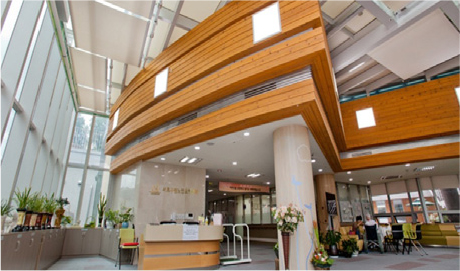
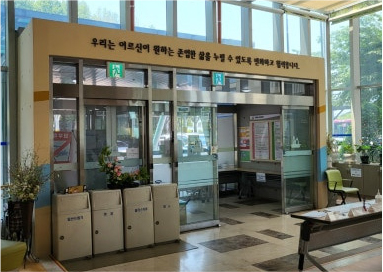
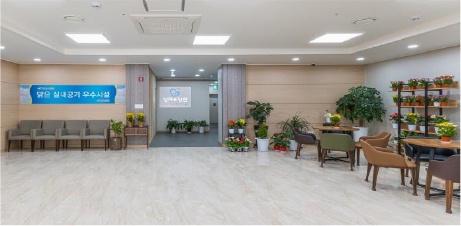
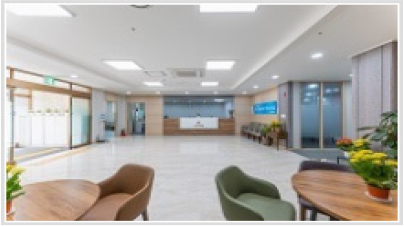
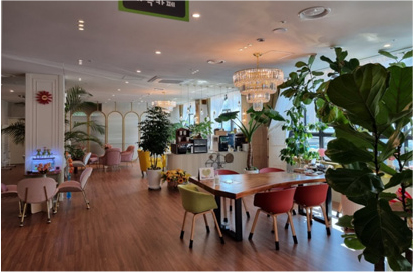
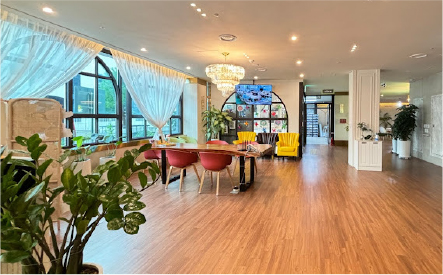
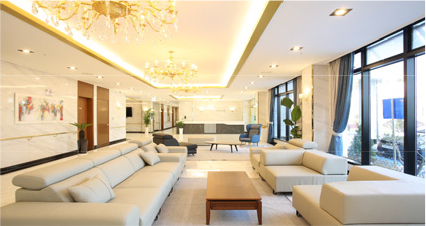
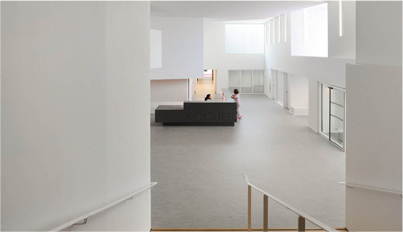
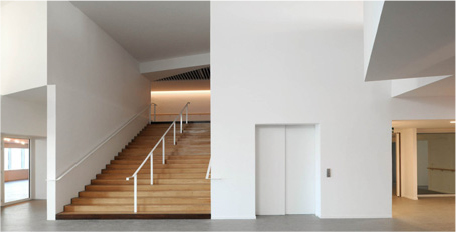
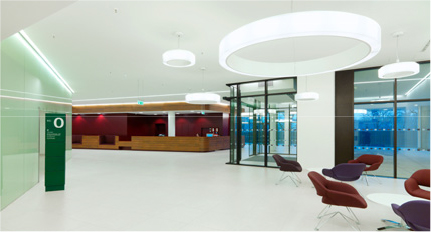
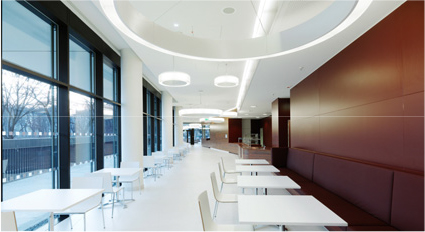
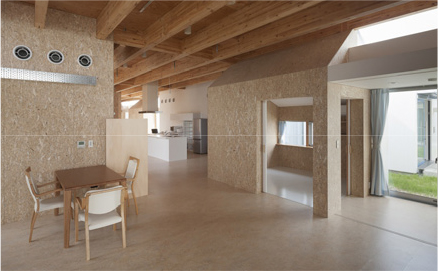
본 연구에서는 국내・외 노인요양시설 로비의 이미지를 <Table 2>에서 제시하고 있는 12개의 바이오필릭 디자인 패턴의 내용을 토대로 <Table 4>와 같이 노인요양시설 사례의 이미지에 적용된 바이오필릭 디자인 패턴 요소를 분석하였다.

Table 4.

Biophilic Design Elements Applied In The Lobby Of Elderly Care Facilities
N. Images and applied elements
A https://cdn.apub.kr/journalsite/sites/khousing/2025-036-02/N0450360205/images/Figure_khousing_36_02_05_T4-1.jpghttps://cdn.apub.kr/journalsite/sites/khousing/2025-036-02/N0450360205/images/Figure_khousing_36_02_05_T4-2.jpg
Large window, potted plant, wood (natural material), aquarium, green (natural color), curtain, partition
B https://cdn.apub.kr/journalsite/sites/khousing/2025-036-02/N0450360205/images/Figure_khousing_36_02_05_T4-3.jpghttps://cdn.apub.kr/journalsite/sites/khousing/2025-036-02/N0450360205/images/Figure_khousing_36_02_05_T4-4.jpg
Opening, large window, potted plant, wood (natural material), green (natural color), unique spatial structure
C https://cdn.apub.kr/journalsite/sites/khousing/2025-036-02/N0450360205/images/Figure_khousing_36_02_05_T4-5.jpghttps://cdn.apub.kr/journalsite/sites/khousing/2025-036-02/N0450360205/images/Figure_khousing_36_02_05_T4-6.jpg
Opening, potted plant, wood (natural material), green (natural color)
D https://cdn.apub.kr/journalsite/sites/khousing/2025-036-02/N0450360205/images/Figure_khousing_36_02_05_T4-7.jpghttps://cdn.apub.kr/journalsite/sites/khousing/2025-036-02/N0450360205/images/Figure_khousing_36_02_05_T4-8.jpg
Large window, potted plant, wood (natural material), green and blue (natural colors), multiple pathways
E https://cdn.apub.kr/journalsite/sites/khousing/2025-036-02/N0450360205/images/Figure_khousing_36_02_05_T4-9.jpghttps://cdn.apub.kr/journalsite/sites/khousing/2025-036-02/N0450360205/images/Figure_khousing_36_02_05_T4-10.jpg
Wood and brick(natural materials), green (natural color), shelf that blocks view
F https://cdn.apub.kr/journalsite/sites/khousing/2025-036-02/N0450360205/images/Figure_khousing_36_02_05_T4-11.jpghttps://cdn.apub.kr/journalsite/sites/khousing/2025-036-02/N0450360205/images/Figure_khousing_36_02_05_T4-12.jpg
Opening, large window, potted plant, curtain
G https://cdn.apub.kr/journalsite/sites/khousing/2025-036-02/N0450360205/images/Figure_khousing_36_02_05_T4-13.jpghttps://cdn.apub.kr/journalsite/sites/khousing/2025-036-02/N0450360205/images/Figure_khousing_36_02_05_T4-14.jpg
Large window, potted plant, wood(natural material), green (natural color), ceiling lighting design, curtain
H https://cdn.apub.kr/journalsite/sites/khousing/2025-036-02/N0450360205/images/Figure_khousing_36_02_05_T4-15.jpghttps://cdn.apub.kr/journalsite/sites/khousing/2025-036-02/N0450360205/images/Figure_khousing_36_02_05_T4-16.jpg
Large window, potted plant, wood (natural material), blue (natural color), curtain
I https://cdn.apub.kr/journalsite/sites/khousing/2025-036-02/N0450360205/images/Figure_khousing_36_02_05_T4-17.jpghttps://cdn.apub.kr/journalsite/sites/khousing/2025-036-02/N0450360205/images/Figure_khousing_36_02_05_T4-18.jpg
Windows in various locations, potted plant, wood and brick (natural materials), ceiling structure, curtain, blind, space separated from surroundings, indoor louver
J https://cdn.apub.kr/journalsite/sites/khousing/2025-036-02/N0450360205/images/Figure_khousing_36_02_05_T4-19.jpghttps://cdn.apub.kr/journalsite/sites/khousing/2025-036-02/N0450360205/images/Figure_khousing_36_02_05_T4-20.jpg
Opening, large window, potted plant, indoor landscaping, wood and stone (natural materials), blue (natural color), water wall
K https://cdn.apub.kr/journalsite/sites/khousing/2025-036-02/N0450360205/images/Figure_khousing_36_02_05_T4-21.jpghttps://cdn.apub.kr/journalsite/sites/khousing/2025-036-02/N0450360205/images/Figure_khousing_36_02_05_T4-22.jpg
Opening, potted plant, wood (natural material), blue (natural color), ceiling structure, ceiling lighting
L https://cdn.apub.kr/journalsite/sites/khousing/2025-036-02/N0450360205/images/Figure_khousing_36_02_05_T4-23.jpghttps://cdn.apub.kr/journalsite/sites/khousing/2025-036-02/N0450360205/images/Figure_khousing_36_02_05_T4-24.jpg
Windows in various locations and forms, unique spatial structure
M https://cdn.apub.kr/journalsite/sites/khousing/2025-036-02/N0450360205/images/Figure_khousing_36_02_05_T4-25.jpghttps://cdn.apub.kr/journalsite/sites/khousing/2025-036-02/N0450360205/images/Figure_khousing_36_02_05_T4-26.jpg
Large window, potted plant, green wall, wood (natural material), atrium, small space created by spatial structure
N https://cdn.apub.kr/journalsite/sites/khousing/2025-036-02/N0450360205/images/Figure_khousing_36_02_05_T4-27.jpghttps://cdn.apub.kr/journalsite/sites/khousing/2025-036-02/N0450360205/images/Figure_khousing_36_02_05_T4-28.jpg
Large window, potted plant, green wall, wood natural material), green (natural color), atrium, cave-like small space
O https://cdn.apub.kr/journalsite/sites/khousing/2025-036-02/N0450360205/images/Figure_khousing_36_02_05_T4-29.jpghttps://cdn.apub.kr/journalsite/sites/khousing/2025-036-02/N0450360205/images/Figure_khousing_36_02_05_T4-30.jpg
Large window and windows in various locations, potted plant, wood (natural material), green (natural color)
P https://cdn.apub.kr/journalsite/sites/khousing/2025-036-02/N0450360205/images/Figure_khousing_36_02_05_T4-31.jpghttps://cdn.apub.kr/journalsite/sites/khousing/2025-036-02/N0450360205/images/Figure_khousing_36_02_05_T4-32.jpg
Windows in various locations and forms, wood(natural material), atrium
Q https://cdn.apub.kr/journalsite/sites/khousing/2025-036-02/N0450360205/images/Figure_khousing_36_02_05_T4-33.jpghttps://cdn.apub.kr/journalsite/sites/khousing/2025-036-02/N0450360205/images/Figure_khousing_36_02_05_T4-34.jpg
Large window, wood (natural material), ceiling lighting design
R https://cdn.apub.kr/journalsite/sites/khousing/2025-036-02/N0450360205/images/Figure_khousing_36_02_05_T4-35.jpghttps://cdn.apub.kr/journalsite/sites/khousing/2025-036-02/N0450360205/images/Figure_khousing_36_02_05_T4-36.jpg
Wood (natural material), green (natural color), unique ceiling structure
S https://cdn.apub.kr/journalsite/sites/khousing/2025-036-02/N0450360205/images/Figure_khousing_36_02_05_T4-37.jpghttps://cdn.apub.kr/journalsite/sites/khousing/2025-036-02/N0450360205/images/Figure_khousing_36_02_05_T4-38.jpg
Large window, potted plant, wood (natural material), atrium
T https://cdn.apub.kr/journalsite/sites/khousing/2025-036-02/N0450360205/images/Figure_khousing_36_02_05_T4-39.jpghttps://cdn.apub.kr/journalsite/sites/khousing/2025-036-02/N0450360205/images/Figure_khousing_36_02_05_T4-40.jpg
Windows in various locations and forms, wood (natural material), curtain

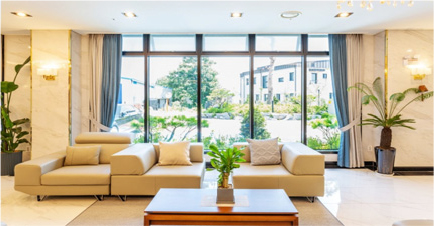
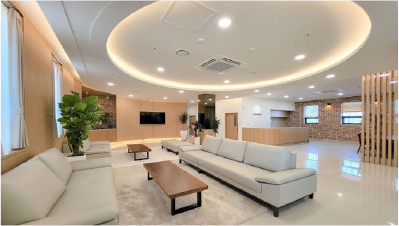
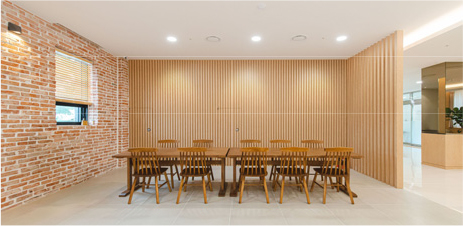
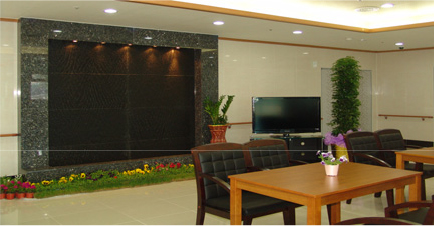
<Table 5>는 사례 분석을 통한 바이오필릭 디자인 패턴별 주요 요소와 각 시설마다의 바이오필릭 디자인 패턴 적용률을 보여준다. 분석 결과, 국내・외 노인요양시설의 이미지들은 ‘공간 내부의 자연’ 62.4%, ‘자연의 연출’ 21.3%, ‘공간의 특성’ 16.3%의 적용률을 보인다. ‘공간 내부의 자연’에 비해 ‘자연의 연출’과 ‘공간의 특성’ 범주의 적용률이 낮게 나타났다. 바이오필릭 디자인 패턴에서는 ‘자연과의 비시각적 연결’, ‘자연과의 시각적 연결’, ‘비리듬적 감각 자극’, ‘자연 색상 및 소재 활용’, ‘다이나믹 & 확산적 빛’이 상대적으로 높은 적용률을 보인다. 특히, 자연의 변화를 관찰하고 느낄 수 있는 창, 시각 및 촉감을 자극하여 자연을 느낄 수 있는 자연 재료인 목재 및 석재, 생물과의 접촉 및 생태계 관찰을 위한 조경 등이 주로 나타났다. 반면, ‘물의 존재’, ‘복잡성과 질서’, ‘은신처’ 패턴은 상대적으로 낮은 적용률을 보였다. 즉, 물의 역동적인 특성을 보여주는 요소, 구조적 패턴 및 공간 구획, 소규모의 휴식 공간 등의 고려가 필요하다.

Table 5.

Biophilic Design Elements Applied In The Lobby Of Elderly Care Facilities
Biophilic design pattern Key element Elderly care facilities subject to analysis Sub-
category
Total
A B C D E F G H I J K L M N O P Q R S T f % f %
NIS VC Opening 18 90 88 62.4
Large window
NVC Opening 20 100
Window
Indoor landscaping
Natural material
Water wall
Aquarium
NR Opening 18 90
Window
Landscaping
PW Water wall 2 10
Aquarium
DL Large window 16 80
Various type and position of window
CN Indoor landscaping 14 70
NA B Organic shape 7 35 30 21.3
MC Nature Material 18 90
Nature color
CO Ceiling Design 5 25
NOS P Large window with louver or curtain 9 45 23 16.3
Atrium
R Spatial structure 3 15
M Various pathway 11 55
Ceiling height difference
Partition
Spatial structure

3. 국내・외 노인요양시설의 바이오필릭 디자인 적용 특성 비교 분석

Table 6.

The Frequency Of Applying Biophilic Design Patterns In The Lobbies Of Domestic And International Elderly Care Facilities
Biophilic design Frequency of biophilic design pattern application
NIS https://cdn.apub.kr/journalsite/sites/khousing/2025-036-02/N0450360205/images/Figure_khousing_36_02_05_T6-1.jpg
NA https://cdn.apub.kr/journalsite/sites/khousing/2025-036-02/N0450360205/images/Figure_khousing_36_02_05_T6-2.jpg
NOS https://cdn.apub.kr/journalsite/sites/khousing/2025-036-02/N0450360205/images/Figure_khousing_36_02_05_T6-3.jpg
Domestic: https://cdn.apub.kr/journalsite/sites/khousing/2025-036-02/N0450360205/images/Figure_khousing_36_02_05_T6-4.jpg, International: https://cdn.apub.kr/journalsite/sites/khousing/2025-036-02/N0450360205/images/Figure_khousing_36_02_05_T6-5.jpg

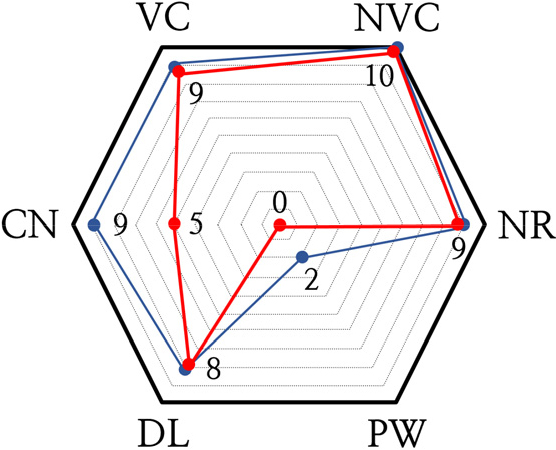
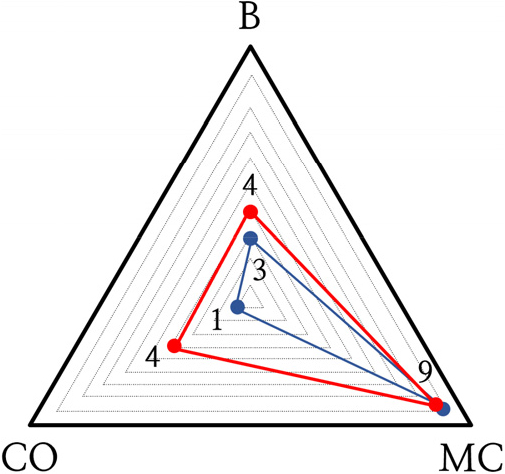
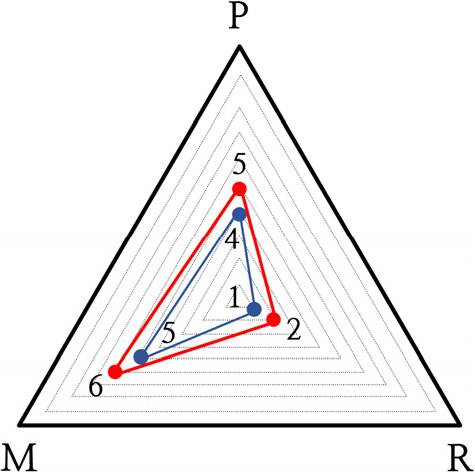
<Table 6>은 국내・외 노인요양시설 로비 이미지에 적용된 바이오필릭 디자인 패턴의 빈도를 나타낸다. 전체적인 분석 결과, 세 가지 범주에서 각각 국내는 67.1%, 18.6%, 14.3%, 국외는 57.7%, 24%, 18.3%의 적용률을 보였다. 노인요양시설의 바이오필릭 디자인 패턴 적용률은 국내 및 국외 시설 모두 ‘공간 내부의 자연’, ‘자연의 연출’, ‘공간의 특성’ 순으로 나타난다. 특히, 국내 시설은 ‘공간 내부의 자연’ 범주에서 국외보다 높은 적용률을 보이는 반면, ‘자연의 연출’ 및 ‘공간의 특성’ 범주에서는 국외보다 낮은 적용률을 보인다. ‘공간 내부의 자연’에서 국내는 ‘물의 존재’, ‘자연계와 연결’ 패턴에서 국외보다 높은 적용 빈도를 보인다. 특히, ‘자연계와 연결’ 패턴의 적용 빈도에서 큰 차이를 나타낸다. 국외 사례의 경우 창이나 자연 재료를 통해 자연으로부터 다양한 자극을 받을 수 있는 특성 적용은 높은 수준이나, 물을 포함해 자연과 접촉할 수 있는 직접적인 특성에 대한 고려가 부족함을 시사한다. 반면, 국내 사례는 물의 요소에 대한 고려가 부족하지만, 내부 공간에서 자연 요소와의 직접적인 연결이 잘 이루어지고 있음을 의미한다. ‘자연의 연출’에서는 ‘자연 색상 및 소재 활용’ 패턴에서 동일한 적용 빈도가 나타났고, ‘자연을 닮은 형태’ 및 ‘복잡성과 질서’ 패턴에서 국내가 국외에 비해 낮은 적용률을 보인다. 국내・외 시설 모두 ‘자연 색상 및 소재 활용’ 패턴은 높은 적용률을 보였으나, ‘자연을 닮은 형태’, ‘복잡성과 질서’ 패턴은 상대적으로 낮은 적용률이 나타났다. 특히, 목재와 같은 자연 재료가 주로 나타났으며, 벽면과 천장 등 공간의 구조적 측면에서 자연의 형태적 특성이 낮은 적용률을 보인다. ‘공간의 특성’에서는 모든 패턴에서 국내 사례가 국외보다 더 낮은 적용률을 보인다. 이는 국내 노인요양시설이 프라이버시와 개방적인 전망을 동시에 제공하는 요소, 매력적인 자연 환경적 특성, 다양한 공간의 구성 등의 적용률이 낮아 노인요양시설 계획 시에 고려가 필요하다는 점을 의미한다.

IV. 결 론

본 연구는 생물친화적 관점에서 국내・외 노인요양시설 로비 이미지에 적용된 바이오필릭 디자인 패턴을 시각적으로 비교 분석함으로써 향후 적용 방안 및 방향을 모색하였다. 이는 노인요양시설에서 중요한 공간적 특성을 갖는 로비의 바이오필릭 디자인 적용 방안을 제시함으로써, 증가하는 입소자들의 새로운 환경 적응과 치유 효과를 도모하는 데 의의가 있다.

본 연구의 결과는 다음과 같다. 첫째, 노인요양시설 로비 사례 이미지를 통해 바이오필릭 디자인 적용 특성을 분석한 결과, ‘공간의 특성’ 범주에 대한 전반적인 적용률이 낮았으며, ‘공간 내부의 자연’ 범주에 집중된 경향을 보인다. 구체적으로, 외부 자연의 변화를 관찰하고 느낄 수 있는 창, 시각 및 촉각을 자극하는 목재 소재, 생태계를 관찰하고 생물과 접촉할 수 있는 조경 등이 주로 나타났으며, 물을 이용한 벽천, 실내 연못, 수족관, 복잡성 및 질서를 고려한 벽과 천장 등의 형태, 소규모 공간을 위한 식물, 파티션 등의 요소 도입이 필요하다. 둘째, 국내・외 노인요양시설 로비 사례 이미지 비교 분석 결과, 국내 노인요양시설은 자연 환경을 관찰하고 생물과의 접촉 및 관찰을 지원하며, 석재 및 목재 위주의 자연 소재가 주로 나타났다. 그러나 혈압 및 심박수 감소시키고 평온함을 제공하여 사회적 상호작용을 촉진하는 데에 긍정적인 영향을 주는 수공간이 필요하다. 또한, 자연에서 관찰 가능한 유기적인 형태 및 질서 있는 복잡한 형태로 구성된 공간 구조, 프라이버시 및 개방감을 동시에 제공하는 요소, 휴식을 위한 소규모 공간의 적용률이 낮게 나타났다. 이들은 면역 기능 개선, 스트레스 및 피로도 감소, 집중력 향상 등에 영향을 주는 중요한 특성이므로 구체적인 적용 전략이 필요하다. 셋째, 국외 사례 중에서 M 시설, N 시설은 바이오필릭 디자인 적용 패턴이 각각 10개, 12개가 적용되었으며, NIS, NA, NOS 세 범주에 걸쳐 고른 분포를 보인다. 두 사례와 같이 안전함과 개방성을 동시에 느낄 수 있는 아트리움 및 개방형 다층 구조, 벽 또는 가구 등으로 보호받을 수 있는 아늑한 소규모 휴식 공간과 같은 요소 도입이 필요하다. 그러나 지나치게 개방된 공간은 치매 노인의 공간 인지력에 혼란을 야기하여 기본적인 일상생활 수행 능력에 있어서 의존도를 높일 수 있다(Marquardt et al., 2011). 또한, 소음이 많은 환경은 대화의 어려움을 초래하며, 이는 노인들의 사회적 상호작용을 방해할 수 있다(Mamo et al., 2019). 따라서 노인 시설에서는 시야를 차단하거나 보호받을 수 있는 가구 및 소규모 휴식 공간과 개방형 다층 구조의 조화를 이룬 설계가 필요하다. 넷째, 노인요양시설의 로비는 출입구와의 연계로 개방적인 특징을 가질 수 있으나, 분석 결과 대형 창을 제외한 다른 오픈스페이스 관련 요소들은 상대적으로 낮은 적용률을 보인다. 치매 노인을 고려한 특성으로 이해되지만, 바이오필릭 디자인은 시각적 개방성이 중요하므로 이러한 부분에 대한 해결 방안이 필요하다.

본 연구는 사례 분석을 위해 각 시설의 홈페이지와 Archidaily에서 수집한 시설의 로비 이미지를 활용하였으나. 각 시설당 2~4장의 제한된 이미지와 현장답사 및 도면 분석에 대한 부분을 다루고 있지 않다는 점에서 한계가 있다. 이러한 제한된 분석 자료는 연구 결과를 일반화하는 데 어려움이 있으므로, 사례별 바이오필릭 디자인 패턴의 적용 양상을 충분히 반영하여 분석하는데 한계점을 가진다. 또한, ‘다이나믹 & 확산적 빛’ 패턴과 같이 시간대와 계절 변화에 따라 달라지는 동적인 요소는 이미지 자료만으로 평가하기 어려움이 있다.

따라서 향후 연구에서는 사례별 시설 규모, 지역 및 문화적 특성 등 다양한 요인에 따라 바이오필릭 디자인의 적용 양상이 달라질 수 있음을 감안하여, 노인요양시설의 사례 선정 기준의 세분화, 현장답사 및 도면 분석, 시설 이용자들의 의식조사 등을 통해 바이오필릭 디자인 패턴과 요소들을 체계적으로 분석하고 적용 방향을 논의할 필요가 있다.

Notes

[1] 1) 1980년대에 생물학자 Wilson이 바이오필릭 개념을 처음 소개한 이후, 2000년대에 들어서면서 바이오필릭 디자인이 건축 분야에서 본격적으로 주목 받기 시작했다. 이에 따라, 2000년 이후에 설립된 노인요양시설이 바이오필릭 디자인 원리를 잘 반영하고 있을 가능성이 높아 분석 대상으로 선정하였다.

[2] 2) Browning et al.(2014), Sim(2022), Liu(2023), Lee & Park(2018)의 선행 연구의 내용을 재정리하였다. 인용된 연구들은 설문조사, 생리적 반응(심박수, 혈압), 선호도, 뇌파 분석 등의 연구 방법을 통해서 통계학적으로 유의미하게 도출된 결과이다.

Acknowledgements

본 연구는 2024년도 한국연구재단 연구비 지원에 의한 결과의 일부임(No. NRF-2021R1A2C1012228)(No. RS-2023-00275564).

이 논문은 2024년 (사)한국주거학회 추계학술발표대회에서 발표한 논문을 수정・보완한 연구임.

References

1

Al-Aqqad, A., & Yedekci, G. (2024). The considerations of biophilic design towards successful application in office building. Aurum Journal of Engineering Systems and Architecture, 8(1), 135-150.

10.53600/ajesa.1062961
2

Browning, W. D., Ryan, C. O., & Clancy, J. O. (2014). 14 Patterns of biophilic design. New York: Terrapin Bright Green.

3

Choi, J. E. (2016). A study on the methods of improving public space in nursing homes for senile dementia patients - Focused on the analysis of healing environment elements -. Master's thesis. University of Chung-Ang, Seoul.

4

Fromm, E. (1973). The Anatomy of Human Destructiveness. New York: Holt, Rinehart and Winston.

5

Jang, H. -A. (2021). A study on the space design plan using expression elements of biophilic design for a psychological treatment center for youths (Focusing on runaway youth facilities). Master's thesis. University of Hong-ik, Seoul.

6

Jun, M. -S., & Choi, S. -H. (2009). A study on the introduction of natural elements in public places of nursing homes - Focusing on ensuring the amenity of mediation, interaction, and rest places -. Journal of the Korean Institute of Interior Design, 18(1), 108-116.

7

Kellert, S. R. (2018). Nature by design: The practice of biophilic design. New Haven: Yale University Press.

10.12987/9780300235432
8

Kellert, S. R., Heerwagen, J., & Mador, M. (2011). Biophilic design: The theory, science and practice of bringing buildings to life. Hoboken: John Wiley & Sons.

9

Kim, D. E., & Lee, C. (2023). A study on the application of biophilic design to nursing facilities for the elderly in the Seoul metropolitan area. Journal of the Korea Institute of Spatial Design, 18(4), 63-78.
10

Kim, M. J., & Yoon, J. E. (2018). A study on the use of the common spaces for dementia view of the affordance. Journal of the Korea Institute of Spatial Design, 13(2), 217-228.

10.35216/kisd.2018.13.2.217
11

Kim, M. Y., & Choi, M. Y. (2016). Study on risk factor of falls of the aged for safety and security design. Journal of Integrated Design Research, 15(4), 154-162.

10.21195/jidr.2016.15.4.013
12

Kim, T. -M., & Choi, S. -H. (2011). A study on eco-friendly design techniques of nursing homes to improve quality of life for the aged - Focus on the passive design -. Journal of the Korean Institute of Interior Design, 20(6), 208-217.

13

Kim, Y. W. (2009). A study on clothing weight and cornel medical index in elderly women. Journal of the Korean Human Ecology,18(5), 1087-1092.

10.5934/KJHE.2009.18.5.1087
14

Kwon, O. G., & Lee, J. K. (2019). A study on therapy garden of nursing home. Journal of the Korea Institute of Spatial Design, 14(3), 265-278.

10.35216/kisd.2019.14.3.265
15

Lee, E. -H. (2018a). A qualitative study on factors for improving quality of life for long-term care residents: Perspective of long-term care residents and their families. Journal of Social Science, 29(4), 197-222.

10.16881/jss.2018.10.29.4.197
16

Lee, E. -H. (2023). A qualitative study on social relationships of nursing home residents with peers and staff. Journal of Humanities and Social Sciences, 31(2), 128-157.

17

Lee, E. -J. (2018b). Common use space design of biophilic design based welfare center for elderly. Master's thesis. University of Keimyung, Daegu.

18

Lee, E. -J., & Park, S. -J. (2017). A study on the application of bio-philic design pattern in house for elderly. Journal of the Architectural Institute of Korea, 37(1), 65-68.

19

Lee, E. -J., & Park, S. -J. (2018). The application of bio-philic design pattern in housing for cure of mental health - Focused on the elderly and baby-boomer -. Journal of the Architectural Institute of Korea Planning & Design, 34(2), 13-21.

20

Li, M. -Y., Liu, C. -Y., Feng, X. -Y., & Kwon, H. -J. (2022). A study on the healing environmental design in activity spaces at assisted living facilities - Focused on nature elements -. Journal of the Korean Institute of Interior Design, 24(1), 45-49.
21

Liu, H. I. (2023). A study on biophilic design characteristics of shared space for elderly facilities in china. Doctoral dissertation, University of Hoseo.
22

Mamo, S. K., Reed, N. S., McNabney, M. K., Rund, J., ... Lin, F. R. (2019). Age-related hearing loss and the listening environment: Communication challenges in a group care setting for older adults. Annals of Long-Term Care, 27(11), e8-e13.

23

Marquardt, G., Johnston, D., Black, B. S., Morrison, A., ... Samus, Q. M. (2011). Association of the spatial layout of the home and ADL abilities among older adults with dementia. American Journal of Alzheimer's Disease & Other Dementias, 26(1), 51-57.
10.1177/153331751038758421282278PMC3143576
24

Ryu, H. -J. (2015). A study on the characteristics of the public space design of nursing home. Journal of Construction and Environment Research Institute, 10(1), 193-201.

25

Shi, Q. Y. (2019). A study on the environmental characteristics and the evaluation of residential environment in the common space of small and medium-sized nursing homes. Master's thesis. University of Hanyang, Seoul.

26

Sim, J. H. (2022). A study on restorative environmental design for multi-unit housing architecture with biophilic design. Master's thesis. Seoul National University of Science and Technology, Seoul.

27

Wilson, E. O. (1984). Biophilia: The human bond with other species. Cambridge: Harvard University Press.

10.4159/9780674045231
28

Yoon, S. K. (2023). A study on the environmental improvement of elderly care facilities. Master's thesis. University of Dongguk, Seoul.

페이지 상단으로 이동하기