Research Article

Journal of the Korean Housing Association. 25 February 2022. 119-130
https://doi.org/10.6107/JKHA.2022.33.1.119

ABSTRACT


MAIN

I. 서 론

1. 연구의 배경 및 목적

한국의 65세 이상 고령인구 구성비는 2021년 16.5%로 전년대비 0.8% 증가하였으며 1970년(3.1%)에 비해 5배 증가한 수준이다. 이런 추세로 계속 증가한다면 2025년에는 20.3%로 초고령사회에 진입하고, 2067년에는 46.5%로 높아질 전망이다(Statistics Korea, 2021). 이러한 급속한 고령화 현상1)은 노인인구의 증가와 출산율의 급격한 감소,2) 그리고 의료기술의 발전에 따른 기대수명의 연장3)으로 인한 것으로 과다한 복지예산과 의료비의 증가4)로 이어진다.

병원이나 요양원 등 시설이 아닌 집에서 노년의 삶을 살고 싶으나 의료 및 복지서비스의 제공이 병원이나 시설 위주로 이루어지고 있기 때문에 선택의 여지가 없는 경우가 많다. 이에 정부는 급속한 고령화 사회를 대비하기 위한 정책으로 노인이 살던 곳에서 건강한 노후를 보낼 수 있는 커뮤니티케어(지역사회 통합돌봄)를 보편적으로 실현하고 이를 통해 복지의 사각지대가 없는 포용국가를 목표로 한다(Ministry of Healty and Welfare, 2018). 시설이나 병원이 아닌 이전부터 살던 익숙한 곳에서 생활을 하면서 주거, 의료를 비롯한 지역사회의 여러 가지 서비스 제공을 받으면서 노후생활을 할 수 있는 것은 인간적인 삶을 영위하는데 의미가 있고 중요한 일이라 할 수 있다. 2026년 보편적 실행을 위한 법·제도적 장치의 마련이나 실제 수요자들이 거주하는 지역사회 단위에서의 진행이 아직 미흡한 수준이긴 하나5) 현재 선도사업지역 추진 및 커뮤니케어형 도시재생뉴딜사업, 안심주택 보급 등 정부 및 지방자치단체들의 노력들이 계속되고 있다.

이에 본 연구는 현재 지자체별로 진행 중인 커뮤니티케어 사업의 내용을 살펴보고자 한다. 이러한 분석을 통해 커뮤니티케어 사업의 취지와 지역 및 대상자 특성에 맞게 계획이 이루어지고 있는지 검토하고, 지속적인 서비스 제공과 효과를 담보하여 포용복지의 보편적 실시에 도움이 되는 자료를 얻고자 한다.

2. 연구방법 및 범위

본 연구는 살던 곳에서 노후생활을 영위할 수 있도록 하는 통합돌봄 서비스 정책인 커뮤니티케어 선도사업의 내용에 대한 분석을 통해 사업목적과 특성에 부합하는 계획수립에 도움이 되고자 진행되었다.

커뮤니티케어의 보편적인 실시를 위해 정부는 2019년 선도지역 16곳을 우선적으로 선정하여 시범사업을 실시하였다. 본 연구에서는 16개 선도지역 중 가장 많은 비중을 차지하는 융합형 및 노인형 선도사업지역 13곳을 대상으로 주거, 보건·의료, 요양·돌봄, 서비스연계의 4대 핵심과제의 세부사업계획을 연구대상으로 한다. 이를 위해 선도지역의 지자체 홈페이지의 지역적, 인구학적 특성을 분석하였으며, 지자체에서 발간한 커뮤니티케어사업에 관련된 보고서를 자료로 분석하였다.

구체적인 연구방법은 다음과 같다.

첫째, 대상지역의 특성을 검토한다. 둘째, 지자체별로 시행계획 중인 커뮤니티케어 시범사업의 내용에 대해 분석한다. 마지막으로 사업의 핵심과제별 분석항목을 추출하여 항목별 세부사업을 분석하고자 한다. 이를 통해 보편적 실시를 과제로 한 커뮤니티케어의 효과적이고 지속적인 사업계획 수립에 도움이 되고자 한다.

II. 이론적 배경

1. 고령화와 노인복지

수명의 연장은 인류가 달성한 최대의 성과 가운데 하나로 영양과 위생, 의료, 보건, 교육, 경제생활이 개선되면서 인간의 장수(長壽)가 가능해졌다. 고령화는 한 나라의 발전정도와 연관이 있으며 사회전반의 모든 면에 중요하고 광범위한 영향을 미친다(UNFPA, 2012).6) OECD는 현재와 같은 속도로 인구고령화가 진행되고 근로연령대의 감소가 유지된다면 노인부양부담의 급격한 증가와 미래의 삶의 질, 공공재정의 지속가능성 등에 부정적 영향을 미친다고 전망하였다(OECD, 2019). 이에 따라 고령화에 대응하는 정책의 일환에서 유럽, 미국, 일본 등 선진국의 경우 병원·시설 위주의 케어에서 지역·재택에서의 케어로 변화하고 있다.

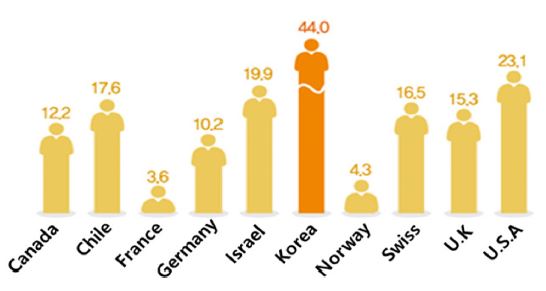
우리나라는 2014년 기초연금 도입 이후 기초연금액 인상과 수급자 증가로 인해 노인복지 예산이 빠르게 증가하고 있다(Yun, 2018). 2020년 기획재정부의 자료에 따르면 보건복지부 총예산은 전년 대비 9.2%, 사회복지 지출은 전년대비 9.4% 증가한 것에 비해 노인복지 예산이 경우 전년대비 12.8%로 상대적으로 높았다. 이는 노인복지 예산이 보건복지부 총예산에서 차지하는 비율이 전년대비 15.7%(2020년 5.2%→2021년 20.9%) 포인트 증가한 수치이다(Choi, 2020). 반면 노령인구의 빈곤률은 2016년 이후 개선되고 있다고는 하나 2018년 상대적 빈곤률이 43.4%로 65세 이하 인구의 빈곤률(11.8%)보다 월등히 높다<Table 1>. 이는 2017년 기준 OECD 가입국 중 가장 높은 수준이다(OECD, 2020)<Figure 1>.

Table 1.

The Poverty Rate for the Elderly*

20112012201320142015201620172018
18~65 (Working)14.013.913.813.612.912.912.611.8
66 More than (Retired)47.847.047.746.044.345.044.043.4

Data: Statistics Korea·Bank of Korea·Financial Supervisory Service, 「Household Financial Welfare Survey」

* Relative poverty rate (median income 50% or less)

https://cdn.apub.kr/journalsite/sites/khousing/2022-033-01/N0450330112/images/JKHA_2022_v33n1_119_f001.jpg
Figure 1.

Relative Poverty Rates in Major OECD Countries

Source. Statistics Korea, 2020 (%)

2020년부터 노령기에 접어들기 시작한 한국의 베이비부머세대7)는 부모 봉양에 대한 책임과 자녀양육에 대해 헌신적이면서도 자신 스스로가 노후를 책임져야하는 첫 세대이며, 기존 노령세대에 비해 고학력이고 고도의 경제성장기와 민주화를 경험한 세대로 경제적 수준은 비교적 높지만 동세대 내 소득격차가 크기 때문에 노후에 빈곤층으로 전락할 가능성이 높다(Yoo & Cho, 2020).8) 2019년 사회조사 결과 노후준비에 대한 사회조사에서도 자녀와 따로 살고 있으면서(70.7%), 생활비를 본인 및 배우자가 부담하고 있다(69.9%)라고 응답한 반면 노후준비가 되어 있다고 응답한 경우는 48.6%에 불과해9) 이들의 노후준비에 대한 미흡한 수준을 예측 할 수 있다.

따라서 안전하고 건강한 노후를 위해서는 기초연금 등의 경제적 지원뿐만 아니라 개인의 사회적·인간관계·문화적 욕구를 충족시키면서 인간다운 삶을 영위할 수 있는 실질적인 제도적·정책적 지원을 마련하는 것이 필요하다.

2. 커뮤니티케어(지역사회 통합돌봄)

커뮤니티케어란 돌봄이 필요한 주민들이 시설이나 병원에서 벗어나 기존에 살던 곳에서 개개인의 욕구에 맞는 서비스를 누리면서 지역사회와 함께 어울려 살아갈 수 있도록 주거, 보건의료, 요양, 돌봄, 일상생활의 지원이 통합적으로 확보되는 지역주도형 사회서비스 정책이다(MOHW, 2018). 이를 위한 정책의 추진방향은 당사자 인권 강조, 지방분권, 지속가능한 포용적 복지 등이 제시되었으며(Na, 2019), 자율적이고 자립적인 생활을 영위할 수 있는 생활환경의 개선과 지역사회의 의식변화, 관련기관의 지속적이고 실질적인 지원이 필요하다.

보건복지부는 돌봄을 필요로 하는 당사자의 삶의 변화를 지향하고 가시적인 성과 창출을 통한 정책의 장기적 동력을 확보하기 위해 <Table 2>의 추진방향을 수립하였다(Hwang, 2018).

Table 2.

The Direction of Community Care

SortMain content
Expanding social services such as care and safetyStrengthening the coverage of long-term care insurance, step-by-step expansion of social services, community safe life support service
Reinforcement of the community-centered health care systemEnsuring the right to health for the vulnerable at home, strengthening community-centered health care services
Improvement of the system that induces rational use of hospitals and facilitiesImprovement of the medical management system, improving the evaluation system to induce appropriate use
Support for settlement in the community of people in need of careSetting the path to return to the community, strengthening support for local settlement, such as housing linkage
Strengthening community care infrastructure and enhancing accountabilityEstablishment of a local public-private cooperation system, strengthening the linkage of local welfare resources, strengthen the role of local governments as subjects

Source. Reconfiguring the contents of the Community Care Promotion Roadmap.

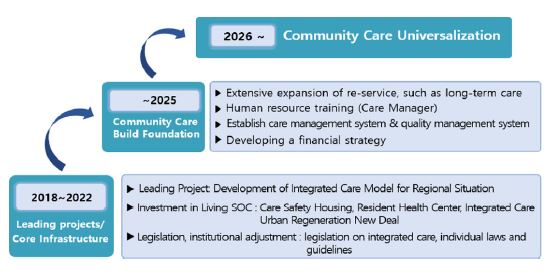
또한 2026년 커뮤니티케어의 보편적 실행을 위해 ‘25년까지 지역사회의 통합 돌봄 제공기반 구축의 목표를 달성하기 위해 로드맵을 설정하였다<Figure 2>10) 이와 같은 커뮤니티케어의 보편적 실행으로 사각지대 없는 포용복지를 구현하고 개인의 자립적이고 자율적인 생활을 보장함으로써 인간적인 삶의 권리를 존중하고 쇠퇴하고 있는 지역사회에 활력이 제공하는 것을 목표로 한다.
https://cdn.apub.kr/journalsite/sites/khousing/2022-033-01/N0450330112/images/JKHA_2022_v33n1_119_f002.jpg
Figure 2.

Roadmap for Community Care

III. 분석항목 선정

1. 커뮤니티케어 선도사업 선정지역

보건복지부는 2026년 커뮤니티케어(지역사회 통합돌봄) 보편실시를 목표로 하여 지역 실정에 맞는 서비스를 발굴하고 제공 모형을 개발·검증·보완하여 다양한 지역사회 통합돌봄 모형 개발하기 위해 2019년 지방자치단체의 신청으로 선도사업 계획을 실시하였다. 노화·사고·질환·장애 등으로 케어가 필요한 상태로 평소 살던 곳에서 지내기를 희망하는 사람을 대상으로 하며, 융합형·노인형·장애인형·정신질환자형으로 구분하여 신청하도록 하였다.11)

선정된 시범사업 계획은 모두 16곳으로 노인형 5곳, 융합형 8곳, 장애인형 2곳 그리고 정신질환자형 1곳이다 <Table 3>. 본 연구에서는 16개의 선도사업 선정지역 중 가장 많은 비중을 차지하는 13개의 노인형12) 커뮤니티케어 선도사업 선정지역으로 한정하여 커뮤니티케어 세부사업을 분석하고, 사회인구학적 특성과 지역적 특성을 분석하였다.

Table 3.

Leading Project Selection Region

Region (Sort*)TypeRegion (Sort*)Type
Bukbu, Busan (A)OlderCheongyang, Chungnam (I)Older
Busanjingu (B)Con.**Jeonju, Jeonbuk (J)Con.
Region (Sort*)TypeRegion (Sort*)Type
Seogu, Gwangju (C)Con.Suncheon, Jeonnam (K)Older
Bucheon, Gyeonggi (D)Con.Gimhae, Gyeongnam (L)Con.
Ansan, Gyeonggi (E)OlderSeogwipo, Jeju (M)Older
Namyangju,Gyeonggi (F)Con.Namgu, DaeguDisabled
Jincheon, Chungbuk (G)Con.Hwaseong, GyeonggiMentally Illness
Cheonan, Chungnam (H)Con.Jeju, JejuDisabled

*Regional Classification : Divided into Alphabets in the Data.

**Convergence type (Con.): Elderly+Disabled+Mentally Illness

2. 사업내용 분석 항목 선정

보건복지부는 1단계 노인 중심 커뮤니티케어 구현을 위한 기본계획에서 4대 핵심요소별 중점 과제를 제시하였다13)<Table 4>.

Table 4.

Key Tasks for Each Core Element

SortMain content
Expansion of housing support infrastructure- Expansion of care-safe housing for elder
- Implementation of a house repair project to live independently and prevent falls
- Community Care-type Urban Regeneration New Deal responds to the extinction of the village
Health and medical care- Expanding the “Residents’ Health Center” for visiting health care
- Providing visiting medical care that provides medical treatment and nursing at home
- Prevention and management for chronic diseases
- Exercise, health prevention, and other programs
- Support for discharged patients to return to the region through the “regional connection room”
Expansion of nursing and care services- Establishment of next-generation customized long-term care insurance for the elderly
- “Comprehensive Home Care Center”: Integrated service provision and quality improvement
- New home medical benefits: Support for discharged patients’ home life
Service connection- Supplier-centered service partitions are resolved
- Linkage and integration of public-private services in the local community
- Expansion of public-private service providers and case management personnel

Source. MOHW (2018). Basic Plan for Integrated Community Care

지자체별 커뮤니티케어 사업계획의 세부내용에 대한 분석을 위해 핵심요소별 중점과제의 내용을 바탕으로 하는 항목에 대해 전문가의 검토14)를 거쳐 각 핵심요소별 분석항목을 아래와 같이 제시한다<Table 5>.

Table 5.

Selection of Items for Business Analysis

SortItemStandard Contents of Classification
Housing supportHousing renovation and supplyHousing renovation and supply plan to prevent independent living and safety accidents
Care safe houseHousing renovation and supply plan based on service linkage such as home care service and door-to-door call
Improvement of residential environmentA village environment improvement project plan or an urban regeneration-linked project plan
Health and medical carePrevention and health careLinkage with local medical institutions for the prevention and management of chronic diseases, a health care plan using a local village hall, plans for health prevention and management using local resources
Discharged medical servicePlans related to medical services at home after discharge of long-term hospitalized patients
Institutional supportReorganization of laws and systems to ensure sustainability, plans for the establishment of health and medical centers and case management
Expansion of nursing and care servicesLife supportPlans to provide and link services related to daily life, such as meals and transportation
Home health care supportPlans for home care support and home care support for discharged patients
Institutional supportReorganization of laws and systems for sustainability, plans for the establishment of home care centers and case management
Service connectionService management and connectionEstablishment of a department dedicated to local governments that connects services and users and a care information counter
Public-private partnership networkA plan to form a network of services provided by local governments and the private sector
Building a platformAn online and offline space plan where information on available resources can be collected

IV. 연구 결과

본 연구에서는 1단계 노인중심의 커뮤니티 기본계획 사업내용을 기준으로, 조사대상을 노인형 선도지역으로 선정된 13곳의 시범사업 내용을 분석하였다. 계획 사업의 분석을 위해 각 지자체의 홈페이지 및 각종 보고서, 국민건강보험공단의 지역사회 통합돌봄 선도사업계획 안내에 소개된 각 지자체의 사업계획내용과 경기도의 정책연구보고서를 참고하였다.

1. 지역특성 분석

6개 광역시 중에서는 부산 2곳과 광주 1곳이 선도지역으로 선정되었다. 그리고 지방자치단체로는 경기도 3곳, 충북 1곳, 충남 2곳 그리고 전북, 전남, 경남 그리고 제주가 각 1곳이 선정되었다.15)

선정된 지역의 지역적 특성을 살펴보기 위해 각 지자체 홈페이지 및 2020년 통계연보, 사회조사연구보고서의 내용을 참고하였다. 본 연구에서는 사회인구학적 특성과 환경적 특성 중 지역별 면적, 인구밀도와 지역의 접근성 여부를 알아보기 위해 연결되는 주요 교통수단의 현황을 살펴보았다. 지역의 특성을 살린 커뮤니티케어 사업 구상을 위해서는 후속연구를 통해 활용 가능한 주거, 보건, 의료, 돌봄 전반에 걸친 요소들에 대한 지역여건들에 대한 통합적인 분석이 이루어져야 한다.

먼저 사회인구학적 특성으로 고령인구비율, 노령화지수, 평균연령 및 중위연령을 살펴보았다.<Table 6> 전국기준 고령인구비율16)은 16.0%이며, 노령화지수17)는 132.5이다. 전국 평균보다 높은 지역은 부산 북구, 부산진구, 충남 청양, 제주 서귀포 4곳이며, 고령인구비율과 노령화지수가 가장 높은 지역은 충남 청양군이다. 평균연령과 중위연령 또한 청양군이 다른 지역보다 높게 나타났다.

Table 6.

Sociodemographic Characteristics

RegionTotal population65 of age, olderRatio of the elderOld age indexAverage ageMiddle age
Nation.51,829.18,287.216.0132.542.943.9
A280.248.217.2163.444.647.2
B351.468.119.4211.044.946.1
C294.942.214.3116.542.043.4
D833.1113.913.7123.642.844.0
E717.375.110.596.341.242.3
F696.099.014.296.541.643.1
G89.513.515.1111.642.242.4
H682.272.010.674.539.239.1
I30.110.635.2509.253.858.3
J666.599.614.9113.841.542.3
K272.442.815.7113.942.544.2
L552.461.411.176.740.341.7
M178.633.818.9141.544.546.3

*As of 2020, the population unit is 1,000, and the ratio is %.

선정지역의 환경적 특성을 살펴보면 <Table 7>과 같다. 대지면적의 경우 전남 순천시가 가장 크고 충남 청양군이 가장 작은 반면, 인구밀도는 경기도 부천시가 가장 높고 충남 청양군이 가장 낮다. 광역시 및 경기도 지역은 대부분 대지면적에서는 낮은 수준이고, 인구밀도는 높은 수준으로 광역시 및 수도권지역의 과밀한 인구분포 특징을 보여준다. 또한 가구 수가 많은 지역은 경기도 지역 및 충남 천안시와 전북 전주시로 주로 서울시와 인접해 있거나 지역 내 존재하는 기업체 등의 지역 특성을 반영하는 것으로 보인다.

Table 7.

Environmental Characteristics

RegionSquare measure (km2)Population density (People/km2)Num. of households (1000th)The main means of transportation*
A39.267,211.1113.7Rail (1), Urban subway (2), E. H (1), N.H (2)
B29.6911,969.6158.0Rail (1), Urban subway (2), E. H (2), N.H (1)
C46.736,119.0125.0Rail (1), Urban subway (1), E. H (1), N.H (2)
D53.4015,124.5329.6Rail (1), M.S (1), E. H (1), N.H (4)
E155.734,196.4291.3Rail (1), M.S (1), E. H (2), NN.H (3)
F458.101,557.1255.6Rail (2), M.S (1), E. H (3), N.H (5)
G407.30202.237.4E. H (2), N.H (3)
H636.081,035.2284.8Rail (1), M.S (1), E. H (2), N.H (3)
I479.1064.2813.7E. H (1), N.H (3)
J206.043,189.6274.8Rail (1), E. H (2), N.H (5)
K910.96309.1110.8Rail (2), E. H (3), N.H (3)
L463.451,162.3214.2E. H (4), N.H (3)
M871.56208.373.6The north-south road (6), The east-west road (6)

*Excluding city bus information, the number in ( ) means the number of connected routes

**Express highway=E.H, National highway=N.H, Metropolitan subway=M.S

주요 교통수단을 살펴보면 섬지역인 제주도의 경우 섬의 종단을 연결하는 도로가 지역 주민들의 원활한 이동을 지원하고 있다. 제주도를 제외한 모든 지역의 경우 고속도로와 국도로 인접 지역과 연결되어 있으며, 선정된 13개 지역 중 철도가 연결되지 않은 지역이 4개 정도로 다른 지역과의 교통연결도 원활할 것으로 판단된다. 광역시의 경우 도시전철이 다른 지역과 연결되어 있으며, 경기도 지역은 수도권 전철이 서울과 연결되어 있어 이웃해 있는 지역과 원활한 이동이 가능하도록 지원하고 있다. 이외에도 광주서구의 경우 도시철도가 현재 1개 노선이 운행 중이며 1개 노선은 진행 중이라 곧 연결될 예정이다. 충북 진천과 충남 청양의 경우는 철도가 연결될 계획이다. 전반적으로 선도사업으로 지정된 지역의 경우는 인근 지역과 연결되는 교통수단이 발달되어 있는 것으로 판단된다.

2. 선도사업의 전반적 특성 분석

2025년 커뮤니티케어 제공기반 구축을 위해 주거지원, 건강·의료, 요양·돌봄, 서비스 연계의 4개 핵심 과제 부문에 관한 지자체별 사업내용을 분석하였다<Table 8>.

Table 8.

Number of Business Plans for Each Core Task

SortNumber of business plans for each local governmentTotal
ABCDEFGHIJKLM
Housing support5724643626115566
Health · medical care1513161415718191318201414196
Expansion of nursing · care services10108897812141426108144
Service connection522111121513126

4대 핵심과제 중 건강·의료 부분에 대한 사업계획이 가장 많았으며, 과제별로 살펴보면 주거지원, 보건·의료, 요양·돌봄 지원계획은 전남 순천의 사업계획이 가장 많았으며, 서비스연계부분은 부산 북구와 전북 전주의 사업계획이 가장 많았다.

3. 세부 분야별 특성 분석

1) 주거지원 부분의 사업 분석

주거지원의 경우 주택개조 및 공급, 케어안심주택, 주거지환경개선의 3개 항목으로 구분하여 세부사업계획을 살펴본 결과 주택개조·공급계획은 모든 지역에서 골고루 세부사업을 계획하였다<Table 9>.

Table 9.

Status of Detailed Housing Support Projects by Region

RegionDetailed business plan for each element
Housing renovation and supplyCare safe houseImprovement of residential environment
APublic rental modeling, Improvement of residential environmentCare safe house, Care safe house using permanent rental priceEstablishing a social mix ecosystem
BElderly care housing, Warning collection repair, and elderly-friendly residential environment-Urban Regeneration New Deal, Intermediate house operation, Saetteul village, Shared housing
CA renovation of a convenience houseOld care safe house-
DHouse repairsCare safe houseCommunity home, Experience home
EImprovement of residential environment, Residential clean projectReconstruction of elderly care safe housing and management and operationIntegrated care housing platform, Independent living experience home
FSupport for home repairs tailored to your health, Improvement of residential hygiene environmentHome-community care safe houseOur neighborhood chemi-house
GCustomized Residential Environment Improvement ProjectSupport care safe houseCommunity center
HWell-being home care, Public safe housing, Customized residential environment improvement-New garden project, New deal for urban regeneration, Home for the elderly living alone
IImprovement of customized residential environment, Welfare housing for the elderly--
JSupport for elderly people’s safe housing, Residential convenience facilities, and migration costsCare-safe house, Specialized program for the elderlyImproving the residential environment, Experiencing independent living
KPublic rental modeling, Safety inspection, Residential safety convenience facilities, Happy nest, Safe life prevention and cleaningCare safe houseStanding seats in the senior citizen center, Sacant house maintenance and housing improvement, Saetteul Village, Common living space for senior citizens living alone, Eoullim Welfare Center
LSimple house repairs, Self-reliance support housing, Home consulting supportCare safe houseImproving the residential environment
MSafe residential environment improvementCare-safe house, Safety LED sensor lighting to prevent lonely deathsIntegrated care sharing space, Integrated care center

노령층 안전사고를 예방할 수 있는 주택개조사업은 모든 지자체에서 공통으로 계획을 하고 있는 반면, 일부 지역은 방역과 청소를 지원하는 지역도 있었다. 케어안심주택지원의 경우 기존 노인거주 주택을 케어안심주택으로 활용하는 계획과 새롭게 조성하여 지원하는 계획으로 나누어볼 수 있다. 또한 주거지개선사업 부분에서는 국토교통부의 도시재생뉴딜사업이나 새뜰마을사업과 연계하여 마을환경을 개선하는 사업계획을 제안한 지역이 3곳이다.

지역 내 독거노인들이 함께 생활할 수 있는 공동주거 공간이나 공동돌봄공간을 계획한 지역도 상당수 있었다. 커뮤니티케어사업의 홍보와 지속성을 고려한 자립생활 체험공간을 계획하고, 지역 내 소셜믹스를 시도하는 사업계획을 제안하는 지역도 있다.

커뮤니티케어사업을 계획하고 있는 일부 지역의 경우 국토교통부 주관의 도시재생뉴딜사업과 새뜰마을사업과의 연계방안에 대한 여러 연구가 진행되고 있으며 실제 사업계획으로도 연결되고 있다. 현재 많은 지자체와 민간단위에서 제공되고 있는 노후주택에 대한 개보수 지원사업들과 중복되지 않게 주거환경의 개선을 필요로 하는 모든 대상자에게 골고루 서비스가 제공되는 사업계획이 필요하다.

2) 건강·의료 부분의 사업 분석

건강·의료지원 사업계획은 예방·건강관리, 퇴원의료서비스, 제도적 지원의 3가지 항목으로 나누어 분석하였다 <Table 10>. 예방·건강관리는 지역에 거주하고 있던 돌봄을 필요로 하는 대상자의 서비스 내용이며, 퇴원의료서비스는 요양원이나 병원 등에서 장기입원을 하다가 퇴원하여 돌봄을 필요로 하는 대상자로 구분하여 사업내용을 분석하였다. 또한 이러한 서비스를 가능하게 하고 지속성을 보장하기 위해 법적·제도적으로 지원하는 서비스 내용을 제도적 지원으로 구분하였다.

Table 10.

Status of Detailed Health and Medical Support Projects by Region

RegionDetailed business plan for each element
Prevention and health careDischarged medical serviceInstitutional support
ACustomized exercise prescription service, Senior doctor, Proper drug use, Oriental medicine doctor,
Primary care chronic disease management
Visiting clinic for discharged patients, Community connection, Visiting local medical institutions, Supporting discharge from medical institutionsVillage health center, primary medical visit fee, Case management of medical benefits, Home care benefits, Exclusive window for integrated care medical institutions, Community-centered end-of-life integrated care projects
BVisiting oriental medicine, Elderly dentist, drug management, Early examination of dementia, Chronic disease management of primary careHome hospice, Discharge patient support,
Medical institution discharge support
Primary medical visit fee, Home care benefit case management, Health living support center, Dementia treatment management fee support, Residents' self-governing public service construction project
CPrimary medical chronic disease management, Pain control visiting physician, Visiting oral care, Correct drug intervention, Nutrition and exercise intervention, Weak elderly exercise program, Welfare equipment support, Dementia relief care, Mental health high-risk group support projectDischarge support, Rehabilitation service, Visiting treatment for discharged patientsPrimary medical visit fee, Case management of medical benefits, In-home medical benefits, Integrated patient evaluation and care plan establishment
DOperation of a 100-year-old health room, In-depth treatment for high-risk groups, Visiting drug services, Local health care, Recovery of health functions outside of long-term care grade, Chronic disease management, visit treatment, Oral disease management and doctor systemDischarge support, Community connection of discharged patientsPrimary medical visit fee, In-home medical benefits, Training and caring activities for local leaders
EICT smart care, Jjakkung village care, Visit healthcare for the health vulnerable, Visit medicine support for doctor, pharmacist, Visit oriental medicine treatmentRegional connection of discharge support, Re-support, Visiting treatment of discharged patientsPatient evaluation and care plan establishment, Case management of medical benefits, Visitation fee, home care medical benefits, Dementia relief center, Care relief center are operated
FVisiting medication guidance, Visiting health care team, Visiting Western medicine treatment, Visiting oriental medicine treatmentCommunity connection of discharged patients, Discharge supportIn-home medical benefits
GBasic health care package, Hypertension diabetes management, Dedicated management pharmacist, Visiting medical care (visiting), Visiting professional nursing, Care-farm, Customized visiting exercise guidance, Visiting oriental medicine treatment, Early response health screen, Pain management serviceIntegrated patient visit treatment, Discharge support, Hospital connection of discharged patientsIntegrated patient evaluation and care plan, Health life support center, Neighborhood base care center, Medical benefit case management, Home care benefit
HHealth care packages, Visiting health care, Visiting oral health care, Visiting medication guidance, Visiting health and care programs, Visiting medical care, Primary medical chronic disease managementVisiting treatment, Home nursing, Visiting rehabilitation, Visiting treatment of discharged patients, Community connection of discharged patients, Discharge support, support for returning to daily life of dementia patients, Revitalize the discovery and connection of discharged patientsCardio-cerebrovascular complications examination fee, Primary medical visit fee, home care benefits, Dementia customized case management
IVisiting health management, visiting cognitive rehabilitation, Customized exercise guidance, Village doctor system, Online exercise guidance using ICT, Integrated management of the elderly living alone with initial dementia, Integrated health promotion projects for the elderly living alone with chronic diseasesDischarge support, community-centered rehabilitation projectInitial evaluation and monitoring of inpatients, Home care benefits, Case management of medical benefits, Patient evaluation and care plan establishment
JFall prevention, health guard, Disease prevention project, Anti-stop guard, Safe medication support, Customized visit exercise guidance, Integrated cognitive training, Primary medical chronic disease management, Visit guarantee repair serviceVisiting medical treatment for discharged patients, Community linkage, Pilot projects to support dischargeHealthy life support center, Establishment of a health and medical safety net,
Neighborhood health care center, Medical benefits case management, Home medical
benefits, First-line medical visits
KAI and IOT-based health care, IOT-based health and safety notification service for the elderly living alone, Mobility disabled, Rural medical services, Visiting exercise guidance, Visiting medical treatment support, Multi-drug management, Drug abuse guidance, Happiness planner, Primary medical chronic disease management, Dementia prevention programDischarge support, Visiting clinic for discharged patientsHealth living support center, Primary medical visits, Home care benefits, Medical benefit case management, Integrated patient evaluation, Care plan establishment
LVisiting medication, Visiting medical treatment,
Primary medical chronic disease management, Regional health care services using ICT between medical institutions, Intensive health care projects
Door-to-door nursing, Discharge support, Visiting treatment for discharged patients, Visiting medical institutions for cooperative medical institutionsHealth living support center, Medical benefit case management, Integrated patient evaluation and care plan, Primary medical visits, Home care benefits
MAdult walkers, safe medication support, Visiting medical care support, Visiting care and health care,
Customized visiting exercise
Community linkage support for discharged patients, Visiting rehabilitation classes,
Community linkage support for discharged patients
Intensive case management for vulnerable households, Integrated patient evaluation and care plan, Short-term shelter for the elderly with dementia, Housekeeping at primary medical institutions, Case management of medical benefits, Home care benefits

이러한 기준으로 선도지역의 사업내용을 분석한 결과 예방·건강관리 부문은 노인을 위한 방문 운동처방, 약물사용 안내, 만성질환을 위한 양·한방 방문진료 등의 사업계획이 가장 많이 구상되었으며, ICT나 IOT를 활용한 스마트 관리를 계획한 지역도 다수 있었다. 또한 치매예방을 위한 인지훈련이나 구강질환 서비스, 통증관리, 보장구 출장 수리 계획 등이 소수 지역에서 계획되었다.

퇴원의료서비스의 사업내용은 퇴원환자 방문 간호 및 진료와 지역사회 연계 방안에 관한 계획이 가장 많았으며, 호스피스 지원이나 방문 재활치료 서비스 계획이 소수 존재한다. 제도적 지원 항목은 의료급여 제도의 정비와 사례관리, 평가 및 케어 플랜 계획 위주로 이루어져있다. 그리고 서비스의 효율적 운용을 위한 센터 운영계획을 세우고 있는 지역이 소수 있었다.

주민의 건강관리를 위해 지역의 약사, 의사, 한의사, 치과의사 등 다양한 분야의 전문 인력이 서비스를 지원하는 사업계획은 구상되어 있지만, 민간자원들의 자발적 참여가 우선되어야 가능한 계획이므로 이에 대한 지역사회 차원의 인력배정, 원활한 서비스 제공을 위한 서비스 체계 구축 및 제도적 지원 문제에 대한 논의가 우선되어야 한다.

3) 요양·돌봄 부분의 사업 분석

요양·돌봄의 사업분석을 위한 항목은 서비스 대상의 건강 특성을 반영하여 생활지원, 재가건강관리지원, 제도적 지원으로 구분하였다. 지역거주 노인을 대상으로 하는 생활지원 서비스 사업계획의 내용과 퇴원후 자택에서 돌봄을 받는 거동불편환자를 대상으로 하는 재가건강관리지원 서비스 계획 그리고 이를 뒷받침해주는 제도적 지원으로 나누어 사업내용을 분석하였다<Table 11>.

Table 11.

Status of Detailed Nursing Care and Care Support Projects by Region

RegionDetailed business plan for each element
Life supportHome health care supporInstitutional support
AShort-term director support, Nutrition for the elderly, Hospital movement support, Daily life support area vouchersElderly mental health promotion, Artificial intelligence emotional care, Expanded housework and care services for discharged patients, IOT safety care sensor for the elderly living alone, Dementia management for the elderlyCare activist training project
BAlternative family business, Meal nutrition management, joint laundry room, AI companion robot support, Hospital accompanying service, Elder-elder-careFamily care service, AI emotional care support, Care family supportHome medical benefits
CCustomized nutrition food support, Hospital movement care taxi, Daily life support visit helperSupport for caring families, Emergency care services, Mental health programsDigital Integrated Welfare System, Public-private partnership happiness manager
DVillage care center (senior citizen center), Organizing and storage coordinator, Providing integrated care, Smart Integrated Care, Dietary nutritionManaging depression for the elderlyComprehensive home care center, Community care center
ECustomized care services for the elderly, Emergency safety service, Transportation service, Mobile support project, Customized nutrition service, Visiting lyrics supportCaring gap filling service, Base-type care safe housing integrated care cooperative model projectHealth love room for the disabled
FNutrition meal support, Hospital transfer supportSupport for caring families, Gap care, One-person care smart safety supportCase management, Non-face-to-face case management
GTransportation support, Supplies for nutritional lunch boxes, Meal support voucher, Support for independent living, Smart Safe Life SupportExpanding domestic care support for discharged patients, Support for housekeeping, Visiting bath support-
HTransportation support, Supplies for food ingredients, Care package, Integrated care and safe living support, Support for jobs and social activities for the elderlyMentoring mental health risk groups, Mental health support, Smart non-face-to-face care, Smart Integrate, Monitoring System, Prevention of lonely deathsSupport for case management targets, Comprehensive home care center
IMeal delivery business, Moving support, Transportation support, Village caregiver, Visiting beauty service, Public meals for senior citizens, Residents’ self-governing care, Connecting to a food bank connection, Elder-elder-careHealth and safety notification IoT service, Family care emotional support, Emergency care support, Customized care for the elderlyCare Center Home Welfare Project, Civil complaint handling room
JHealthy ingredients, Lunch box, nutritional food, Colleague applicants are supporting activities, Support for the elderly’s right to self-determinationSupport for the caring family, Emergency care support, Establishment of a mental health safety net, Self-reliance support coordinator, Family support for long-term care grade evaluationSmart care platform, Integrated system for independent living centered on the region, Senior citizens’ culture community, Integrated care supporters
KBeauty care, Mobile support (transportation card), Healthy meal support, Keeper of solitude, Mental health support for the elderly, Customized care services for the elderly, Rural healing village, farm creation, Free meal delivery, Healing program, Welfare club, Emergency safety notification service, Mobile laundry room, Daily life mobility support, Support for Food Bank, Support for side dishes, Neighbor Care-Smart Care (IOT), Care farm, Job for the elderly, Support for young and elderly settlementHome care visit support, Improving access to mental health servicesResidents’ self-governing public specialized projects, Day and night care facilities dedicated to dementia, Dementia relief center, SOS center, 1:1 happiness dream team management
LLyrics, emergency care, Hospital accompanying service, Smart Home, Meal & nutrition management project, Support for care packageSupport for visiting housekeeping and caregivers, Daily life support service, Mental health programs, Emotional support program-
MTotal care service for the elderly, Donating activities, Customized design for the elderly, Community kitchen, Dispatch of social workers to senior citizens’ centersFamily care service, Public guardianship service for dementiaSafe care platform using AI

3개 항목으로 구분하여 분석한 결과 생활지원 사업계획이 가장 많았으며, 지자체 중 전남 순천시가 가장 다양한 사업계획을 구상하였다. 생활지원 항목에서는 도시락이나 급식, 반찬 등의 식사 및 영양관리 서비스와 병원이나 이동을 위한 차량지원서비스가 대부분의 지역에서 계획되었다. 정리수납 서비스, 경로당 공공급식, 공동빨래방, 이미용 서비스 등 다양한 일상생활을 지원하는 사업계획이 소수 있었으며, 식사지원을 위한 지역바우처 활용계획도 구상하고 있다.

그리고 AI를 이용한 감성케어, 노인사회활동 지원, 어르신 자기결정권 지원과 같은 노인의 정서적 지원과 자존감 및 효능감 향상을 위한 사업을 계획한 지자체도 일부 존재하였다. 이는 노인을 능동적·주체적 사회구성원으로 인정하고 이들의 활동을 지원한다는 측면에서 매우 긍정적인 측면이 있다고 여겨진다.

재가건강관리지원 항목의 서비스 계획은 주로 간병지원과 돌봄가족의 정서적 지원, 가사지원 등으로 이루어져 있다. 거동이 불편한 사람을 대상이므로 돌보는 가족이나 간병인이 상주하여야 하므로 이들의 정서적, 신체적, 시간적 측면을 지원하는 서비스가 중요하다. 그리고 제도적 지원의 항목은 센터운영, 사례관리가 대부분이며 활동가를 양성하는 사업계획이나 서포터즈·멘토제도 운영을 구상하는 지역도 소수 있다.

4) 서비스 연계 부분의 사업 분석

서비스 연계는 서비스관리·연계, 민·관 협력 네트워크, 플랫폼 구축의 3항목으로 나누어 <Table 12>와 같이 사업을 구분하였다.

Table 12.

Status of Detailed Service Linkage Support Projects by Region

RegionDetailed business plan for each element
Service management and connectionPublic-private partnership networkBuilding a platform
AOperation of a dedicated department · information counter, Operation of a shared spaceSpecial social security support area, Integrated care start-up projectOperation of the care community platform
BOperation of a dedicated department · information counter-Welfare center project
COperation of a dedicated department · information counter, Monitoring and performance evaluation--
DOperation of a dedicated department · information counter--
EOperation of a dedicated department · information counter--
FOperation of a dedicated department · information counter--
GOperation of a dedicated department · information counter--
HOperation of a dedicated department · information counter-Developing and using communication apps
IOperation of a dedicated department · information counter--
JOperation of a dedicated department · information counter, Promotion of integrated care, Intensive education project, Meeting activation project-Establishing an integrated care platform
KOperation of a dedicated department · information counter--
LOperation of a dedicated department · information counterEstablishing a network of medical institutionsIntegrated care system construction project
MOperation of a dedicated department · information counter--

13개 지역 모두 서비스관리·연계항목에 해당하는 사업중 전담부서 및 통합 돌봄 안내창구의 운영사업을 계획하였다. 전담부서의 경우 지역 보건소 또는 행정부서 내 담당부서를 지정하여 커뮤니티케어 서비스를 전담하도록 하고 있었다.

광주 서구의 경우는 서비스의 관리를 위해 모니터링 및 성과평가를 계획하였고, 전북 전주시의 경우 통합 돌봄을 위한 홍보 및 교육사업 계획을 구상하였다.

민·관 협력네트워크 항목에서는 부산 북구와 경남 김해시만 사업계획을 구상하였다. 부산 북구의 경우 민간의 참여지원을 위한 스타트-업 사업을 계획하였고, 경남 김해의 경우는 지역의 의료기관 네트워크를 구축하여 서비스 제공에 활용할 계획을 구상하였다. 플랫폼 구축에 관한 사업계획은 13개 지역 중 5개 지역에서 온·오프라인 사업을 구상을 하였다.

서비스를 제공하는 기관과 필요로 하는 사람을 연결하고 서비스의 질을 관리하기 위한 조직의 운영과 지속적인 관리는 커뮤니티케어 사업의 보편적 시행과 지속적 운영을 위해 필수적인 사업계획이다. 더불어 공공기관은 물론 민간사업이나 지역자원봉사단체 등을 통해 제공되는 서비스의 내용을 지역주민들이 쉽게 알 수 있고 이용할 수 있는 협력네트워크 및 플랫폼 구축 사업계획이 좀 더 필요하다고 생각된다.

V. 결 론

본 연구는 포용적 복지를 실현하기 위해 현재 시행단계에 있는 커뮤니티케어의 선도사업계획을 분석하여 추후 진행되는 사업계획의 실용성과 효과성을 높이는 데에 있다. 커뮤니티케어는 우리나라의 급속한 초고령화 현상에 대응하기 위해 인간다운 삶을 영위하면서 자신이 살던 곳에서 노후를 보낼 수 있도록 포괄적이고 통합적인 서비스를 지원하는 정책으로, 이를 실현하기 위해 주거, 건강·의료, 요양·돌봄, 서비스 연계의 4개 핵심과제를 제시하였다.

본 연구에서는 2026년 보편적 실시를 위한 시범사업으로 선정된 선도지역 중 융합형 및 노인형 커뮤니티케어 사업에 해당하는 13개 지자체의 선도사업을 분석하였다.

고령화비율이 전국 평균인 16.0%보다 높은 지역은 부산 북구, 부산진구, 충남 청양군, 제주 서귀포 4곳이다. 고령인구비율과 노령화지수가 가장 높은 지역은 충남 청양군이며, 평균연령과 중위연령 또한 청양군이 다른 지역보다 높게 나타났다. 인구밀도의 경우는 경기도 부천시, 부산진구, 부산시 북구, 광주시 서구, 경기도 안산시 등의 순으로 광역시 및 수도권 지역의 과밀한 인구분포 특징을 보여준다. 고령인구비중이 높은 지역의 경우 건강이나 생활돌봄에 있어 공동돌봄의 세부사업을 다수 계획하고 있다. 하지만 노인에 대한 인식이나 기준이 변화하고 있는 만큼 건강상태나 나이에 따라 노년층을 구분하여 각각의 특성에 맞는 세부사업계획이 필요하다고 생각한다.

커뮤니티케어의 4대 핵심과제별 세부사업계획에 대한 분석결과와 논의는 다음과 같다.

첫째, 주거지원부분에서는 주택개조·공급, 케어안심주택, 주거지환경개선의 3개 항목으로 구분하여 세부사업계획을 살펴본 결과 주택개조·공급계획은 모든 지역에서 사업이 구상되었다. 그리고 독거노인들을 위한 공동주거공간이나 공동돌봄공간을 계획한 지역이 다수 있었으며, 커뮤니티케어의 홍보와 지속성을 위한 자립 체험공간 계획, 지역 내 소셜믹스를 시도하는 사업계획을 제안하는 지역도 있다. 현재 국토교통부 주관의 도시재생뉴딜사업이나 새뜰 마을사업과의 연계계획도 일부 지역에서 계획되어 있지만, 지자체 및 민간단위에서 제공되고 있는 노후주택에 대한 개보수 지원사업과 중복되지 않지 않도록 일원화된 제도의 개선과 함께 모든 대상자에게 골고루 서비스가 제공되는 사업계획이 필요하다.

둘째, 보건·의료 부분은 건강상태가 양호한 노인들을 대상으로 하는 예방·건강관리, 장기입원 요양원 및 병·의원 퇴원자가 대상인 퇴원의료서비스 그리고 제도적 지원의 3가지 항목에서 세부사업계획을 살펴보았다. 예방·건강관리 항목의 사업계획이 가장 많았으며, 노인을 위한 방문 운동처방, 약물 사용 안내, 만성질환을 위한 양·한방 방문진료, 치과질환 관리 등이 다수의 지역에서 계획되었다. ICT나 IOT를 활용한 스마트 관리나 치매예방을 위한 인지훈련, 통증관리, 보장구 출장 수리 계획 등이 소수 지역에서 계획되었다. 퇴원의료서비스의 사업내용은 퇴원환자 방문 간호 및 진료와 지역사회 연계 방안에 관한 계획이 가장 많았으며, 제도적 지원 항목은 의료급여 제도의 정비와 사례관리, 평가 및 케어 플랜 계획 위주로 이루어져있다. 대상자에 맞는 서비스내용을 적절히 계획하고 있으나 정서적 건강 측면을 고려한 서비스 제공에 대한 내용이 미흡하며, IT를 활용한 사업계획이나 인력에 대한 적절한 활용계획이 부족하다고 생각된다.

셋째, 요양·돌봄의 사업분석을 위한 항목은 서비스 대상의 건강 특성을 반영하여 생활지원, 재가건강관리지원, 제도적 지원으로 구분하여 살펴본 결과, 생활지원 사업계획이 가장 많았다. 식사 및 영양관리 부분에서는 도시락이나 급식, 반찬제공 서비스와 지역바우처 활용계획이 구상되었다. 또한 병원이나 이동을 위한 차량지원서비스, 정리수납 서비스, 경로당 공공급식, 공동빨래방, 이미용 서비스 등을 통해 다양한 일상생활을 지원하는 사업을 구상하였다. 재가건강관리지원은 간병지원과 돌봄가족의 정서적 지원, 가사지원 등으로 이루어져 있으며, 제도적 지원의 항목은 센터운영, 사례관리가 대부분이다. 노인 연령층이 많은만큼 일부지역에서 사업계획 중인 초기노령인구가 후기노령인구를 돌보는 노노(老老)케어의 형태에 대한 계획도 좋은 대안이라고 여겨진다.

마지막으로 서비스 연계는 서비스관리·연계, 민·관협력 네트워크, 플랫폼 구축의 3항목으로 나누어 사업을 살펴보았다. 13개 지역 모두 지역 보건소 또는 행정부서 내 담당부서를 지정하여 통합돌봄 안내창구와 연계되도록 계획하였다. 또한 일부 지역에서는 서비스의 관리를 위해 모니터링 및 성과평가를 계획하거나, 통합돌봄을 위한 홍보 및 교육사업 계획을 구상하기도 하였다. 효율적이고 지속적인 사업계획을 위해서는 서비스의 내용과 대상을 연결해주는 중간자의 역할이 매우 중요하다. 이를 위한 지역자원의 교육 및 활용에 대한 사업계획과 지속적인 모니터링 계획이 구상되어져야 한다고 생각한다.

현재 선도지역의 커뮤니티케어 사업은 시행 중에 있으므로 진행되는 과정에서 사업계획의 성과 및 효과성을 분석하고 평가하여, 이후에 실시되는 사업에 적합한 모델을 제시하여야 한다. 또한 우선고려 대상은 노인과 장애인, 정신질환자이지만, 지역사회 내에서의 통합돌봄이 실현되기 위해서는 지역의 돌봄을 필요로 하는 모든 구성원들의 다양한 요구를 만족할 수 있어야 한다. 따라서 진정한 커뮤니티케어의 효과적이고 지속가능한 운영을 위해서는 서비스를 제공하는 공공 및 민간의 전문 인력뿐만 아니라 지역 내 돌봄을 제공할 수 있는 주민들에 대한 지원도 매우 중요하다.

커뮤니티케어의 올바른 자리매김을 위해서는 노인을 능동적인 주체로 새롭게 인식하고 복지부터 주택, 일자리, 문화여가 등 다양한 분야의 민관 주체들이 협력해서 마을의 특성에 맞는 전략을 수립(Kim et al., 2019)해야 한다. 또한 커뮤니티케어가 보편적인 서비스로 정착되기 위해서는 지역주민들의 다양한 요구와 필요를 충족시킬 수 있는 지역실정이나 상황에 맞는 사업계획이 이루어져야 한다. 그리고 지역주민들을 대상으로 커뮤니티케어에 대한 이해와 필요성을 인식시키고 지역 내 성공적 정착 및 운영을 위한 인적자원 역량강화방안과 지원체계 구축에 대한 연구도 이어지는 것이 필요하다.

본 연구는 현재 선도사업지역 중 가장 많은 유형인 노인형 커뮤니티케어사업을 살펴보았으나, 우리나라의 급격한 고령화현상과 다양한 노인의 욕구를 충족하는 세심한 사업계획과 함께 이를 위한 노인특성을 고려한 폭넓은 노년층의 범위를 구분하는 추후 연구가 필요하다. 또한 본 연구에서는 지역적 특성을 분석하기 위해 사회인구학적 특성과 환경적 특성을 살펴보았으나, 지역에 맞는 커뮤니티케어 사업계획의 구상을 위해서는 주거, 건강, 의료, 돌봄, 네트워크 연계 등 다양한 부문의 포괄적이고 통합적인 특성을 파악하는 것이 중요하다. 따라서 추후의 연구에서는 커뮤니티케어에 적용 가능한 지역 특성 분석 항목에 대한 세부적 분석이 필요하다.


Notes

[10] 1) UN은 65세 이상을 노인으로 규정하고 있다. 한 사회의 전체 인구에 대한 65세 이상의 인구의 비율로 고령화를 나타내는데, 비율이 7% 이상~14% 미만인 경우 고령화사회, 14% 이상~20% 미만은 고령사회, 20% 이상인 경우 초고령사회라 한다. 대한민국의 경우 2000년 노인인구의 비율이 7.3%로 고령화사회가 되었으며, 2017년에는 노인 비율이 14.0%로 고령사회로 접어들었다. 통계청에 따르면 2021년 4월 현재 16.7%로 이러한 인구 증가 추이로 볼 때 2025년에는 초고령사회로 진입할 것으로 예측하고 있다(노인인구비율 자료출처: 국가통계포털>국내통계>주제별통계>인구>인구총조사>인구부문, 2021년 4월 15일 검색). 또한,「세계와 한국의 인구현황 및 전망」(p. 2)에서는 2067년 세계의 노인인구 구성비가 18.6%이고 한국이 46.5%,로, 한국이 세계 수준의 2.5배에 달한다고 전망하고 있다.

[11] 2) 우리나라는 2001년 합계출산율 1.31명으로 초저출산 국가에 진입한 이후 20년 동안 합계출산율 1.3명 이하의 초저출산 현상이 지속되고 있다. 2017년 합계출산율(1.02명)이 1970년에 비해 3.48명 감소하여, OECD 일부 국가(멕시코 등)를 제외하고 출산율 감소폭이 가장 컸다. 최근 합계출산율은 2018년 0.98명, 2019년 0.92명으로 2년 연속 1.0명 미만으로 OECD 회원국 중 합계출산율이 1.0명 미만인 유일한 국가이다(자료출처: 국회예산정책처, 2020, ‘한국경제의 구조변화와 대응전략 II, 지속성장을 위한 인구구조변화 대응전략’)

[12] 3) 한국의 기대수명은 2015~2020년 82.5세로, 세계의 기대수명인 72.3세보다 높은 수준으로 추정된다(자료출처: 통계청, 2019, 세계와 한국의 인구현황 및 전망).

[13] 4) 건강보험진료비가 전체 의료서비스의 약 80% 이상의 범위에 해당하므로 2003~2012년 사이의 건강보험진료비를 연구대상으로 분석한 연구의 결과를 살펴보면, 노인인구의 증가가 건강보험진료비 증가의 주요 요인으로 작용을 하고 있으며, 환자가 의료기관을 방문할 때 제공되는 서비스의 구성이 진료비를 높이는 방향으로 작용한다(허순임·김수정, 2014, ‘건강보험진료비 증가요소의 기요도 분해-인구구조 변화를 중심으로’, p. 28-29 결과부분의 내용을 정리).

[14] 5) 국민의료보험공단 홈페이지의 ‘정책센터>정책홍보관’을 통해 지역사회 통합돌봄의 사업추진계획 및 사례들이 소개되고 있다. (https://www.nhis.or.kr/nhis/policy/wbhadd04700m01.do)

[15] 6) UNFPA (2012), 21세기의 고령화: 축복받을 성과와 당면한 과제, p. 3-4 내용의 일부를 재편집하여 인용.

[16] 7) 베이비부머(baby boomer)세대는 전쟁 이후 출생률 급상승 시기에 태어난 세대를 의미하는 것으로 우리나라의 경우는 한국전쟁이후 1955~1963년생을 베이비부머 세대라고 한다. 이들은 정치, 경제, 사회, 문화적으로 현역 기성세대로 2020년 65세가 되어 본격적으로 노년층에 진입하게 되었다(위키백과사전 및 네이버 시사상식사전의 내용을 정리하여 정의한 것임).

[17] 8) 유용식·조수동(2020), 베이비부머의 노후준비도가 노인복지시설 이용의향에 미치는 영향, p. 550의 내용을 정리, 편집하여 인용.

[18] 9) 통계청의 「2019년 사회조사결과」의 ‘생활비 마련방법(p. 13)’과 ‘자녀와 동거 여부(p. 14)’, 노후준비율(p. 32) 조사의 내용의 일부 인용.

[19] 10) 보건복지부 커뮤니티케어 추진본부(2020), ‘지역사회 통합돌봄 자체 추진 가이드북’, p. 2의 그림을 재편집하여 사용.

[20] 11) 국민건강보험공단 홈페이지(https://www.nhis.or.kr)>정책센터>정책홍보관>지역사사회통합돌봄 정책안내>선도사업 추진계획(2021년8월 11일 검색)

[21] 12) 융합형의 경우 노인형을 포함하는 사업계획이므로 노인형 사업 계획으로 구분하여 조사대상으로 간주하였음.

[22] 13) 보건복지부(2018), ‘지역사회 통합 돌봄 기본계획-1단계: 노인 커뮤니티케어 중심-’,「4대 핵심요소별 중점 과제」 내용을 요약하여 표로 정리.

[23] 14) 전문가 조언: 관련 분야의 연구소 및 공무원 대상

- A: 관련분야 박사학위 소지자로 현재 연구소 대표
- B: 관련분야 박사학위 소지자로 현재 Y대 겸임교수
- C: 현재 D시 도시재생과 근무

[24] 15) 서울특별시, 세종특별자치시, 인천·대전·울산광역시, 강원도, 경상북도는 선도사업으로 선정된 지역이 없었다.

[25] 16) 2020년 기준으로 ‘국가통계포털(https://kosis.kr/)>주제별통계>인구>인구총조사>인구부문>총조사인구>전수부문>전수기본표>연령 및 성별 인구’의 내용 편집인용, 2021년 주민등록현황 기준 전국 고령인구비율은 17.0%이며, 2020년과 마찬가지로 부산 북구와 부산진구, 충남 청양군, 제주 서귀포시의 경우 전국 기준을 넘어섰으며, 청양군이 37.0%로 가장 높았음(국내통계>주제별통계>인구>주민등록현황’의 통계 인용), 2021년 11월 15일 검색

[26] 17) 노령화지수(고령화지수, Aging Index)는 유소년층(0~14세)에 대한 노년층(65세 이상) 인구의 비율로서 인구의 노령화 정도를 나타내는 지표이다. 노령화 지수가 높아진다는 것은 장래에 생산 연령에 유입되는 인구에 비하여 부양해야 할 노년 인구가 상대적으로 많아 진다는 것을 의미한다

Acknowledgements

이 논문은 2021년 (사)한국주거학회 추계학술발표대회에서 발표한 논문을 수정·보완한 연구임.

References

1

Ansan City Hall (2021). Retrievd from https://www2.ansan.go.kr.

2

Bucheoncity (2017). Retrievd from http://www.bucheon.go.kr.

3

Buk Gu, Busan metropokitan (2020). Retrievd from https://www.bsbukgu.go.kr.

4

Busanjin-gu Office (2021). Retrievd from https://www.busanjin.go.kr.

5

Cheonan-Si (2021). Retrievd from https://www.cheonan.go.kr.

6

Choi, Y. J. (2020). Analysis of the 2021 Health and Welfare Budget: Welfare for the Elderly. Monthly Welfare Trend, 265, 27-32.

7

Gimhae City (2021). Retrievd from https://www.gimhae.go.kr.

8

Gwangju City Seogu (2021). Retrievd from https://www.seogu.gwangju.kr.

9

Gyeongggi Welfare Foundation. (2019). A Study on the Establishment of Customized Community Care in Gyeonggi-do. Policy Research Report, 2019(17).

10

Huh, S. I., & Kim, S. J. (2014). Decomposition of the factors that increase health insurance medical expenses - change in population structure. Korea Social Policy Review, 21(2), 9-33.

10.17000/kspr.21.2.201406.9
11

Hwang, S. H. (2018). Roadmap for community care (region-based care). Academic Conference of Korea Association Of Community Welfare Studies, 25-38.

12

Jeonju City (2021). Retrievd from https://www.jeonju.go.kr.

13

Kim, S. Y., Baek, S. H., ... An, H. C. (2019). Creating a neighborhood-friendly community for the elderly. Seoul: The Seoul Institute.

14

Korean Statistical Information Service (KOSIS) (2021). Retrievd from https://kosis.kr/.

15

Na, B. J. (2019). Preferred policy directions and tasks of Korea’s community care policy: Focusing on public health care services.. Public Health Affairs 2019, 3(1), 27-38.

10.29339/pha.3.1.27
16

Namyangju-si (2017). Retrievd from https://www.nyj.go.kr

17

National Assembly Budget Office (NABO) (2020). Strategies for responding to demographic changes for sustainable growth (Structural changes and response strategies in the Korean economy II).

18

National Health Insurance Service (NHIS) (2021). Retrievd from https://www.nhis.or.kr.

19

National Health Insurance Service (NHIS) (2019). A plan to promote a leading community care project.

20

National Health Insurance Service (NHIS) (2018). Basic Plan for Integrated Care in the Community - Step 1: Center on Community Care for the Elderly-.

21

Naver Knowledge Dictionary (2021). Retrievd from https://terms.naver.

22

NHIS Community Care Promotion Headquarters. (2020). Guidebook for integrated community care self-promotion.

23

OECD. (2019). The aging population and employment policy for the elderly in OECD countries (Working Better With Ages).

24

Oh, Y. R. (2018).「Community Care: From A to Z finding (2): Community Care in Korea」. Retrievd from http://www.nanumresearch.or.kr.

25

Seogwipo-si (2021). Retrievd from https://www.seogwipo.go.kr.

26

Statistics Korea. (2021). 2021 Statistics for the Elderly. The press release on September 29, 2021.

27

Statistics Korea. (2019). According to the results of the 2019 social survey (Welfare, social participation, culture, leisure, income, consumption, and labor sectors). The press release on November 25, 2019.

28

Statistics Korea. (2019). Population status and outlook of the world and Korea reflecting the special estimate of the future population in 2019.

29

Suncheon (2018). Retrievd from https://www.suncheon.go.kr.

30

United Nations Population Fund(UNFPA) and HelpAge International. (2012). Aging in the Twenty-First Centry: A Cellebration and a Challenge-Summary. Retrievd from https://unfpa.org/sites/default/files/pub-pdf/Ageing%20report.pdf/Executive_Summary_of_AgeingKorean_Version.pdf.

31

Wikipedia (2021). Retrievd from https://ko.wikipedia.org.

32

Yoo, Y. S., & Cho, S. D. (2020). The Effect of Preparation for Old Age of Baby Boomers on the Intention to Use Welfare Facilities for the Elderly. Journal of the Korea Entertainment Industry Association, 14(7), 549-558.

10.21184/jkeia.2020.10.14.7.549
33

Yun, S. M. (2018). Issues and challenges of elderly welfare. Health and Welfare Policy Forum, 256, 37-50.

페이지 상단으로 이동하기