


I. Introduction
1. The Purpose of Study
Reflecting the desire for naturalistic lifestyles and the increasing interests in traditional ways of life, a social phenomenon called the “Hanok Renaissance,” which refers to remodeling old Korean houses for contemporary living, has been observed recently. Especially after the implementation of successful municipal projects such as the Bukchon Hanok Village regeneration, local attempts to reinvigorate economy by utilizing hanok guest houses have become highly visible in South Korea.
Yet, except for a few successful cases, there is no consensus as to what hanoks really are, and how their advantages could be applied in the contemporary context. The high construction cost of remodeled hanoks is a factor that contributes to the difficulty of modernizing hanoks (Lee & Lee, 2013). Newly constructed urban hanoks have been criticized by some architectural researchers as not reflecting the unique characteristics of traditional hanoks due to numerous structural restraints. This criticism largely stems from the fact that architectural discourse surrounding hanoks often focuses on elite literati hanoks. Most remodeled hanoks are constructed in the fashion of hanoks with tiled roofs and wooden bracket structure, which depend on very specialized labor. This often leads to high construction costs. On the other hand, earthen houses and lesser-known traditional houses built by non-experts are ignored in the architectural field since they are either historically unprecedented or have wide fluctuations in building standards. Therefore, it is necessary to study a variety of vernacular houses and find spatial characteristics suitable for contemporary living. The purpose of this study is to search for planning characteristics of lesser-known hanoks that can be applied in contemporary residential structures. Among many local manifestation of traditional houses, this article focuses on Neowa house in Samcheok region of Kangwon Province. In doing so, this study rejects remodeling which places too much emphasis on stylistic conformity. Rather, it seeks to fined a practical way of incorporating traditional attributes manifested in spatial organization.
2. Methods
This study uses multiple methods. First, it employs archival research that includes theoretical debates regarding traditional and vernacular architecture. Historical development of elite literati hanoks and Neowa houses is also discussed in order to analyze the difference between the two. Historical records such as Dongguk Yeoji Seungram, and architectural plans of Neowa houses will be examined. Then it analyzes the characteristics of Neowa houses applicable to contemporary housing.
Then it moves on to use of the ethnographic method by using survey data and interviews with residents of Neowa houses in order to grasp the users’ perception of what residential experiences consist of. Ethnographic findings supplement historical data and architectural documents since they represent unacknowledged and unofficial knowledge, which may shed light on the sociological and anthropological dimension of traditional houses. Survey subjects were limited to those who either were currently or had previously lived in traditional hanoks The survey was carried out in the period of six months, from April to October in 2014. The survey was designed to compare the different understandings of traditional architecture, and to explicate the commonality between Neowa houses and typical tiled-roof hanoks. In addition, this study employs media analysis to discuss popular perception of the contemporary remodeled hanoks. Finally, ethnographic findings and archival records are combined to elucidate the possible application of the characteristics of Neowa houses discussed previously.
II. Theoretical Background
1. Theory of traditional architecture
There is no theoretical consensus on what constitutes traditional architecture. The term “tradition” itself is subject to diverse interpretations. For instance, Yi-fu Tuan (1989) has defined tradition as “lack of choice” while others, such as Edward Shils have taken a more favorable view of it by distinguishing substantive traditionality from mere fashion (Shils, 1981). When applied in the field of contemporary architecture, tradition has become a key word in various projects redressing the ills of high modernism. Many argue that architects need to look back at traditional structures to relearn from past examples. Yet other scholars have challenged such a binary relationship between modern and traditional architecture. As Eric Hobsbawm has pointed out, the practice of invented tradition, which “seeks to inculcate certain values and behaviors by repetition,” works to construct a past that may not have actually existed (Hobsbawm & Ranger, 1983: 1). Thus, the idea of traditional architecture has often become a tool for promoting different ideologies such as nationalism and cultural relativism.
Noting the complex nature of tradition and traditional architecture, Nezar AlSayyad has observed that “the idea of tradition as a harbinger of authenticity and as a container of specific cultural meaning has ended.” (AlSayyad, 2004: 23). While tradition itself may still exist, people’s perceptions, and consumption of it have altered significantly, especially in the context of increasing global tourism and the growing cultural industry of heritage marketing.
In the case of South Korea, traditional architecture has become an even greater source of nostalgia because of two factors. One is colonial history. Laurel Kendall, a sociologist studying the vernacular customs of South Korea such as gutt, noted that the experience of the forceful displacement of Korean customs during Japanese colonial times has resulted in a particularly strong sense of loss among South Koreans (Kendall, 2011). Thereafter, highly condensed urbanization and modernization process has eradicated signs of preindustrial sites and objects. While a small portion of tiled-roof traditional houses were preserved, most thatched-roof houses were targets of improvement, and thus disappeared. The recent surge of interest in traditional Korean houses, therefore, is not surprising given the dominance of apartments and other types of modern housings.
Most new hanok constructions follow the traditional style of the elite literati hanoks with tiled roofs. What the so-called Hanok Renaissance shows is that South Koreans are not simply seeking traditional architectural aesthetics. Rather, they are reconstructing the past as they see fit. Okpyo Moon, in his study of the lineage houses of Andong, has argued that tradition in the case of the hanok experience “evokes synthesized images and feelings rather than a specific temporal past” (Moon, 2011: 93). The imagined tradition of hanoks includes ethical ideas involving virtues of the literati class such as self-control and thrift (Yun, 2012).
Yet the real-life conditions of the newly constructed hanoks may not reflect such an imagined lifestyle. Some newly constructed hanoks are built on a much grander scale than historically precedented residential structures. The interior spaces of literati hanoks have undergone significant changes to make them suitable for furniture that includes desks and sofas. Such an enlargement of interior space requires bigger columns and beams in wooden construction. The problem of finding bigger wooden construction elements was solved by using imported timber from overseas, including Douglas Fir. For these reasons, it can be argued that remodeled literati hanoks in contemporary South Korea do not have the same symbolic meaning that traditional hanoks once had. Instead of the restrained and moderate lifestyle imagined to be enjoyed by the literati class, remodelled hanoks lend themselves to enjoyment of a freer and more luxurious lifestyle
2. Historical Development of Literati Hanoks and Neowa Houses
While there are many types of hanoks, the dominant type currently being remodeled or constructed anew is the tiledroof literati hanoks. Literati hanoks’ development of the layout was completed during the Chosun Dynasty. This type usually consisted of many independent buildings, called chae to accommodate different functions related to Confucian ethics. For instance, sarang chae, ahn chae, and hengrang chae together compose the housing complex of many literati hanoks. Separation of the sarang and ahn chae signalled the separation of private and public activities, while the hengrang chae housed servants. The sadang, another complex, was reserved for ancestor worship. Tiled-roof hanoks with a wooden bracket system were generally the houses of elites, while thatched-roof houses, with fewer chae, housed people of lesser means and social class. Both tiled-roof and thatched roof houses were common in regions with plenty of agricultural fields and rice paddies. Rice paddies supplied roofing material for thatched houses, and most farmers bartered their labor for the maintenance of their houses, including the regular replacement of roofing material.
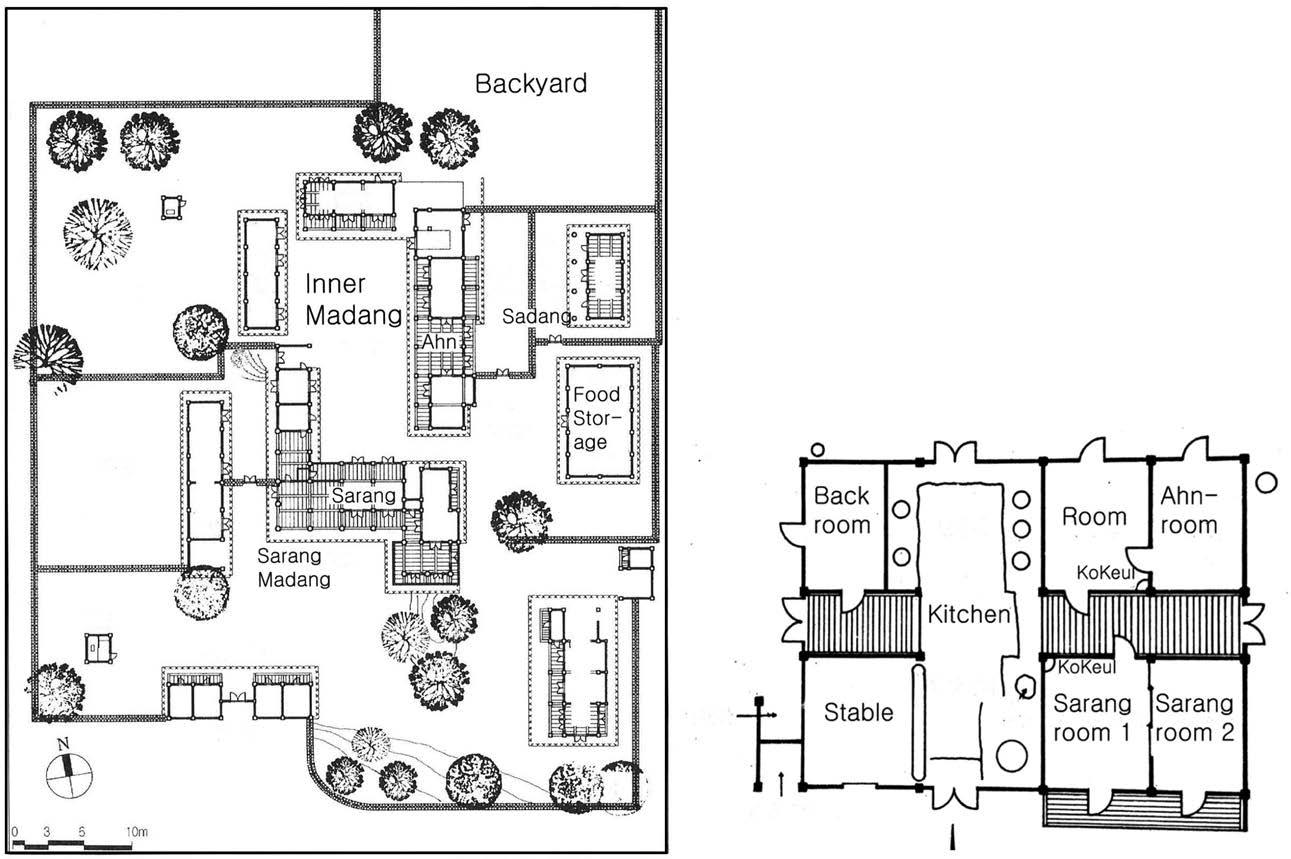
Figure 1.
Plans of a Typical Literati Hanok in Gyeongnam Province Named Jeong-byungho House (on the Left) and a Plan of a Neowa House in Samcheok Neowa Village (on the Right)
Source. Kang, 2004
In contrast, Neowa houses are typically found in mountainous regions without much arable land. According to one study, Neowa houses were in use very early since historical records such as the Dongguk Yeoji Seungram (東國輿地勝覽) mention roofs made of pine tree planks (Kim et all, 1997). Most of the inhabitants of Neowa houses were slash-and-burn farmers who needed to actively appropriate natural landscape for its resources. As a result, the internal organization of space in Neowa houses differs greatly from the literati hanoks or thatched-roof hanoks usually located next to large areas of agricultural hinterland. In fact, some scholars argue that the term dureoung-jip or dureoung house more accurately captures the characteritics of Neowa houses (Yim, 2011). Dureoung means “around,” a name that comes from the concentrated organization of space often seen in Neowa houses. While typical hanoks, including elite literati hanoks, have decentralized plans with many chae connected by outdoor courtyards, dureoung houses generally have one independent building, with rooms connected around an indoor courtyard <Figure 1>.
One of the characteristics of traditional hanoks considered unfit for modern living had been the insufficient use of space and the inconveniences associated with the constant changing of shoes. For instance, Park Gil-ryong, a Korean architect during Japanese colonial times, made a case for remodeled hanoks with a centralized plan by drawing a comparison diagram between traditional and remodeled hanoks (Park, 1936). According to Park, one of the weakness of the traditional hanok layout was its decentralized plan, which resulted in superfluous movements on the part of the inhabitants. In contrast, modern houses in the West had a centralized plan that hanoks should adopt. Unfortunately, his experiments with hanok remodeling could not be continued, due to the Korean War and the rapid rate of urbanization, which would eventually lead to the massive construction of apartment houses.
Although Park was right in that most hanoks had a decentralized plan, this decentrality was not a universal characteristic of all traditional hanoks. Many regional varieties of hanoks were not considered when earlier Korean architects concluded that hanoks have a decentralized plan that requires increased movements. In the next section, this study analyzes the plan of several Neowa houses in detail, and formulate a few desirable characteristics which may be applied in designing remodeled hanoks fit for contemporary lifestyles.
III. Results
1. Analysis of plans
1) Indoor wooden floor (maru or daechung)
Many Neowa houses feature indoor wooden floors called maru or daechung. Although raised wooden floors are more widely seen in South Asian countries with humid weather, the South Korean climate of cold winters and humid summers makes raised wooden floors very practical. What is unique about Neowa houses is that they have indoor wooden floors, completely surrounded by rooms <Figure 2>. Out of 137 case studies, 106 had some kind of indoor wooden floor, although the size and number of maru varied among houses. This contrasts with the wooden floor of typical hanoks, which are exposed on at least one or two sides.
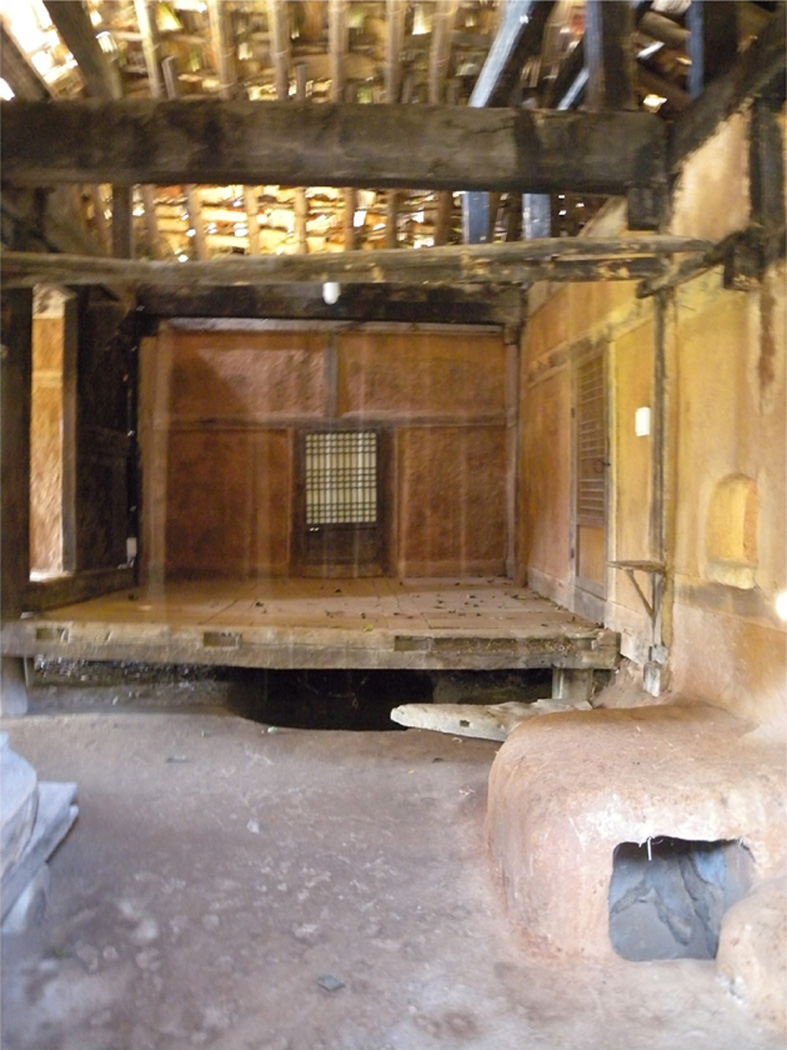
Although in the past the popularity of indoor maru was due to the poor public security in mountainous regions , it is very practical even in the contemporary context, in which the ritual function of maru has decreased significantly. During wintertime, a traditional raised wooden floor which lacks an ondol (underfloor heating system) becomes uncomfortably cold. It was reserved by elite literati for intermittent but important uses, such as receiving important guests and holding commemorative ancestral worship called jesa. In contemporary times, however, the symbolic importance attached to such space has decreased while practicality and comfort have become much more important. While indoor maru (daechung) does not have the same degree of stateliness as the typical daechung, it is warmer, and closer to the other interior spaces.
2) Internal and centralized orientation of space
In addition to the indoor maru, Neowa houses are characterized by their internal orientation of spaces. Compared to the open floor plan of many hanoks, which consist of several chae or independent buildings, the floor plans of Neowa houses are rather closed due to the harsh winter in the mountainous region. The resulting insular and reserved nature of the common space is suitable in the contemporary residential context, which highly values family privacy. Floor plans of Neowa house case studies revealed a similarity to the floor plans of contemporary apartment houses and detached single-family housing built after the 1980s.
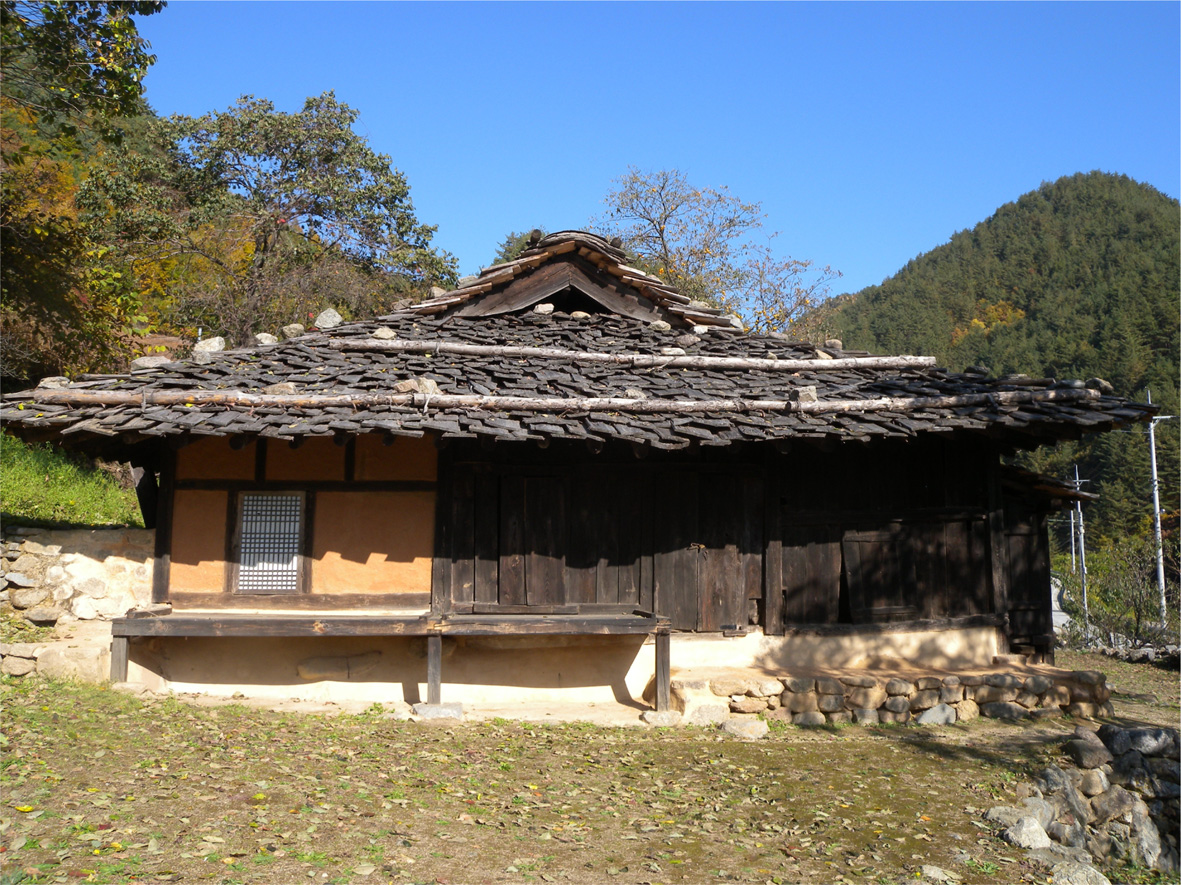
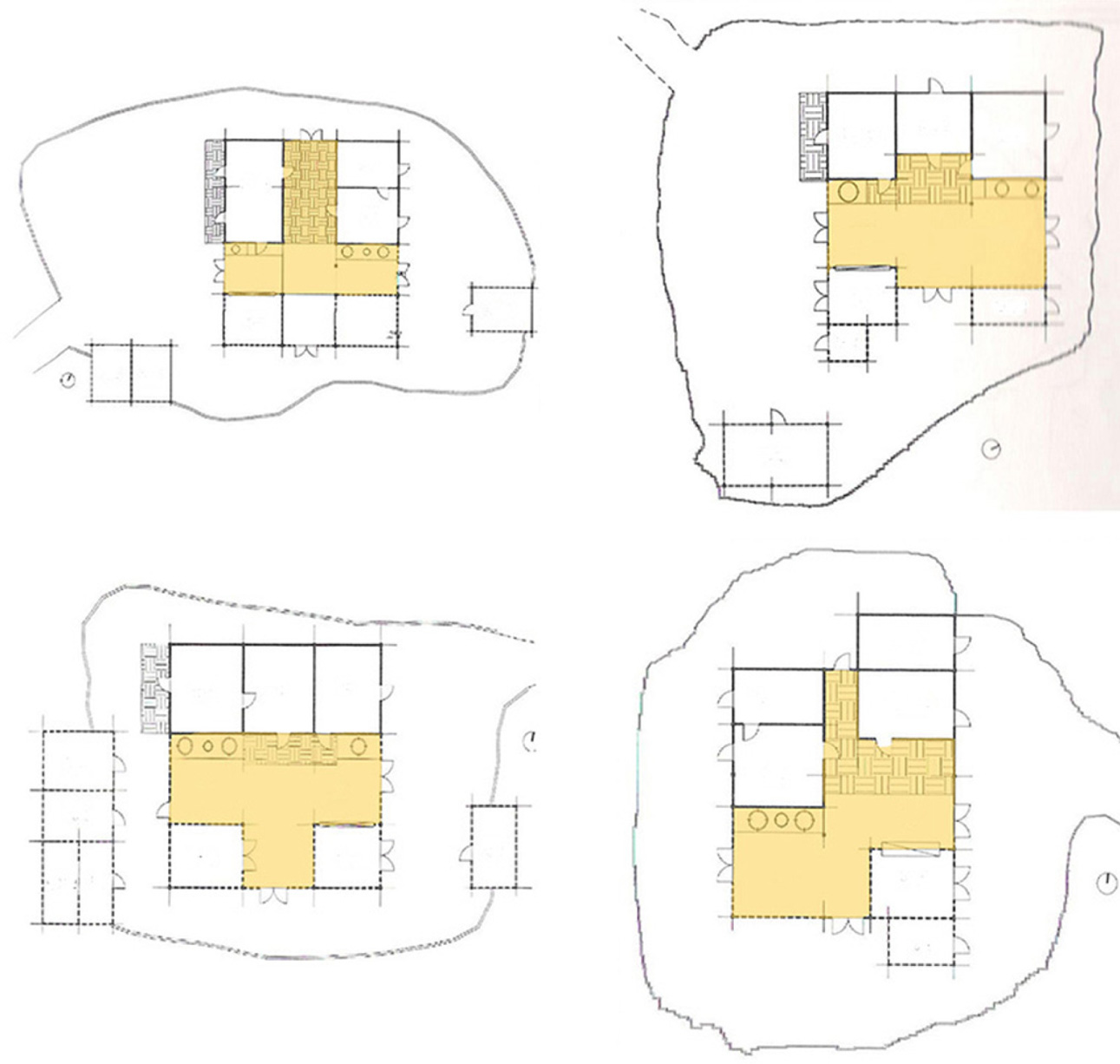
Figure 4.
Various Floor Plans of Neowa Houses with Kitchen and Indoor Maru Space Indicated as Area High-lighted (Yim, 2011)
Beside indoor maru, Neowa houses have full-length wooden walls in contrast to typical hanoks, with paper screen walls <Figure 3>. This characteristic contributes to the inwardoriented nature of Neowa houses. Full-length wooden walls are used in the more private indoor spaces, where everyday activities take place.
The floor plans of Neowa houses reveal a centrality that is atypical of most hanoks. The rooms of Neowa houses are organized around an indoor kitchen, and the kitchen is connected to the indoor maru <Figure 4>. This composite space of kitchen and indoor maru becomes the central indoor space, to which all other rooms are directly connected.
The centralized indoor plan of Neowa houses is similar to that of the contemporary residences popular in South Korea. Given that Neowa houses already have a centralized organization of space, it is easier to adapt Neowa house plans to contemporary residential structures. The Neowa housess fulllength wooden walls are comparable to the masonry walls used in contemporary residences. The central indoor space, which combines kitchen and indoor maru, is comparable to the modern day floor plans of most apartments and single-family detached housing. Many contemporary houses have an integrated kitchen and living room, reflecting the desire for a more open and broad interior space. This also reflects the busy contemporary lifestyle, which allows intimate interactions among family members, mostly during mealtimes. An affinity to contemporary lifestyles can also be seen in the spatial hierarchy associated with family members. Typical Neowa houses show an emphasis on the space of the married couple rather than that of the eldest male, which is usually the case in other hanoks. This is a reflection of the lifestyles of most Neowa house residents, which place importance on the married couple (Kim, 2005). Since most households in South Korea are those of a nuclear family, the space of the married couple has become the most important one in the house. Such similarities between Neowa houses and contemporary residences make Neowa houses an ideal candidate for developing a prototype for remodeled hanoks.
3) Flexibility
The last characteristic of Neowa houses that may be applicable to contemporary living is their flexibility. Hanoks in general are considered flexible since they are based on a modular system called khan, and can be expanded as the need arises. In Neowa houses, flexibility is maximized by placing vertical columns in an irregular fashion, as individual needs vary, and each room size can be different (Yim, 2011). This means that irregular and spontaneous expansion is possible, which makes Neowa houses very unique.
Also, Neowa houses feature a special courtyard called dwaen, which is different from the more typical madang. While a madang is open and used as a workspace, a dwaen is closed and is used primarily as storage. While the madang in traditional hanoks is absent in many contemporary homes, most contemporary houses have spaces akin to the dwaen in the form of indoor verandahs and a multipurpose room attached to a kitchen. This is because some functions of the madang have become less important or even obsolete as lifestyles have changed. Certain function of the madang, such as processing crops and washing clothes, have become defunct as food processors and washing machines have replaced human labor. In contrast, storage spaces are in greater need, since storage technology has developed significantly, producing new products such as Kimchi and wine refrigerators.
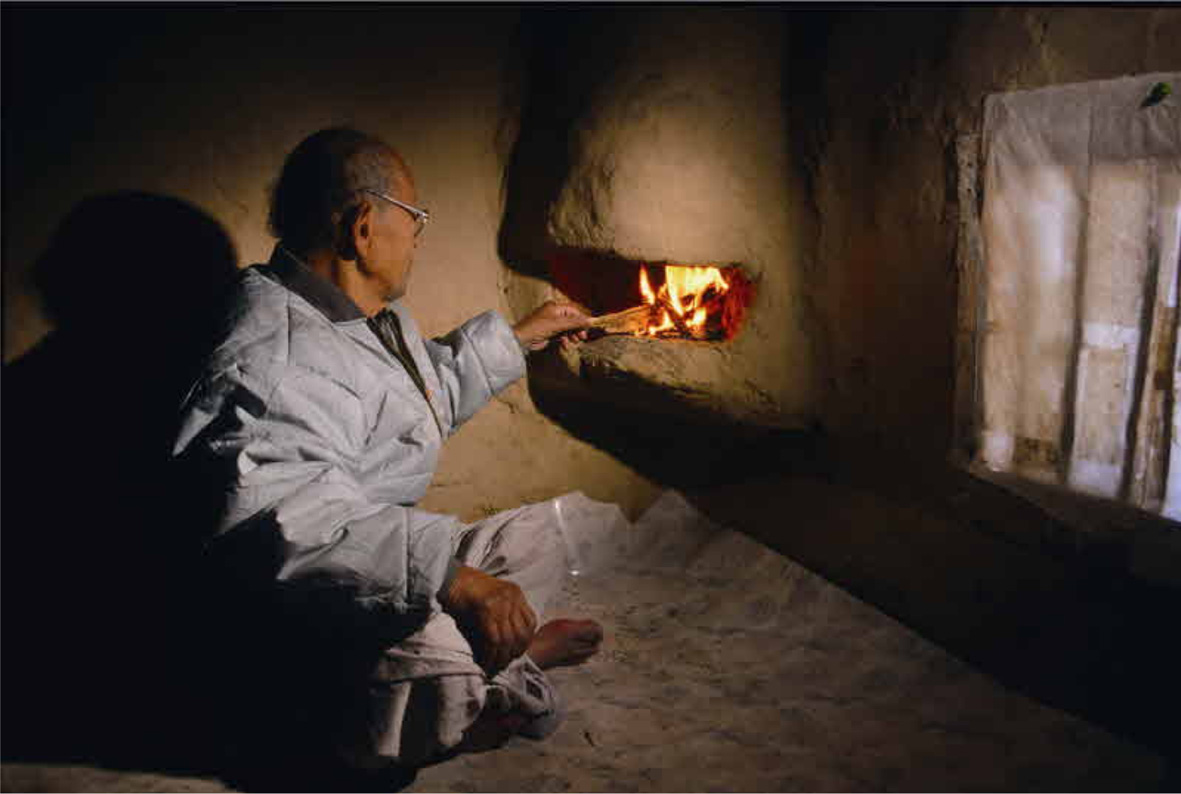
In addition to the traditional ondol that heats the floor of the room, Neowa houses have a kokeul, which looks like a fireplace embedded within a wall <Figure 5>. Although this feature can be a fire hazard, it was useful as both a heating and lighting device at a time when there was no electricity. While electricity seems to render the kokeul an outdated form of interior space, its interchangeable functions in vernacular houses can be still useful in contemporary houses with low energy efficiency. Interestingly, there are other features of hanok, which similarly involve an interchangeability of multiple functions. For instance, ondol (or gudeul) functions as both a cooking and heating device.
The flexibility and interchangeability of functions inherent in Neowa and other hanoks suggest an alternative to contemporary housing dominated by modernist architectural aesthetics. Instead of narrowly defining a function in terms of a given form, function itself can change, and be defined in multiple ways.
2. Ethnographic findings
1) Survey data and interviews
A survey designed to identify perception of the traditionality of hanoks among inhabitants was conducted with 124 respondents. The survey consisted of 7 questions. Respondents were limited to those who either currently were of had previously lived in traditional hanoks Out of the 7 features listed, 68 respondents (55%) said that the most important traditional feature of hanok is the ondol (gudeul), the underfloor heating system <Table 1>. The second important feature was the use of environmental friendly material in the construction. While respondents chose wooden tiled-roof hanoks as the most “typical” representation of hanoks, they did not exclude possibilities of other hanoks with lesser-known material such as thatched roof and earthen houses. Most respondents (86 people, 70%) had heard about Neowa houses through their education or exposure to media presentations, but none of them had actually lived in one. While residents were aware of the variety of hanoks, the cases of remodeling such “minority” hanoks are very rare, if not entirely absent. The relative rarity of Neowa house remodeling was a factor in determining the perceived “prototype” of hanoks among respondents.
Table 1.
The Result of Answers to a Survey Question Which Asked “Out of These Qualities, Which in Your Opinion Is The Most Important Feature of Hanoks?”
To learn more about the experience of living in Neowa houses, I conducted interviews with local residents of Shin-ri, in the Samcheok region. One resident, who had lived in the area for 14 years, remarked, “Neowa houses are more environmentally friendly and less expensive (than literati hanoks) because anyone can build them, even without special knowledge.” In other words, one does not need large, straight, wooden construction elements to build a Neowa house. Also, the complex construction system based on wooden brackets is unnecessary, and this lowers the construction cost of Neowa houses. Instead of relying on the labor of skilled carpenters and craftsmen, unskilled labor can be used.
The resulting architectural form of Neowa houses exudes a rather rough and rugged aesthetic compared to the more refined and sophisticated look of typical literati hanoks. Although both are types of hanok, the stylistic contrast between the two shows that a wide gap can exist within the vernacular architecture of a single region. Neowa houses are more vernacular, as in the sense that they are made of local rather than imported material. Also, Neowa houses show a more spontaneous development of form compared to the more static form of elite literati houses. The rather rough ambience of Neowa houses, therefore, should be considered as a positive attribute that allows room for further changes.
2) Media analysis
Popular media discussion of Neowa houses is not as common as that of the tiled hanoks of literati class or even of thatched roof houses. Most recently, however, Neowa houses started to receive media attention as general interest in hanoks increased. The popular media depict Neowa houses as manifesting to visitors an ambience of hometown rural hospitality. For instance, one article in Kangwon Domin Ilbo, a regional newspaper in Kangwon province, noted that “Neowa houses filled with natural beauty welcome visitors with simple affections” (Hong, 2012). Another article in Kyunghyang Shinmun claimed that the Neowa Village in Shin-ri is the place to experience the true character of Kangwon province (Lee, 2010). These rather vague and romantic descriptions show a tendency to positively evaluate Neowa houses.
Such favorable depictions are triggered by the nature of articles written to promote the regional tourist industry. They illustrate that modern tourists’ desire to experience things as antiquated as hospitality and rustic lifestyles can help increase tourism in the countryside. Yet they also reveal an important point about the current popularity of remodeled hanoks. While many hanok villages, such as Bukchon Hanok Village in Seoul, have been celebrated, such villages often consist of the most widely known prototype of literati hanoks. Although hanok villages in urban settings have also been generally applauded in the popular media, negative aspects, such as the high construction cost and gentrification, have also been reported once the novelty has worn off (Lee , 2008).
In contrast, the Neowa houses in Kangwon province represent a minority and are located in a rural village collectively owned and operated by local residents. Neowa houses have been, and continue to be dwellings of the common people rather than of elites. In this sense, they are different from the urban hanoks that have been remodeled or constructed anew in the metropolitan area of Korea. Also, while some remodeled hanoks have been criticized as based on a “cookie-cutter” design, Neowa houses have not been reproduced extensively as a prototype. They are considered a more primitive, but also friendlier and more authentic form of vernacular dwelling than the widespread literati hanoks.
This perception helps reproduce the image of Neowa houses as more novel and interesting. Traditional qualities associated with Neowa houses included not just its unique roof shape but also rusticity and longing for a lost rural hometown. As theoretical analysis of tradition and traditional architecture has revealed, such an association may not be based on factual evidence. Yet the imagined dimension of tradition, or its reconstructed version, may be stronger than the abstract notion of tradition. A more important question is which tradition is used and for whom. The dominance of literati hanoks shows that the reconstruction of tradition depends on historical positions of social power.
This imagined tradition contains room for change. In this regard, findings of ethnography and media analysis have revealed two things. First, while most Koreans view tiled-roof hanoks as the most representative prototype, they also acknowledge regional vernacular houses, such as Neowa houses, as hanoks since they use environmentally friendly material and are based on a traditional building system. Secondly, lack of knowledge about Neowa houses does not translate directly to into unwillingness to incorporate the features of lesser known houses into contemporary houses. Rather, novelty of such lesser-known hanoks contributes to the positive image of hanoks of the “minority type.”
Thus, hanoks, and more generally, Korean traditional architecture need not be confined to the narrow category of tiled-roof hanoks. If traditional architecture is continually reinvented, it is possible to seek out traditional strands with labor-saving technologies and cost-effective construction methods in order to benefit more people. In other words, if we are living in a moment where tradition is divorced from authenticity or a specific meaning, then we need to make practical use of this. Further research and experimentation will facilitate doing so.
IV. Discussion
The current popularity of remodeling hanoks presents an opportunity as well as challenges faced by practitioners and architectural researchers. In most remodeled hanoks, some traditional features, such as ondol (gudeul), have been integrated within many contemporary residences. Yet other lesser-known traditional features are largely absent from the current housing construction. The selection of a tradition has depended much on the representation of hanoks, which has been mostly focused on literati hanoks. This paper has argued that the lesser-known features of Neowa houses should be adopted in remodeled hanoks as well as modern detached houses. To that end, this paper has analyzed the spatial characteristics of Neowa houses in order to infer applicable designs in contemporary residential environments. Among the many peculiarities of Neowa houses three characteristics, including indoor maru, the internal organization of space, and increased flexibility can be applied in the modern context, in which family privacy and practicality becomes the priority, rather than ritual functions.
The aforementioned characteristics of Neowa houses contained trade-offs in the past. However, contemporary residences do not face the same problems. In addition, ethnographic findings have revealed that the Korean public’s view of lesser-known types of hanok is mostly favorable, which may generate more interest in remodeling them. Thus, adapting Neowa houses’ spatial attributes in modern houses should not be impossible, although it will be challenging, given technological advances and the many research studies conducted on the subject.
In the future, the regional varieties of traditional hanoks should be further studied, as Neowa houses represent only one type of regional variation. Hanoks built with materials other than wood should be studied, as these are considered a minority. Uncommon aspects of vernacular houses show us possibilities for change even in rather static societal conditions.