


I. Introduction
The era of globalization has ushered in dramatic changes in the past decade, covering a wide range of distinct political, economic and cultural trends. The term ‘globalization’ has quickly become one of the most fashionable word of contemporary political and academic debate. The rapid physical transformation of historical sites is now taking place in many third world cities. The processes of globalization has had enormous impacts on not only national economies, but also the physical reshaping of contemporary urban centers (Robertson, 1992). Tipple and Ameen (1999) described transformations as first, modifications of the existing design of a product by expansion of the plinth area, addition of spaces laterally and vertically, or through addition of spatial units like rooms, alcoves, corridors, etc. Secondly, transformation was described as the qualitative re-organization of the disposition of the provided spaces, through relocating and resizing of the openings between spaces and to the exterior environment. Such transformations have been considered by scholars from varied approaches. Some consider housing transformations as transitions from vernacular typologies to modern or conventional typologies (Mirmoghtadaee, 2009), while others consider transformation as being generated by changing household demands (Makachia, 2005). Yet others consider transformations as emanating from urban dynamics in terms of development trends, population pressures, and land constraints (Terekegn, 2000). Following globalization, drastic changes and transformations have been experienced, especially in urban-built environments where the communal life and identity are gradually diminishing.
All historical heritage sites are expressions of the diversity of human society throughout history, embodying the values of traditional urban cultures all over the world. Historical heritage sites remain vital cultural and historic areas, possessing much tangible and intangible heritage in the form of culture and monuments. However, the environment of historical sites is becoming physically degraded, damaged or even destroyed by the impact of urban development, following the modernization of civilization everywhere. Therefore, management of historic sites needs to be done in such a way as to ensure that tourism and modernization are developed in a manner that does not contribute to the deterioration of the traditional urban environment. Traditional architecture is a manifestation and physical representation of the culture of the people at the historical site. It is comprised of houses and all other buildings. All forms of traditional architecture were built to meet specific needs and to accommodate values and economies (Lim, 2007).
Today, little attention is paid to the integrity of traditional artefacts in the newly-built environments, which has resulted in a loss of significance and culture (Saleh, 1988). By definition, sustainability is ‘to meet the needs of the present without compromising the ability of future generations to meet their own needs’ (WCED, 1987). In the case of the Luangprabang world heritage site, the environment and cultural conditions of the city are very unique, rich with diverse tangible and intangible heritage values. Development must take place carefully to preserve the heritage values while following modern lifestyle trends, which raises many questions, such as how this can be properly integrated, how traditional houses can be transformed to meet the desires of residents for new lifestyle trends without loss of the unique traditional characteristics, and who the main actors in the process of transformation are. It also raises the important question of whether traditional houses will be able to survive in the face of cultural, ecological, and technological changes. In previous studies, several researchers concentrated only on the characteristics of form, function, construction materials, and structural methodology of the traditional architecture, as in the study of Clement-Charpentier (1989). Lao houses were wooden houses built high off the ground, where the people could use the space for socializing, and as multipurpose space. Conners (1996) noted that traditional Lao house are constructed of bamboo and wood, rest on wooden piles, and have roofs of palm and grass thatch.
Rapoport (1969) argued that there is a transformative relation between natural and socio-cultural factors and traditional dwelling structuring. The factors that have an impact on the structure of a dwelling can be divided into three categories: natural factors, socio-cultural factors, and globalization and economy factors. Apart from socio-cultural factors, the geomorphologic characteristics of the place where a dwelling is located also have an impact on the dwelling structure, as a natural factor. Especially, when the formation of traditional dwellings that are the source of historical and cultural background are examined, it can be seen that the relation of human-physical and social environment housing has an effective role in structuring of the dwellings. This paper aimed at exploring the impact factors that led to the transformation of traditional houses, the changes and transformation of traditional houses by the occupants during usage according to their social and cultural needs, the importance of understanding the transformation of Lao traditional houses and their adaptation in globalization era, and the identification of the characteristic of traditional and transformed dwellings. A case study was carried out on Luangprabang, an ancient city of Laos.
II. Methodology
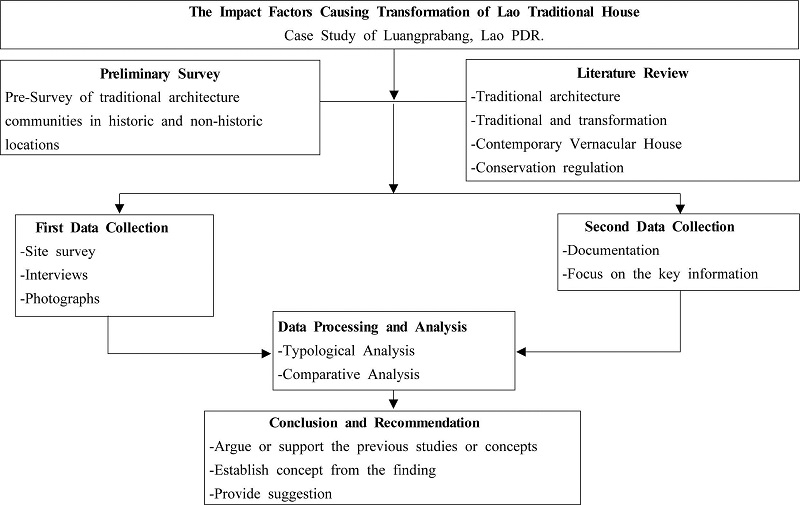
To meet the objectives of this research, the following methods were employed. A literature review was first carried out in order to provide a knowledge base about the characteristics of vernacular architecture, the theory of global influence, economy, social aspect and political function. This creates a knowledge base about the present status and the physical transformations of the traditional houses, embodying the characteristics of globalization, economy, political and social aspect.
Second, the site was selected and observed. This study was carried out on Luangprabang, an ancient city of Lao PDR, which has rich values. The city exhibits an important interchange of human values over a span of time within a cultural area of the world. The examination of secondary data sources and direct observation was done through the five selected case studies of tradition houses with cultural characteristics and traditional context. This examination helped to gain an understanding of the present state of the Lao traditional house, and to get an overview.
Third, site survey was carried out, and photographs were taken. The data collection employed sketches, face-to-face interviews, photographs and measurements of the houses to document the use patterns of the function, form, materials and construction methods. This also helped to provide documentation regarding the issue of cultural heritage conservation. This research survey (of before and after renovations of original Lao houses) has been carried out since 2004 in order to identify the transformation of some residential units into different commercial enterprises related to income generation, as well as subdivisions to obtain rental income.
Finally, comparison between the original houses and transformed houses in five case studies of heritage houses was made to gain an understanding of the spatial organization of the traditional houses and its transformation through time. Specifically, analysis of the basic spatial formation, components and elements was carried out to determine the factors impacting the transformation. In order to evaluate the findings, the percentage of transformation was quantified in terms of total built up areas of the houses. The methodology used in this study provides a basis for analyzing housing transformations in other environmental contexts that have similar socioeconomic conditions to those existing in the field study area. This method attempted to explore the impact factors that caused the transformation of traditional houses, the changes and the transformation of the traditional houses by the occupants during usage, according to their social and cultural needs.
III. Context of Luangprabang City
1. General context
According to the Lao PDR government, which sought to introduce a new way of thinking (Chintanakan Mai), new economic methods became more flexible and the country opened up to the world economically starting in 1986. The tourism industry is one of the country’s main sources of income. Tourism brings the potential to boost the economy of the Lao PDR, and has already contributed to a new sense of identity and local pride in the culture and heritage. Luangprabang is an ancient city of Lao PDR (old capital city), which is rich with diverse, tangible and intangible values. The city exhibits an important interchange of human values over a span of time within a cultural area of the world. The diverse outstanding values include urban landscape, traditional and colonial architecture, natural landscape, mountain, rivers, ponds, traditional culture, customs, art and handicrafts, food, language, festivals, rituals, etc. For these reasons, it was designated as a World Heritage City in 1995.
The rationale for the UNESCO listing of Luangprabang rests on its qualities as a well-preserved townscape consisting of a unique fusion of Lao traditional houses, temples, and Western colonial architecture and urban structures, rather than any individual piece or pieces of architecture. In 1996, the Prime Minister’s cabinet approved a revised urban master plan for Luangprabang. This plan was drawn up in 1994 by the Institute of Technical Studies and Town Planning, which is part of the Ministry of Communication, Transport, Post and Construction. This legally-binding plan covers an area of five hectares, divides the town into conservation and nonconservation zones, and is employed by local authorities as a framework for preserving heritage and controlling development. A major provision of the plan is the designation of a 1.4-hectare heritage preservation zone, centered on the historic peninsula area of the town. A total of 611 buildings were listed on the heritage list of UNESCO, including major Buddhist temples, Lao traditional houses, French-influenced administration buildings, and Chinese-style shop houses. This legally-binding plan controls urban growth and the transformation of traditional architecture.
As a result of the heritage regulations, none of the existing monuments can be destroyed. Restoration must adhere to the original architectural specifications, including facades, roofs, materials, finishes and colors. The transformation of new architecture in historical zones must follow the city regulations. The non-conservation zone, which has greater flexibility in land use and development, surrounds the protected zone. This perimeter zone is divided into suburban areas, riverbank settlements, economic zones, agricultural and natural zones, and areas for possible future expansion.
With its isolation having served as a shield against the forces of globalization and economic growth, Luangprabang is one of the few remaining historically authentic places in Asia, and has become a main tourist destination. It is therefore subject to the pressures of an ever-growing tourism industry. Luangprabang city, with its unique characteristics, has a substantial number of traditional buildings in the old center. Since 1995, many of the traditional houses have been transformed into commercial buildings for servicing the tourism industry. The transformation of older houses provides space for an upcoming generation of the tourism business. In the new living environment conditions, all of the spatial characteristics of the traditional houses have been lost. This substitution has resulted in different spatial characteristics, which were developed according to enforced economic factors and modern lifestyles. Many businessmen from other cities and abroad have invested and provided technical assistance to the local people. With the influx of cash flow, the demand of business people and tourists for food caused prices to escalate to levels that the local people could not afford. Increasing demand for land also prompted some local residents to migrate out of the city and rent their heritage buildings to others to convert their houses for commercial purposes such as hotels, guesthouses, shops, restaurants, massage parlors, ticket booking services, and so on. Thus, tourist economics and globalization have had a great impact on the transformation of many traditional buildings.
2. Lao traditional house (Heuan Lao)
Early houses in Laos were similar to vernacular houses throughout Lane Xang and neighboring kingdoms. Lao traditional houses were finely-carved wooden houses, built high off the ground with hardwood stilts embedded either in the ground or on stones (CLEMENT-CHARPENTIER, 1989). One must climb steps or a ladder to get inside. Wooden planks are used for the flooring, while wood boards or bamboo are used for the siding, and either grass or shingles can be used for the roofing. The roof can be thatched, with a thick covering of leaves layered over a roof frame. Thatched roofs are much cooler than tin roofs, which seem to turn the house into an oven when the sun beats down on it. The ground floor is much cooler during the middle of the day, making it a very good place to stay <Figures 2 and 3>.
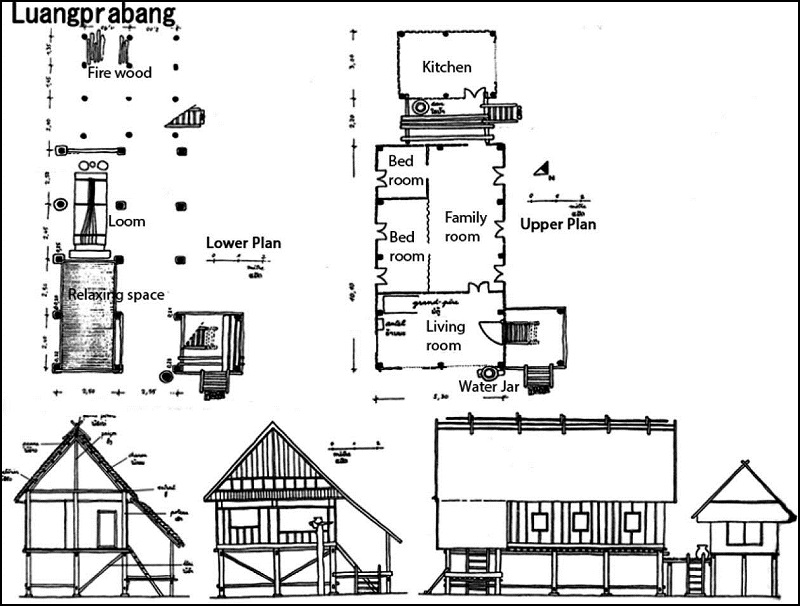
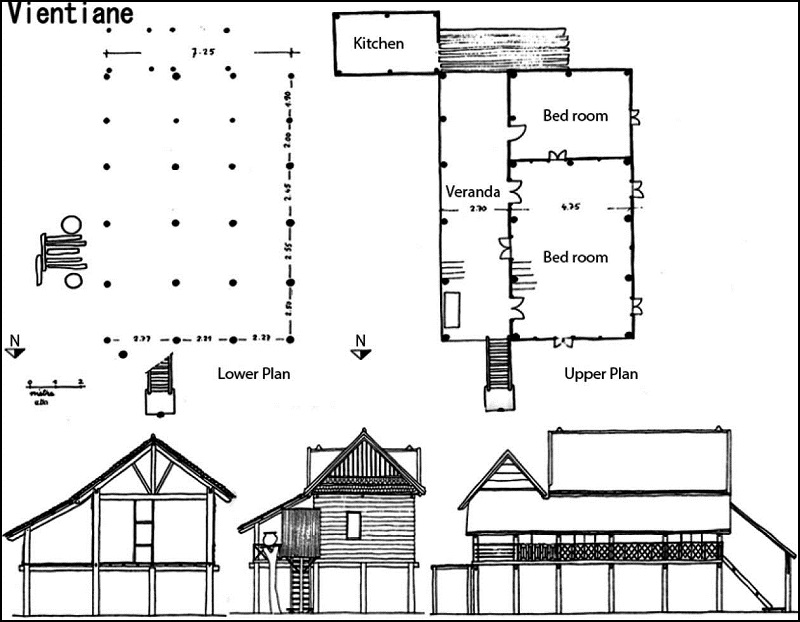
Lao villages are often built near rivers and streams that sometimes flood during the rainy season. Building the house on stilts protects against mud and flooding. There is typically a front porch and a clear space inside which is under the roof but open to the street. There is sometimes a room or two walled off at the back or side of the house. Because the weather is hot, open houses that let lots of air flow through are preferred. Animals are kept in pens under the house. There may also be a bamboo bed under the house for sitting on during the heat of the day, and there is often a loom for weaving cloth.
The houses tend to have no furniture. The open area serves as a living room, dining room, and bedroom. People sit and sleep on the floor. A woven reed mat might be put down for company. A reed mat or thin fold-up mattress may be used for sleeping, and can be put away during the day. The kitchen is usually located in the back of the house, where the people cook over wood or charcoal. The charcoal may be used in a clay bucket like a hibachi, or a wood fire may be made over a thick bed of sand in a box.
They might also make wood fires on the ground in the middle of some stones placed to balance a cooking pot. The houses are built close together with no real yard. The Lao people like company, and can sit on their porch to see and talk with people going by, or with their neighbors. They would rather live together in a close community and walk to the fields outside the village than to have each family live in lone houses near their own fields.
IV. Transformation Analysis
1. Comparison Original Lao House and Transform House
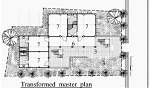
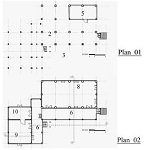
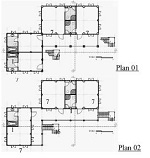
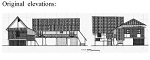
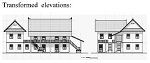
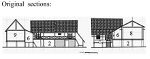
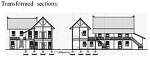
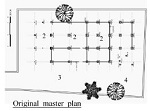
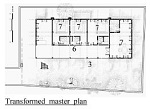
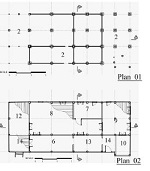
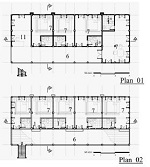
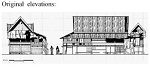
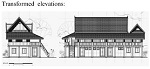
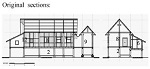
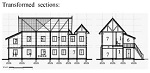
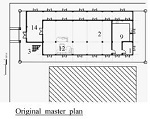
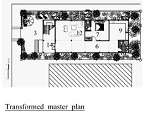
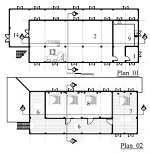
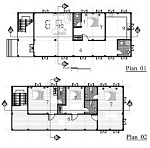
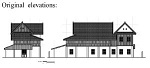
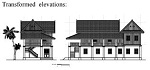
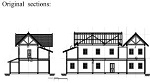
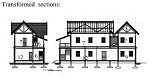
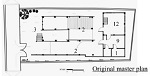
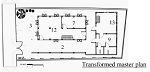
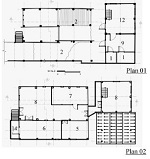
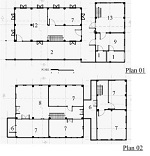
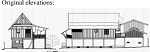
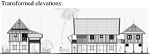
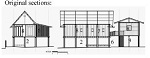
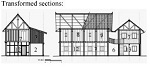
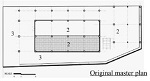
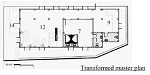
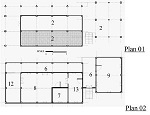
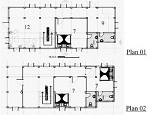
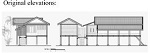
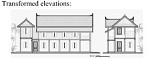
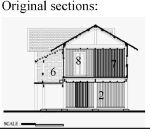
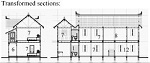
Table 1 shows a comparison of five representative Lao traditional houses before and after renovation. All of the houses were listed on the heritage list of UNESCO. The comparison considered four main categories: the courtyard and its environment, the function of the building, building form and its elements, and structure system and materials. The table shows the physical condition of each of the categories to compare the context of before and after transformation in order to investigate the factors impacting the transformation in each of the categories, which allows an easier understanding of the processes of transformation. The factors of transformation, as noted above, include the current pressure of finding more habitable spaces, income generation (an economic issue), the influence of global trends and increased choice. It is interesting to see the amount of transformation under the urban heritage conservation regulations and some social aspects, despite the current tenant or owner’s lack of freedom to transform physical space, form, construction materials, and technology to meet all their needs.
Table 1.
Comparison between Original Houses and the Transformed Houses of Five Case Study Heritage Houses in Luangprabang World Heritage City
2. Summary of Transformation
The comparison between the original heritage and transformed houses for the five case study houses revealed changes mostly in the arrangement of the housing space, which used to follow geometric rules but now follows the geometry of land parcels. Multifunctional spaces were replaced by single-function rooms. The combination of open, semi-open, and closed spaces, which formerly enhanced the spatial diversity, has been replaced by a shared courtyard and private, closed living spaces. Balconies, which were intended to substitute for courtyards, were instead combined with closed spaces and used chiefly as rooms. Some of the traditional spaces have been lost and changed to have new function and form.
V. The Impact Factors of Transformation and Its Determinants
According to the results of the comparison in Tables 1 and 2, the factors affecting the transformation of the traditional houses (Heuan Lao) in Luangprabang city could be determined to include not just one single factor, but as a number of factors. These factors can be classified into four distinctive categories: globalization, regulation, economy, and social aspect factors, which play a prime role and are the root of all the changes. The traditional Lao house must be flexible with socio changes. The transformed houses are a combination of old traditional buildings and modern construction, in accordance with the current lifestyles and domestic conditions. The transformed houses have become compact dwellings, while still retaining many of the characteristics of traditional houses. The residents still feel confident to call their altered houses by the archetype’s name, Heun Lao (Lao traditional house), but they are in fact transformed Lao houses.
1. Globalization
The factor of globalization played a larger role than any of the other factors because modern lifestyle trends and new technology have had a great influence on the conditions under which traditional houses evolved. The term ‘globalization’ is now commonly used, and is familiar to everybody. The impact of globalization varies across borders. Globalization, which resulted from the use of information and communication technology and has affected cities around the world, has sharpened the basic conflict between the old (traditional) and the new (modern). There are three main factors involved: global technology, global lifestyles, and new global materials. The modern technology in building materials and construction techniques played a very strong role in the transformation of traditional houses, as per the remarks in Table 2. Under the influences of globalization and modernization, whereby people adapted their houses to suit their needs and desires, both physical and morphological changes occurred. The desire to modernize the houses impelled the people to use modern building materials. Through the transformative processes, a new house type has emerged. The major problem is that the physical transformation conflicts with the traditional context and reduces both the aesthetic quality and heritage values. Globalization has had positive and negative affects on the local community, and is rapidly spreading its influence.
2. Urban regulations
This second factor played a very important role to control the typology of the transformation of Lao traditional houses, as the transformation must adhere to the original architecture. Any amount of transformation is subject to the urban heritage conservation regulations, thus limiting transformation due to the government. UNESCO has stimulated conservation, protecting loss of the unique characteristic of traditional Lao houses in the period of globalization and economic growth. The government approved the regulation of heritage building conservation, “Plan de sauvegarde et de mise en valeur de Luangprabang1)” in 2001, by La Maison du Patrimoine authority of Luangprabang, to preserve heritage values and control urban growth and traditional architecture transformation. Restoration must adhere to the original architectural specifications, including facades, function, building size, high, roofs, materials, finishes, and colors. The transformation of new architecture in historical zones must follow the city regulations. However, as mentioned earlier, there is also a non-conservation zone with greater flexibility in land use and development which surrounds the protected zone. As a result of the heritage regulations, no monuments can be destroyed.
Historic buildings can help promote cultural identity and sustainable development in times of change. Such buildings and their surroundings need to be conserved professionally, in their original place. In developing countries, the oldest built structures are often in the poorest areas. This poses a threat to both the buildings and protection, since careless intervention could destroy their value. Professional conservation protects buildings from demolition or modernization processes which might threaten their cultural values, while the continuous maintenance of older buildings can support local economies and improve the quality of life. The way forward from poverty and conflict includes conservation: maintaining cultural identity and the historical testament of the built environment.
3. Economy
The third factor was economy, with its potential role in the transformation of traditional houses. The pressures of the tourism industry are continuously growing, and many traditional houses have been transformed into commercial buildings for the incoming generation of tourism. This matter has a lot of potential to affect the transformation of the traditional houses. The comparison in Table 1 demonstrated that almost all of the traditional buildings had been converted for commercial purposes such as hotels, guesthouses, shops, restaurants, massage parlors, ticket booking services, and so on. Despite the fact that there are no prescribed rules or guidelines on how to transform traditional buildings for small-scale enterprises, there are many examples of transformation enabling generation of income. Because income generation using domestic spaces is an effective measure to alleviate poverty, transformation for the generation of income is of enormous importance and can be measured as an effective survival strategy. Subletting rooms also generates income, but has been criticized for causing poor quality living. A vast study on home-based jobs showed that the most suitable places for such activities are either the courtyards, rooftops, or open verandas. In a lack of such spaces, semi-private spaces, such as paths or even bedrooms, are extensively used. This indicates that the working or commercial spaces and the living spaces overlap with the most necessary daily activities, including sleeping, cooking, and eating. Some transformation from residential to commercial activities would be possible, depending on the physical layout of the plan. However, in the majority of cases, they are neither compatible nor cost-effective.
4. Social aspects
The last impact factor was social aspects. However, this did not play as large a role as expected, because the traditional lifestyle has been changing to contemporary lifestyle. Accordingly, the traditional cultural practices have been reduced causing some traditional spaces to be lost, as shown in the functional comparison in Table 1. Most people who live in Luangprabang are Buddhists; therefore, the social aspects are derived from the context of Buddhism, which influenced the formation of the traditional houses. A house is more than a structure full of things. Its form and organization are influenced by the culture in which it develops, and may be viewed as a reflection of the relationship between the culture and environment. Because the design and use of houses reflect cultural values and ideas, people may have different housing experiences according to their cultural backgrounds. Religion is one of the major factors which guided the formation of traditional houses in Lao PDR. Lawrence (2000) noted that the social dimension includes the patterned processes of everyday life, which encompass the existential being of the people, the actuality of daily life, and the surroundings. Socio-cultural factors have been known to be a crucial force in shaping an idealized framework of the people’s views and needs towards the built form. Drawing from Lawrence’s (2000) remarks about the relationship between social forces and the built setting makes us wonder whether the original form of the traditional house would still be able to support the changing needs and lifestyles of contemporary rice farmers.
Table 2.
Summary of the Comparison between Original and Transformed Houses
VI. Conclusion
The transformation of Lao traditional houses in Luangprabang has been done to accommodate new functions and a variety of commercial enterprises, either through partial improvement or reconstruction, as there was a certain degree of flexibility in the process of fulfilling the current needs of the residents. In the traditional period, house forms were compatible with people's needs. In the contemporary age, however, house spaces were not designed in accordance with the current lifestyles.
The case study also indicated that these changes are connected to housing demand, as well as to the benefits of income generation as a survival strategy for the low and middle-income people in Luangprabang. Most owners of Lao traditional houses have converted their houses to serve the tourism business due to economic growth and the subsequent increase in the cost of living. The transformation of traditional houses can allow adaptation of the houses to suit the people's needs. The desire to modernize their houses impels the people to use modern building materials. Through such transformative processes, new house types have emerged.
This study also revealed that the transformation of the traditional houses is subject to not just one single factor, but to a number of factors, wherein globalization, regulation, economy, and social aspect factors play a prime role. The impact of globalization and the influence of the modern concept of the consumer society have an impact on every society. The dwellers of traditional societies maintain historical culture and values. The Lao traditional houses were wooden, rested on wooden piles with roofs of wood and thatched grass thatch, and were built high off the ground with hardwood stilts embedded either into the ground or on stones. They had an open ground space that could be used for socializing, and as a multipurpose space. The house function was homogeneous, with more flexible spatial utilization (fewer spatial categories), and dynamic and flexible construction. In contrast, the transformed houses represented a combination of the old traditional building and modern construction techniques, in accordance with the current lifestyles and domestic conditions. The transformed houses were integrations of brick and wooden materials, with roofs of clay tiles. The ground floor were bricks wall with plastered, the second floor were wooden wall and roof were clay tiles. The ground floors spaces were more compartmentalized and closed (more privacy), providing more elaborated and increasingly specific spatial types (increasing number of spatial categories) of functioning.
To protect against the loss of the unique characteristics of tradition, authorities must enforce traditions using urban conservation regulations. Therefore, the current transformations are under the regulations of the heritage conservation of Luangprabang city, preventing the factors of globalization and economic to influence every area. The residents could not transform their houses to meet all of their needs, as they must follow the urban heritage housing regulations to keep the main characteristics of the Lao traditional houses for heritage value and conservation reasons. The influencing factors are integrated between globalization, economics, social aspects, and regulation to transform Lao traditional houses to Lao traditional contemporary houses. The houses should be physically harmonious with traditions and lifestyles; consequently, the valuable traditions would be lost forever without regulations to control the transformation.